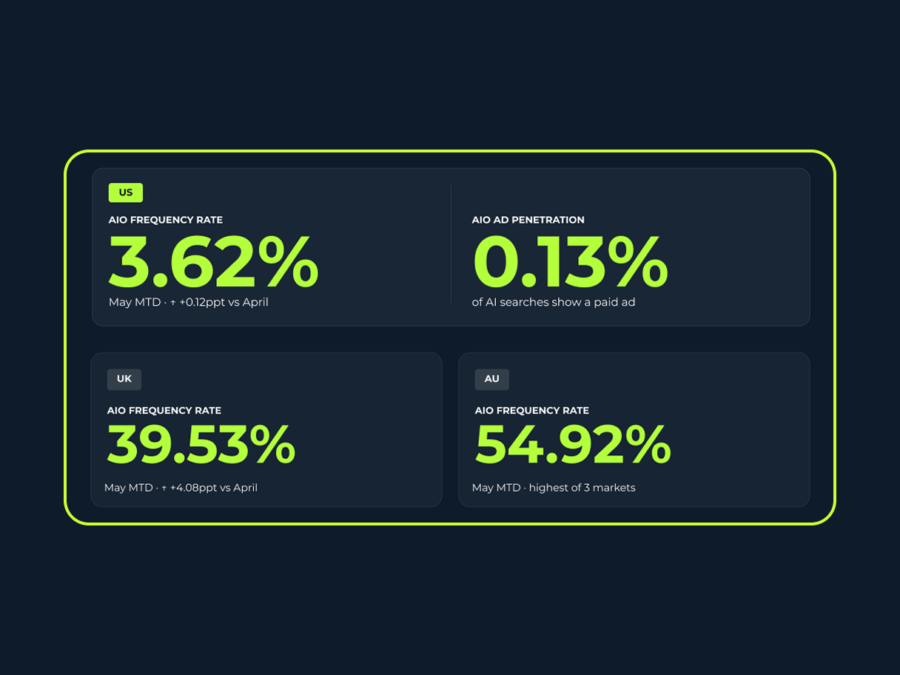
AI Overviews aren’t just a visibility problem. They’re eating into your revenue. Here’s what the data actually shows.
Google’s AI Overviews have moved beyond beta. They’re a permanent fixture of the search results page and their impact on paid search is no longer theoretical. We analyzed data across six major industries from late December 2025 to January 2026, tracking performance metrics from hundreds of thousands of advertisers and more than 5 million ads.
Aggregate data might tell you things are stable. A closer look tells a different story. For advertisers, these automated summaries aren’t just pushing you down the page and they’re directly threatening PPC revenue.
What AIOs mean for paid search revenue
Generative summaries fundamentally change the math of a successful campaign. When an AIO pushes paid ads below the fold, it triggers a chain reaction that impacts your profitability:
- Lower CTR = Fewer clicks: Reduced visibility leads to fewer visits to your landing pages, shrinking your traffic pipeline.
- Fewer clicks = Fewer conversions: A smaller traffic pool inevitably leads to a drop in total lead or sale volume.
- Higher CPC = Reduced profitability: In sectors where AI summaries trigger on high-competition terms, the cost to stay relevant rises, squeezing margins and lowering your return on ad spend (ROAS.
AIO impact across six industries
We tracked AI Overview frequency, content themes, and CPC/CTR performance across desktop and mobile. The picture that emerged is fragmented: impact varies by industry, device, query type, and content intent. That’s exactly why blanket assumptions are dangerous.
Content themes: The battle for mid-funnel intent
Adthena’s analysis shows that Google is increasingly moving into comparison and instructional spaces, directly challenging high-converting paid search territory.
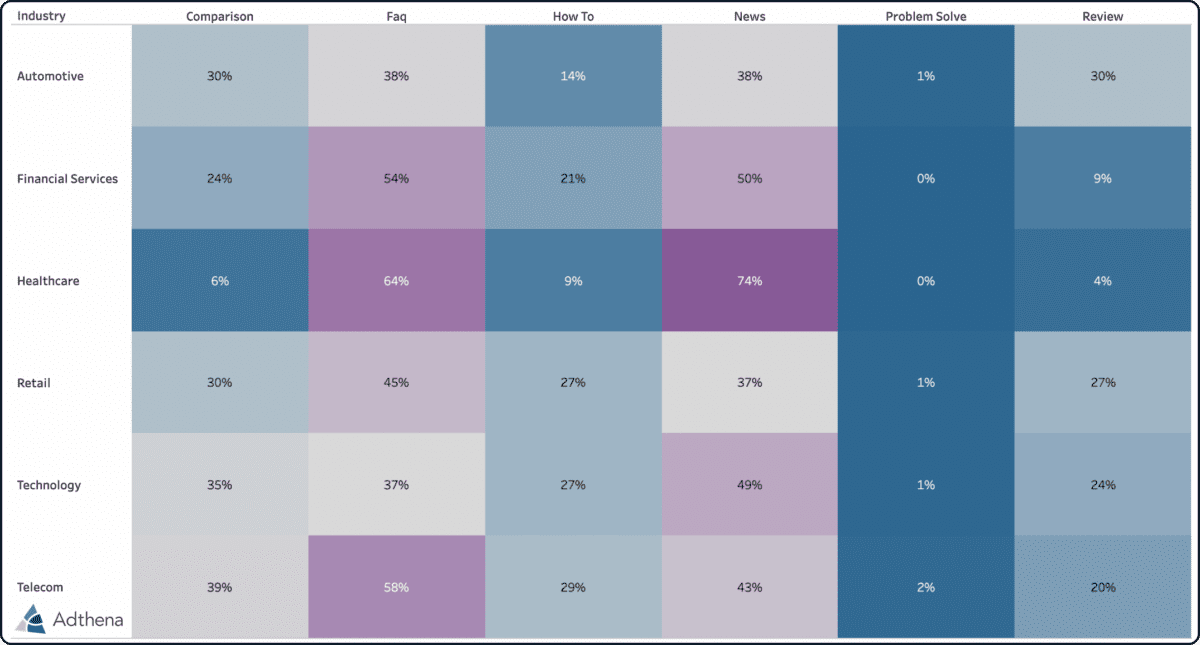
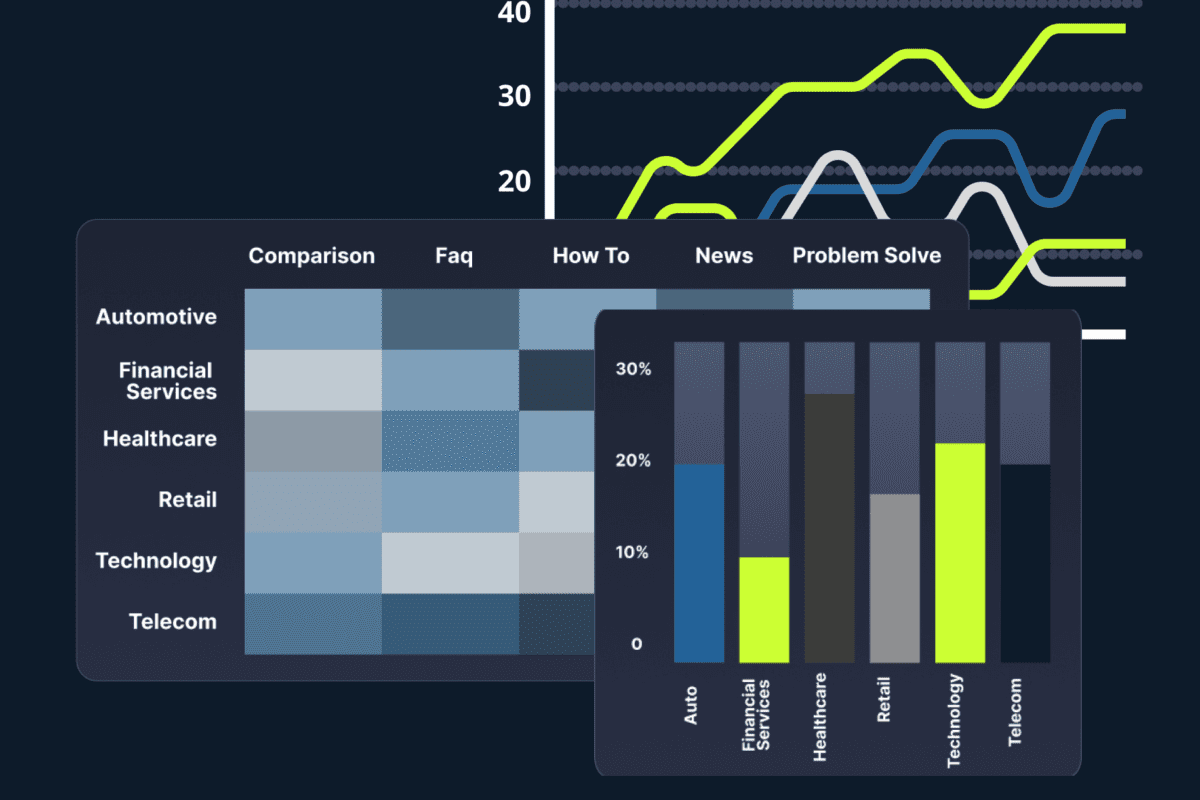
- The comparison conflict: In Telecom, Technology, and Retail, AIOs are dominated by comparison content. When Google provides a side by side analysis, it satisfies the research phase, potentially stopping the user from clicking your ad to investigate further.
- The informational buffer: Conversely, Healthcare (74% News) and Financial Services (54% FAQ) see informational themes. These act as intent filters, potentially protecting ad spend by satisfying low-intent users before they reach a paid link.
- The opportunity gap: Problem solving content remains virtually untouched at 0-2%. This is a safe harbour for advertisers: troubleshooting queries are still largely free from AI interference.
CPC trends: The premium for visibility
Tracking CPC fluctuations identifies where advertisers are paying a visibility tax to stay competitive.
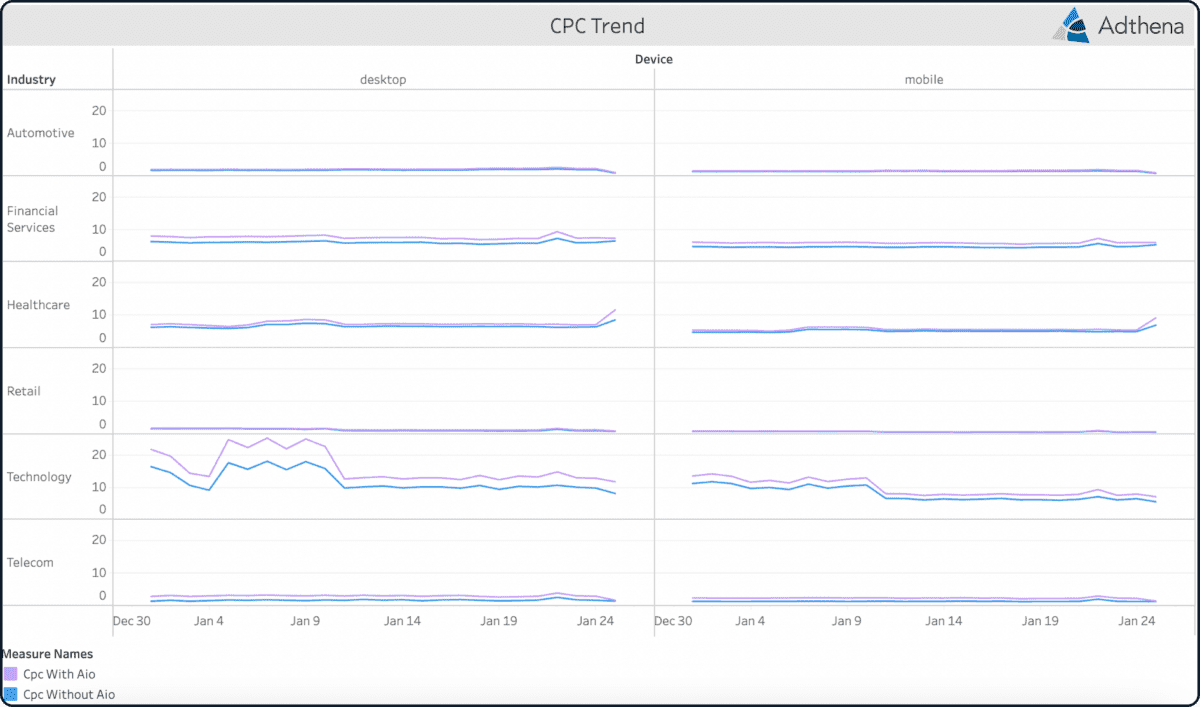
- Technology: Queries featuring an AIO consistently show higher CPCs than those without, a clear signal that AI Overview presence is pushing up the cost of visibility.
- Automotive & Retail: Automotive and retail show nearly identical cost levels regardless of AIO presence.
- Financial Services: CPC increases may look modest here, but in a sector where CPCs are already high, the hit to campaign profitability is harder than the numbers suggest.
Device splits expose desktop saturation
Segmenting by device reveals a striking divergence, but the picture is more nuanced than it first appears.
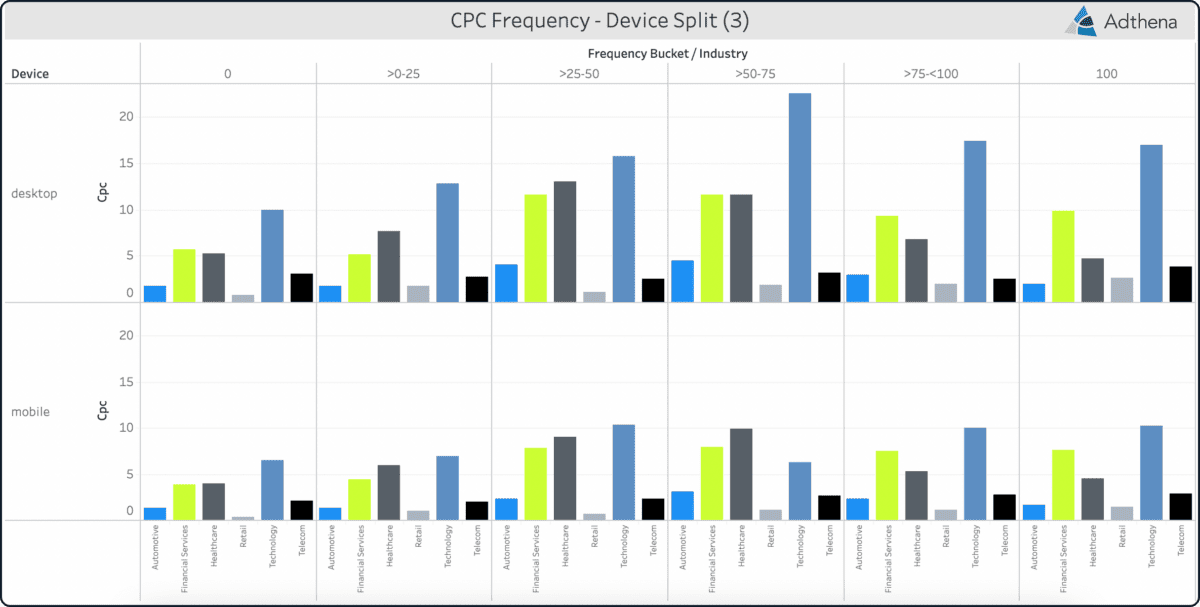
- Desktop dominance: Technology and Financial Services queries on desktop are heavily saturated by AIOs, meaning ads in these sectors almost always compete with an AIO.
- Mobile opportunity: Mobile AIO frequency is generally lower across almost all industries. But the limited screen real estate on mobile means that when an AIO does appear, it displaces ads more aggressively than on desktop, where multiple ads often remain visible below the summary.
CTR trends provide evidence of traffic erosion
Analyzing CTRs over time exposes the persistent performance gaps between influenced and standard search results.
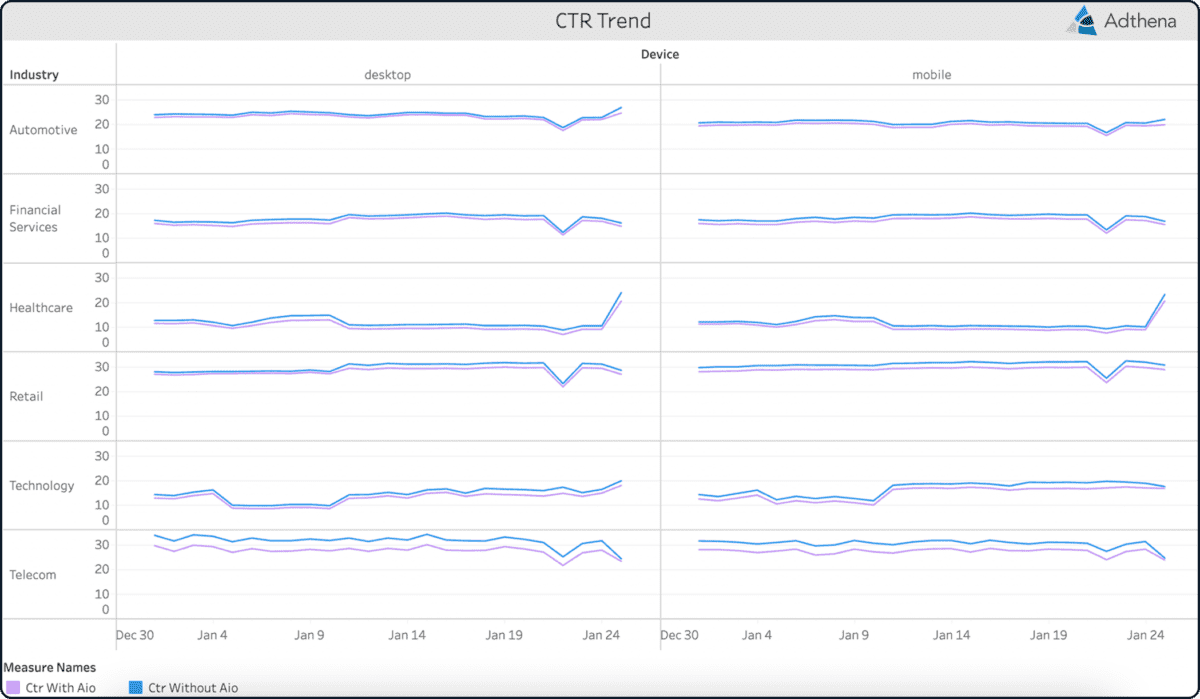
- Persistent gaps: Telecom and Technology show consistently lower CTRs when an AIO is present, representing a direct drain on your traffic pipeline.
- Consumer resilience: Financial services and retail show narrower gaps, suggesting users in these sectors still prioritize ads over AIOs.
- Late month volatility: Sudden spikes in healthcare illustrate how quickly performance shifts as Google iterates on its AI rollout.
Distribution data reveals the zero click reality
This final layer of data exposes the winner-takes-all scenario that average metrics often hide.
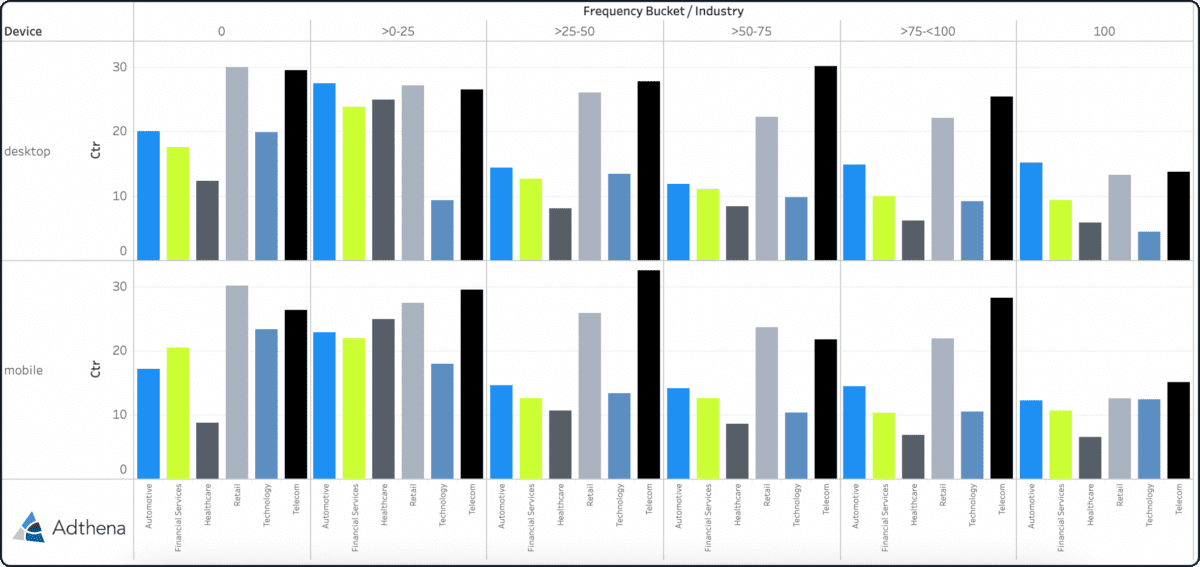
- The baseline gap: Without AIOs, CTR holds up well across industries – Retail in particular. Where AIOs are absent, CTR holds up well across industries. Where they’re frequent, it doesn’t always and the gap between the two tells the real story.
- High AIO frequency, low CTR: When AIOs appear on virtually every query, CTR hits its floor across all industries – Technology included. The higher the frequency, the less traffic ads reliably capture.
- Resilience in Automotive: Automotive shows a healthier spread across mid-range frequency buckets, suggesting users are more likely to bypass the summary to find verified brand information.
Gaining visibility with Adthena's AI Overview solution
Understanding AI Overview impact requires continuous, query-level intelligence. Adthena’s AI Overview solution indexes search results multiple times per hour, giving advertisers accurate visibility into:
- AIO frequency patterns by query, industry, and device
- Content themes and citation sources
- Performance metrics including impact on CPC and CTR
- Ad position vs AIO
With these insights, you’ll know exactly where AIOs are disrupting your revenue and what to do about it before your performance is impacted.
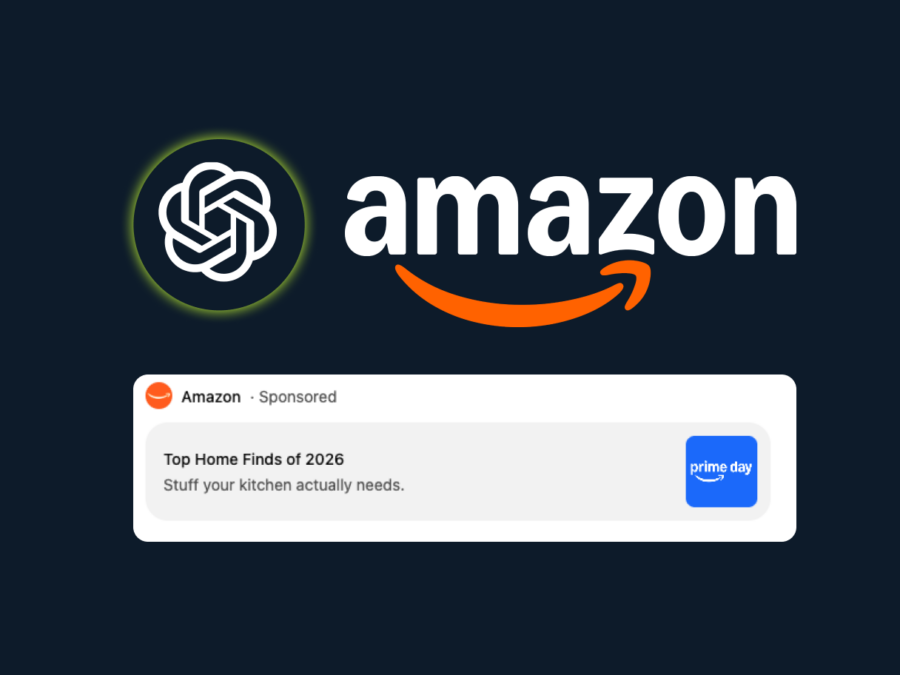
Coming soon: Adthena’s AIO solution will also include visibility into ads appearing within AIOs themselves, so you’ll have a complete picture of how your spend is performing across the entire SERP.
The SERP has changed. Are you keeping up?
Google’s AI Overviews aren’t going away, but their impact is neither universal nor inevitable. The advertisers who come out ahead won’t be the ones who spend more; they’ll be the ones who know exactly where AIOs fire, what content they surface, and how their audience responds. Precision wins now. Assumptions don’t.
Book a demo to see exactly how AI Overviews are impacting your campaigns.