The Adthena MCP is becoming the way search teams talk to their data

MCP is how AI agents get to live data. Here's what Adthena's looks like in practice.

The Adthena MCP is becoming the way search teams talk to their data

TL;DR

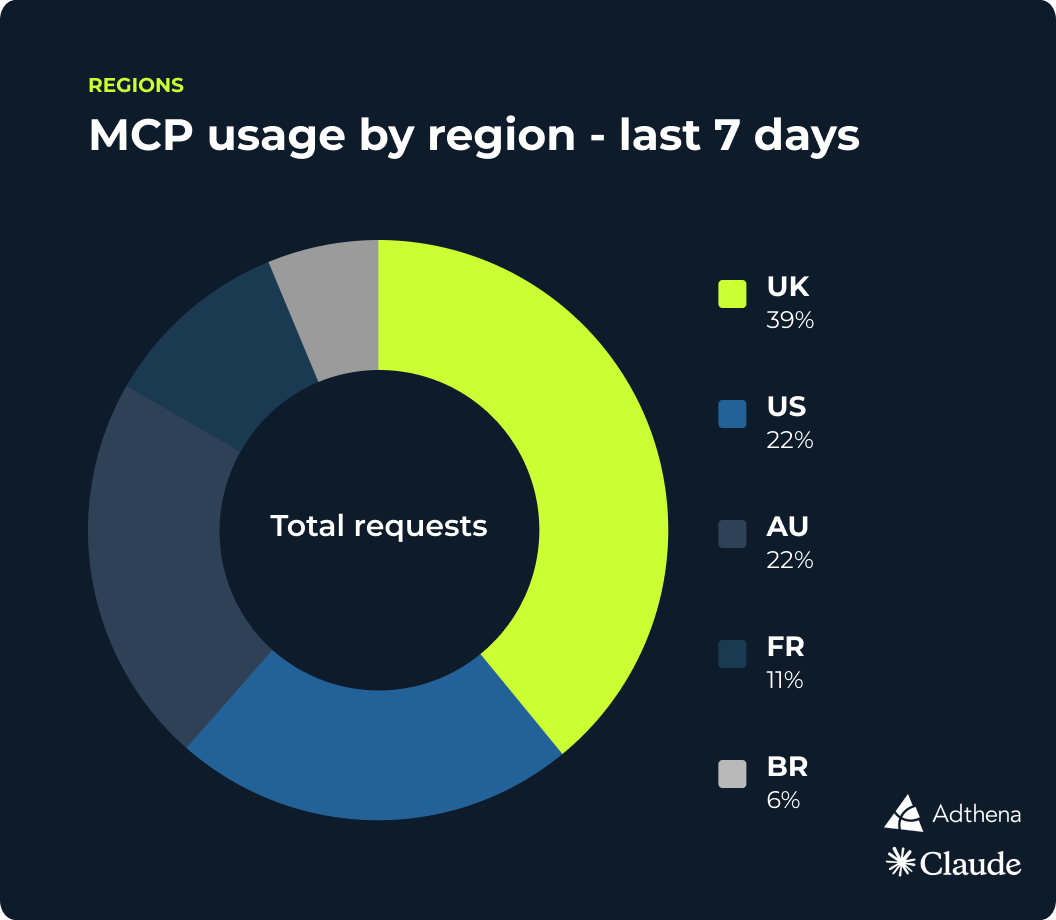
MCP is the protocol AI agents use to query live business data. Adthena supports it now, meaning PPC teams can ask questions about market share, competitor ad copy, search term gaps, brand protection, and AI Overview impact in plain English, through Claude or any MCP-compatible client. Since launching, usage has grown across five markets. The UK leads at 39% of requests, with the US and Australia both at 22%. Insurance and comparison platforms are the heaviest users by sector, followed by beauty and personal care and financial services. Connecting takes a few minutes via Streamable HTTP and OAuth.

Published by Joss Froggatt July 07, 2026

A few weeks ago, Adthena released the MCP connector.. Since then, teams across insurance, retail, financial services, and technology have been connecting their AI agents directly to live search intelligence data. The usage patterns are telling.

This post is about what MCP adoption actually looks like in practice, why the protocol is becoming the default standard for connecting AI agents to business data, and what search teams can do with it right now.

The shift that's already happening

Enterprise AI adoption has moved faster than most business tools have been able to respond to. Teams using Claude, ChatGPT, and Copilot for daily analysis work have a reasonable expectation: their business data should be as accessible as the AI tools they’re already running. For most search intelligence platforms, it hasn’t been.

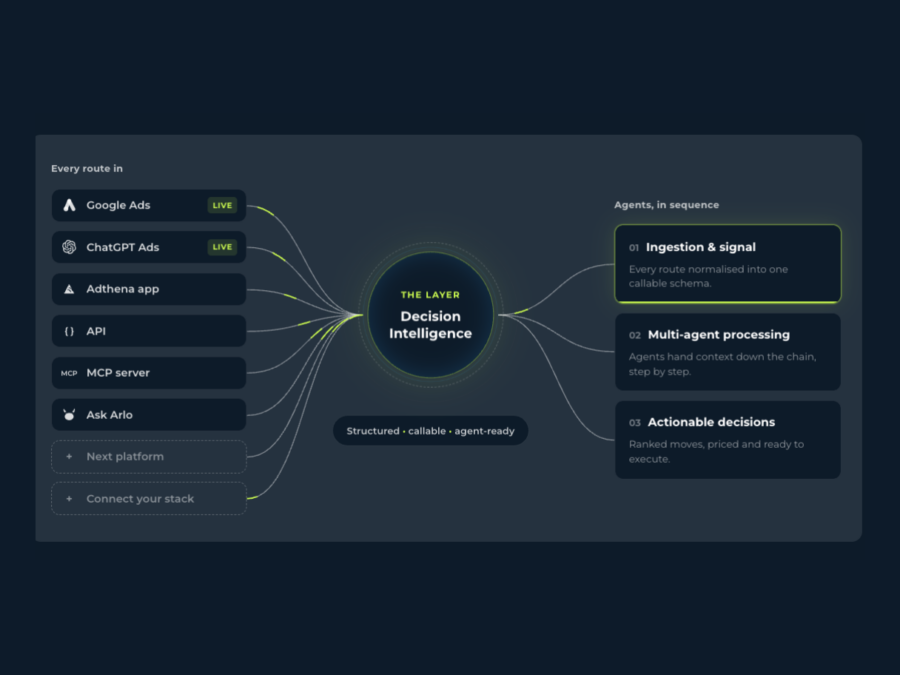
The Model Context Protocol (MCP) is the standard emerging to close that gap. It gives AI agents direct, authenticated access to live business data. No summary, no export, no scheduled report. A direct query against the real dataset, in plain English, in seconds.

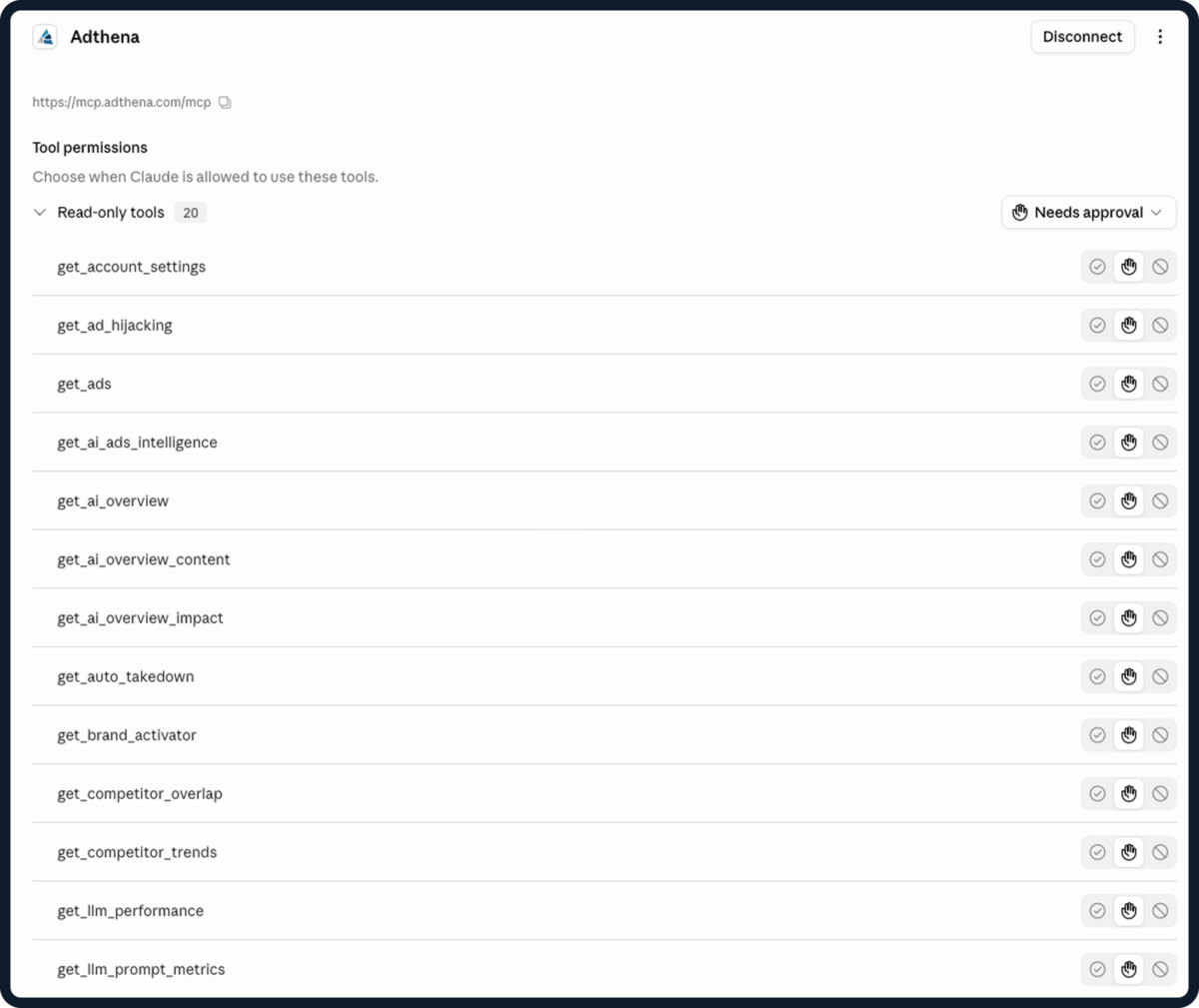
Adthena now supports it. A straightforward OAuth connection via a custom connector, no engineering required.

Adthena MCP connector

What teams are actually using it for

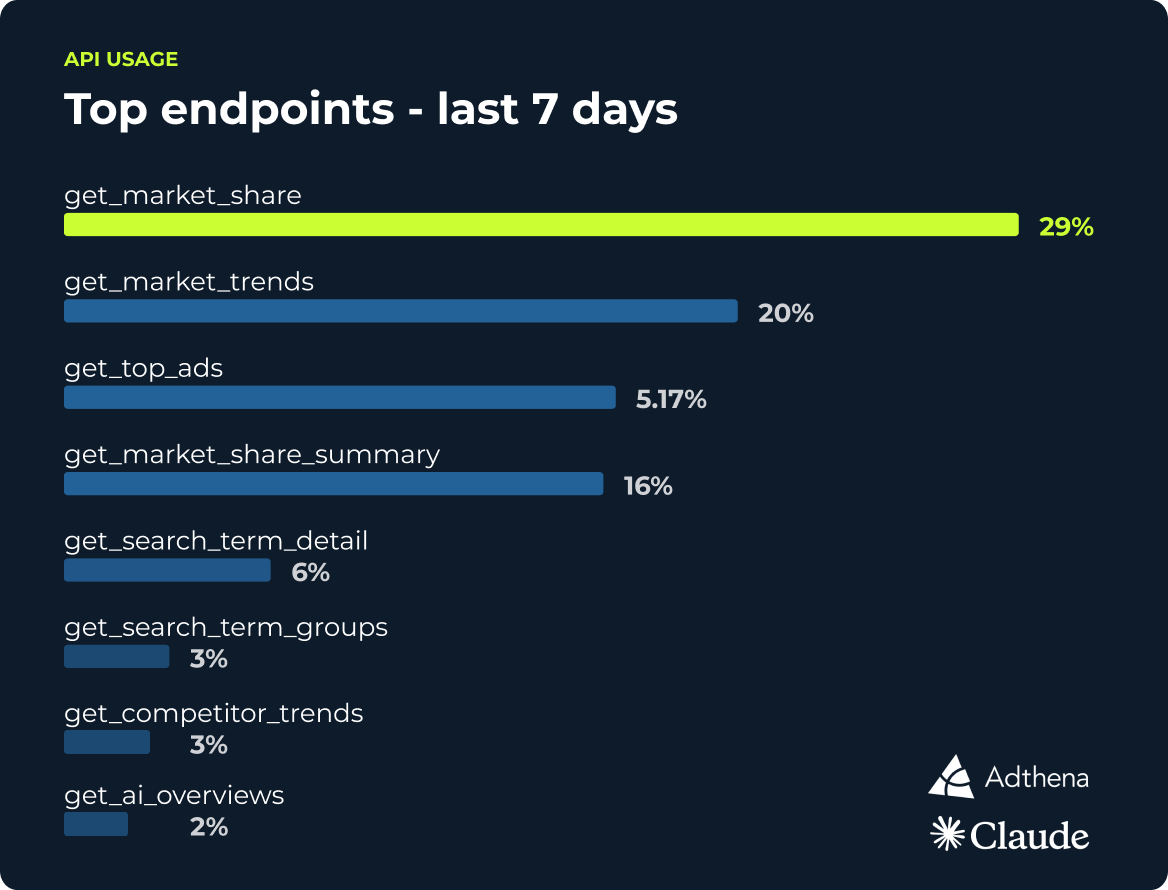
Since launching the MCP connector, usage has grown steadily across markets, with the UK, US, Australia, and Canada leading in request volume. The most requested resources tell you a lot about what search teams actually need answered quickly.

Market share and trends account for the majority of requests. get_market_share and get_market_trends are the two most-used tools by a significant margin. These are the questions that previously required logging in, navigating to the right report, setting date ranges, applying filters, and waiting. Now they take 30 seconds.

Top ad copy is the third most-used resource. Teams are pulling competitor ad creative on demand, asking what a competitor is running right now on a given search term, how messaging has shifted, where gaps in coverage exist.

Market share summary and search term detail round out the top five. Also notable: get_ai_overviews is already in the top eight, a signal that AI Overview impact on paid search is becoming a standing question for teams, not an occasional one.
MCP adoption blog showing top endpoints | Adthena
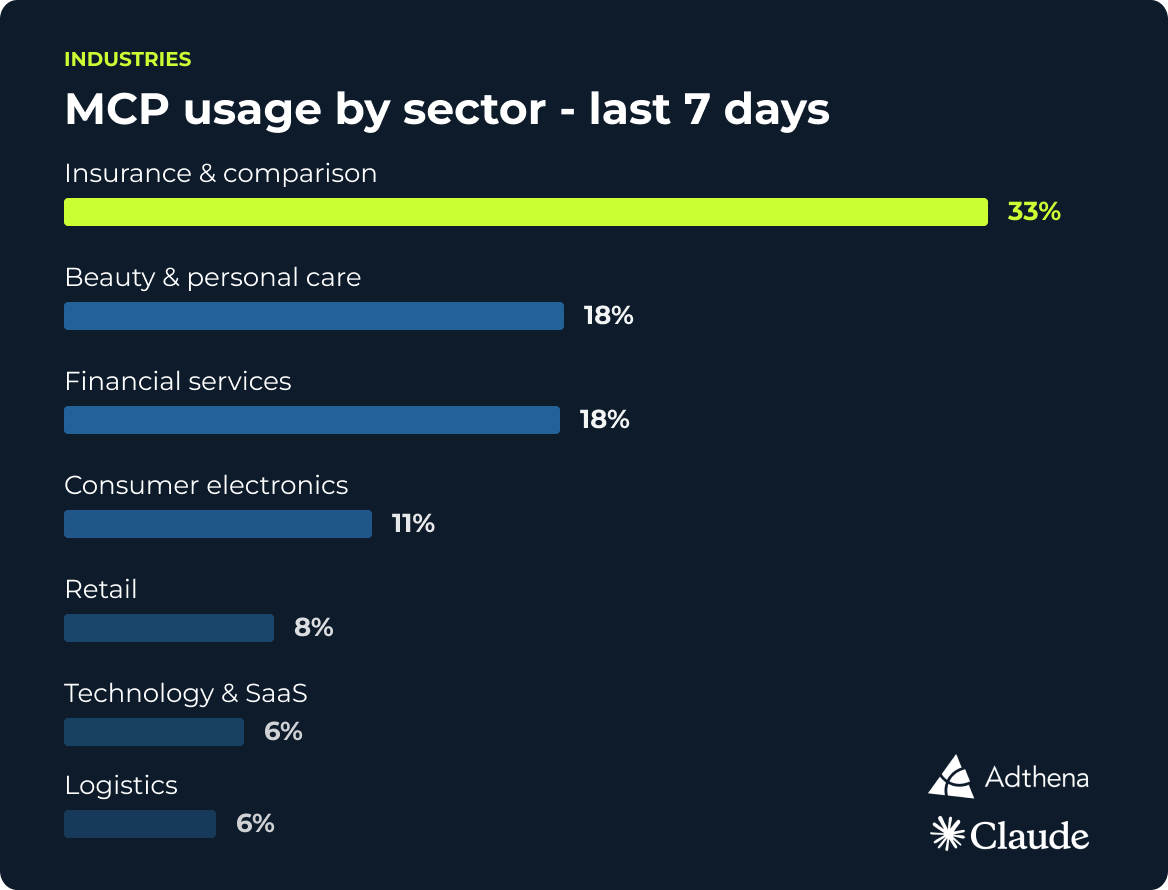
Among the accounts generating the highest request volumes, you see a cross-section of enterprise search. Insurance and comparison platforms lead by volume, followed by beauty and personal care, financial services, consumer electronics, and retail. The use cases differ but the underlying need is the same: faster access to competitive intelligence that’s currently locked inside a dashboard.
MCP adoption blog showing usage by sector | Adthena
The geographic spread is equally broad. The UK accounts for the largest share of usage at 39%, with the US and Australia close behind at 22% each. France and Brazil round out the top five markets, reflecting both the global reach of Adthena’s customer base and the cross-market nature of enterprise paid search.MCP adoption blog showing usage by region | Adthena
Where it fits in the data stack

Adthena MCP connects alongside the integrations search teams are already running: Google Ads, Search Console, GA4, and SA360. Those connectors tell you what’s happening inside your own account. Adthena tells you what’s happening in the whole market.

That’s the layer that’s been missing from agentic workflows: the external competitive view. With Adthena MCP in place, an AI agent can pull your own campaign data and your market context in a single session. No switching tools, no exporting, no waiting for a weekly report.

What you can ask

The Adthena MCP server gives AI agents access to 21 tools covering the full dataset, including capabilities teams have told us they spend the most time manually pulling.

Competitive market share: Who’s gaining share in your market and at what rate. Period-over-period comparisons without building a trend report.

Search term opportunities: High-traffic terms your competitors are bidding on where you have no presence. Quantified by click volume, so each gap is a number, not an observation.

Ad copy and competitor messaging: What ads competitors are running, how creative has shifted, where your messaging overlaps or diverges.

Brand protection: Who’s bidding on your brand terms, whether ad hijacking is occurring, which infringers to prioritize for takedown.

AI Overview impact: How often Google’s AI-generated answers appear across your search terms, which domains are cited, and how CTR and CPC are being affected. This is a question becoming more urgent as AI Overviews expand.

The marketers winning right now are the ones who’ve figured out how to bring their own data, their partner data, and their market intelligence together instantly. That used to mean engineering work and scheduled exports. MCP lets us meet teams where they execute, bringing Adthena’s search intelligence directly into the AI workflows they’re already using to run their business.

Ashley Fletcher
Adthena
CMO | VP People

How to connect

If you’re an Adthena customer with API access enabled, connecting takes a few minutes:

  1. Any MCP client that supports Streamable HTTP transport and OAuth can connect directly:
  2. Server URL: https://mcp.adthena.com/mcp
  3. Transport: Streamable HTTP
  4. Authentication: OAuth 2.0 (the server handles the flow automatically)

On Team or Enterprise plans, an organization owner needs to add the connector at the org level first under Organization settings > Connectors before individual members can use it. Full setup instructions, Claude Code configuration, and troubleshooting are in the Adthena MCP documentation.

Adthena MCP is available now. Read our original announcement post for more background, or head straight to the setup guide to get connected.

Related content