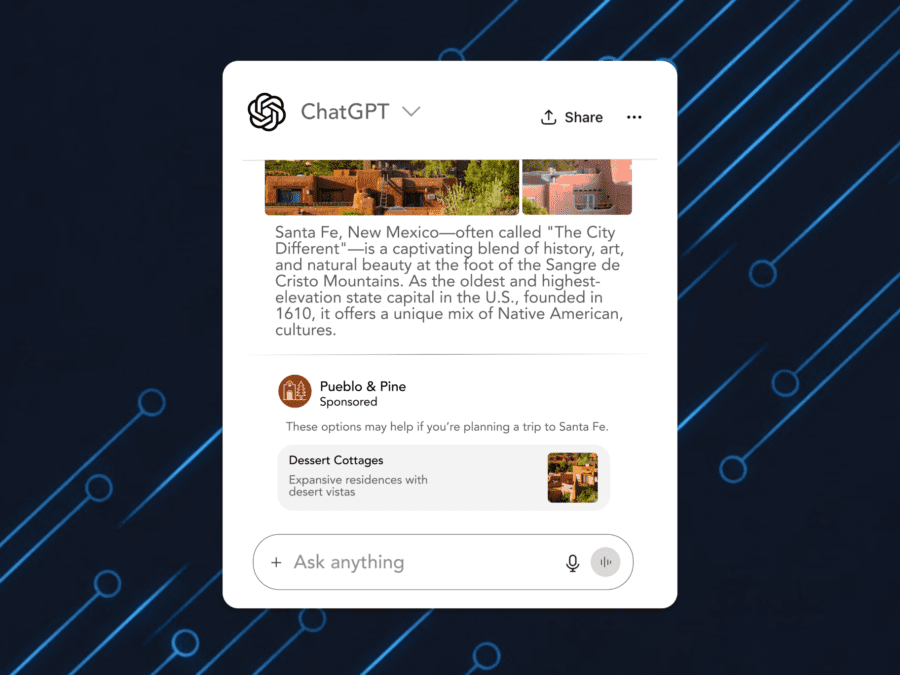
OpenAI recently outlined its approach to introducing advertising in ChatGPT, marking a significant shift in how one of the world’s most popular AI tools will be monetised. The company plans to begin testing ads in the free and low-cost ChatGPT Go tiers in the United States, with ads clearly separated from core responses, labelled as sponsored, and designed not to influence the chatbot’s answers. OpenAI emphasises privacy, user control over personalisation, and maintaining trust as it expands access through advertising while keeping higher-tier subscriptions ad-free.
The Adthena team are now dedicating resources to react to this change, so whilst we expect competition to be high in this new ecosystem we’ll be providing our enterprise advertisers visibility from this platform’s first few days, weeks and months.
Having examined the release notes, I’ve been hypothesizing about the potential mechanics of this new ad platform. A closer look reveals more clues than initially apparent. This post will explore examples across both the Retail and Travel sectors, outlining immediate, essential actions for advertisers to take in preparation.
Ads deep dive 1: Retail & FMCG
The original prompt:
Simple but authentic mexican dish ideas for a dinner party
The Ads would sit beneath the prompt result
Ad observations:
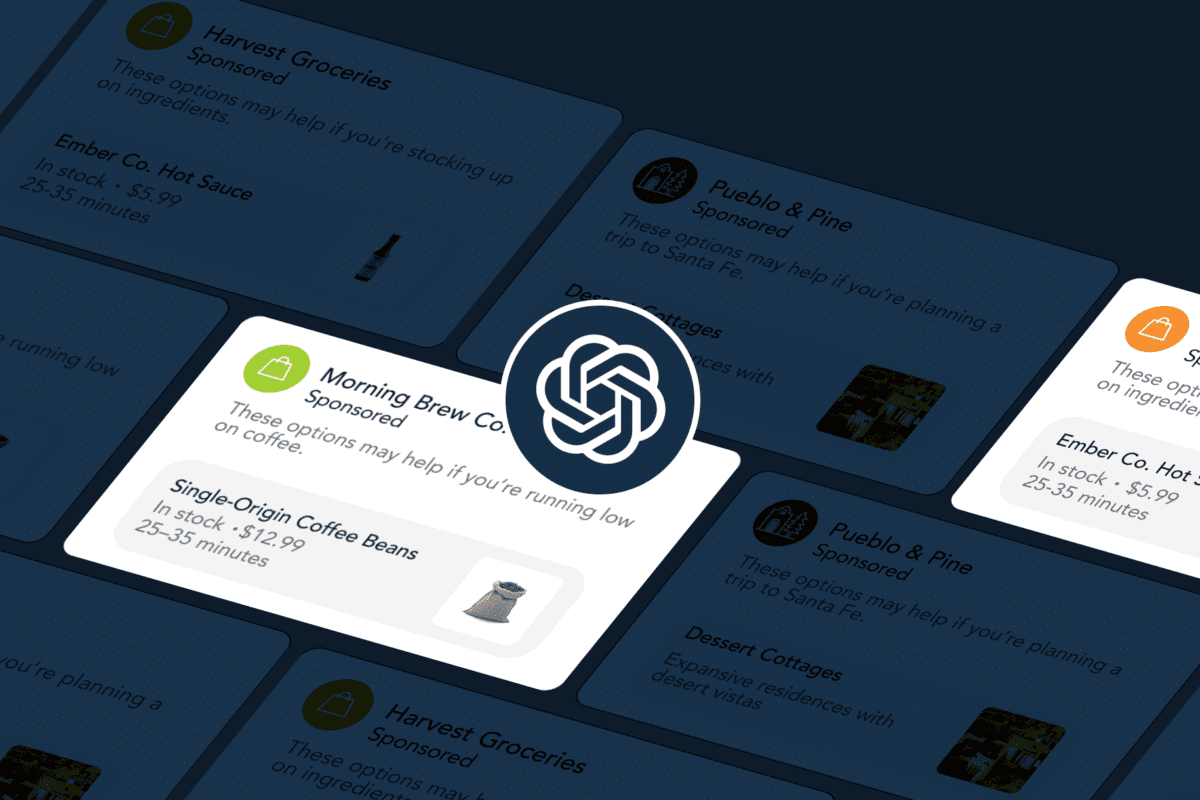
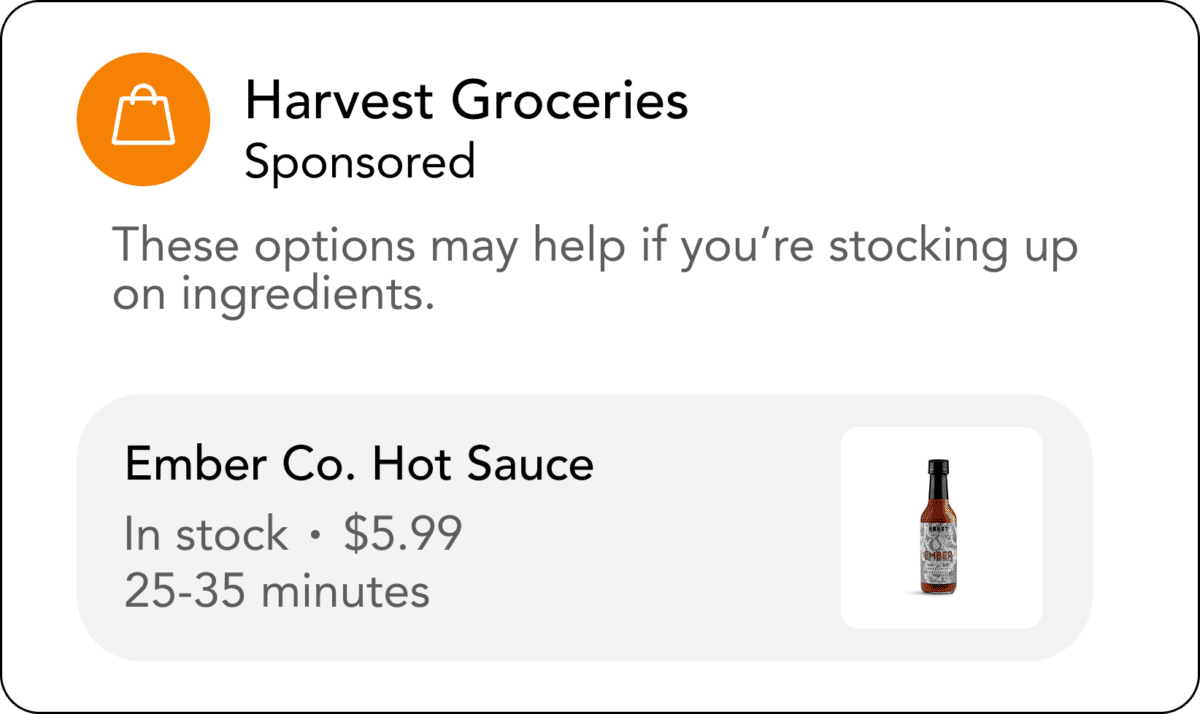
The triggering factors in this prompt example are linked to ingredient items. Extrapolating this theory suggests that future examples could include: healthcare inquiries leading to healthcare products, or questions about fixing a leaking tap resulting in DIY product recommendations, and so forth.
Further insights from shared examples:
- The “Sponsored” label displays the brand name, in this instance, Harvest Groceries.
- The headlines in the shared examples are 13 and 17 characters long, respectively. This raises the question of whether a 20-character limit may be the maximum, compared to the 30-character limit for Google Ads text ads.
- The icon is a shopping bag. While this could potentially be the brand logo, the second example leads us to believe it may broadly signify defined categories.
- The product carousel features the Product Title, Stock status, Price, and Delivery Time.
- The local aspect is emphasised, notably by facilitating same-day delivery.
What advertising elements do you need to ensure this type of advertising would work in ChatGPT ads Retail / FMCG?
Based on how shopping products are surfaced in search and AI systems, ChatGPT ads functionality would likely need the following core elements for advertisers:
- Product and service feeds to supply structured information such as product names, descriptions, pricing, images, and landing pages that ads can be matched to user prompts.
- Real-time availability signals so ads only promote products or services that are in stock or currently bookable, reducing poor user experiences.
- Location and proximity targeting to surface ads that are relevant to a user’s physical location, especially for local inventory, in-store pickup, or same-day fulfilment.
- Delivery and fulfilment attributes including shipping speed, coverage, and cost, allowing ChatGPT to recommend options that best fit urgency and convenience.
- Intent and prompt matching logic to determine when an ad is appropriate within a conversation, ensuring ads appear at relevant moments without disrupting the user experience.
Ads deep dive 2: Travel / Vacations
The original prompt:
Similar to the TV advertisements observed in 2025, ChatGPT often uses vacation-related examples. In this instance, the original, hidden prompt was about planning a trip to Santa Fe, resulting in a complete itinerary for the user on mobile.
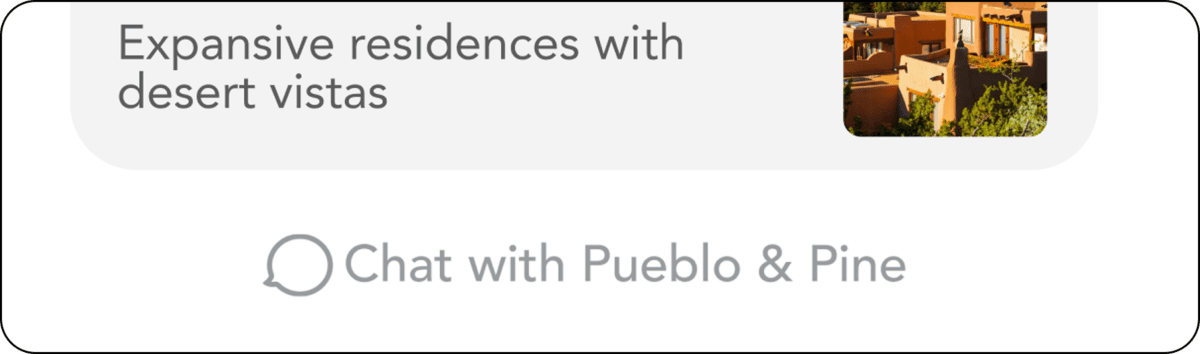
The Ads would sit beneath the prompt result, like Retail example, what’s interesting is what this could do to CTR on these key engagement buttons:

Ad observations:
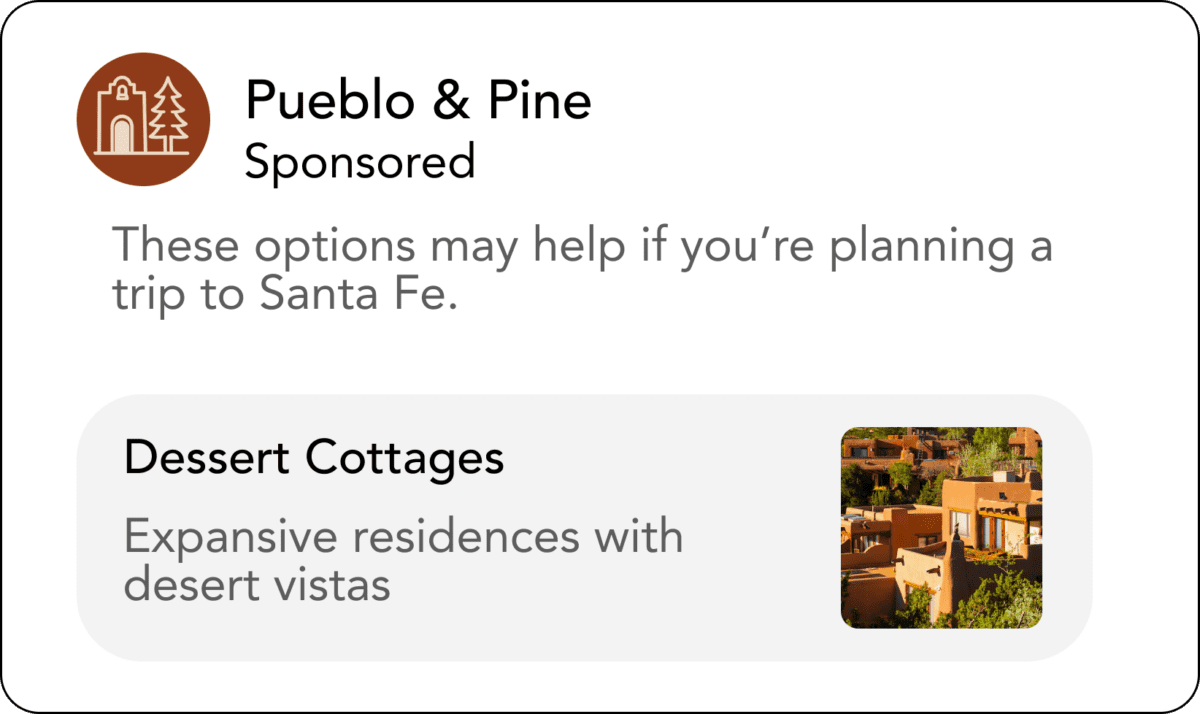
Triggering factors for this prompt appear to be a set of location-based options. Similar to the retail vertical, a new carousel format will be introduced.
Further insights from shared examples:
- The sponsored label displays the brand name, illustrated by “Pueblo & Pine” in the provided example.
- The headlines observed in the shared examples are 13 and 17 characters in length, respectively. A maximum character limit of 20 may be a possibility, in contrast to the 30-character limit for Google Ads text ads.
- The icon is represented by a house, suggesting that other clearly defined vertical segments will utilize this standardized visual style.
- The product carousel contains fewer elements compared to Example 1: Title, description, and a thumbnail image.
- A key difference in the Call to Action (CTA) versus the retail format is the user’s ability to engage directly with the vendor via a chat function. This represents a robust CTA that maintains the conversational flow within the platform.
Using the same methodology, a comparison site such as Hotels.com or Trivago would need to provide ChatGPT with the following core elements to enable hotel ads to appear effectively:
- Structured accommodation feeds containing hotel names, locations, room types, pricing, images, amenities, and booking URLs so listings can be matched to travel-related prompts.
- Real-time availability and pricing data to ensure only hotels with rooms available for the selected dates and party size are promoted.
- Location and proximity information including city, neighbourhood, and distance to key landmarks, enabling relevance for destination and “near me” queries.
- Stay and fulfilment attributes such as check-in and check-out dates, cancellation policies, payment options, and included extras (for example breakfast or parking).
- Ability to be available for chat function, likely easier for Online Travel Agencies (OTAs) but a harder problem to solve from smaller business owners.
Summary
Advertisers preparing for ChatGPT ads should prioritise data quality, intent understanding, and early experimentation. With OpenAI’s ads clearly labelled and separate from core responses, relevance and timing matter more than scale initially. Brands must provide structured product or service feeds, real-time availability, and prompt relevance to connect with user intents mid-conversation.
To succeed, you need detailed insights into where ads appear, who appears alongside you, and what prompt triggers engagement. That’s where Adthena search intelligence comes in – analyzing ad presence across prompts, benchmarking competitors, and revealing the link between prompt triggers and user engagement. This visibility is essential for shaping creative, targeting, and testing strategies as this new AI-driven ad ecosystem unfolds.
Join the waitlist: Uncover your ChatGPT ads landscape
Don’t wait for the landscape to settle. Join the waitlist to be among the first to understand how ChatGPT ads appear, what triggers them, and how your competitors show up.
Join the waitlist