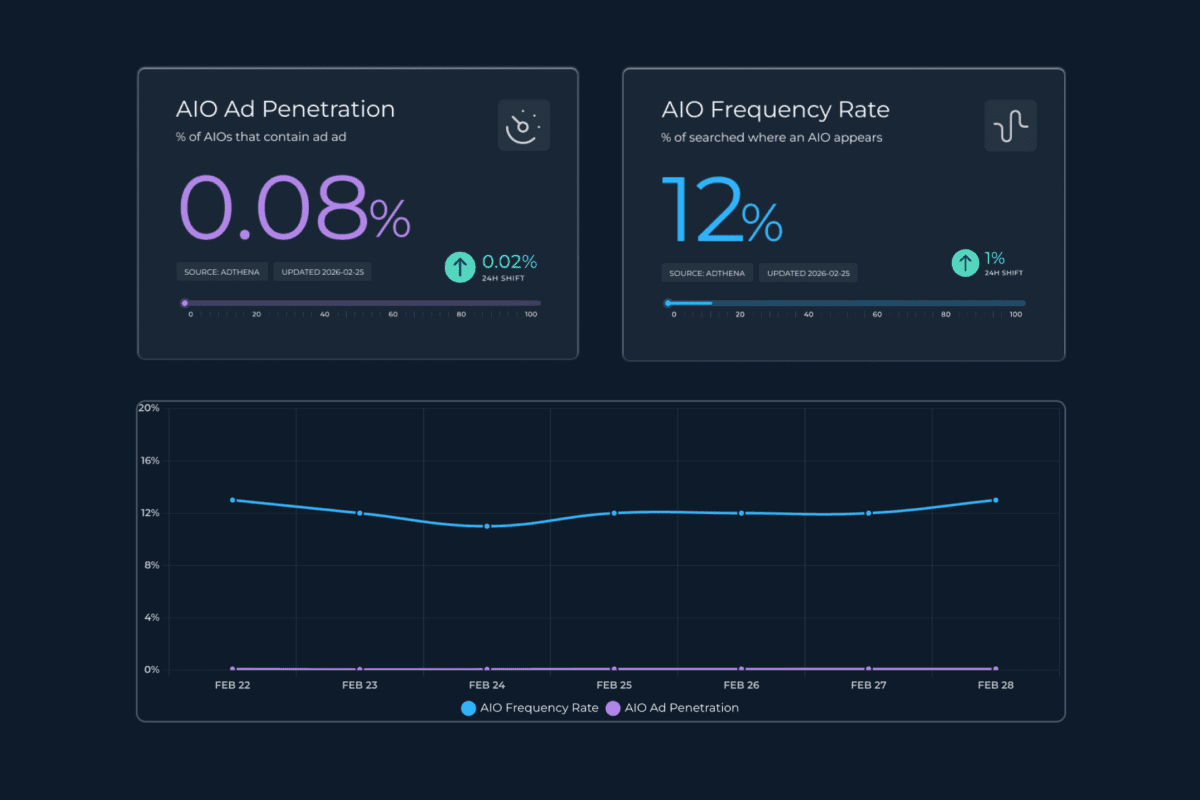
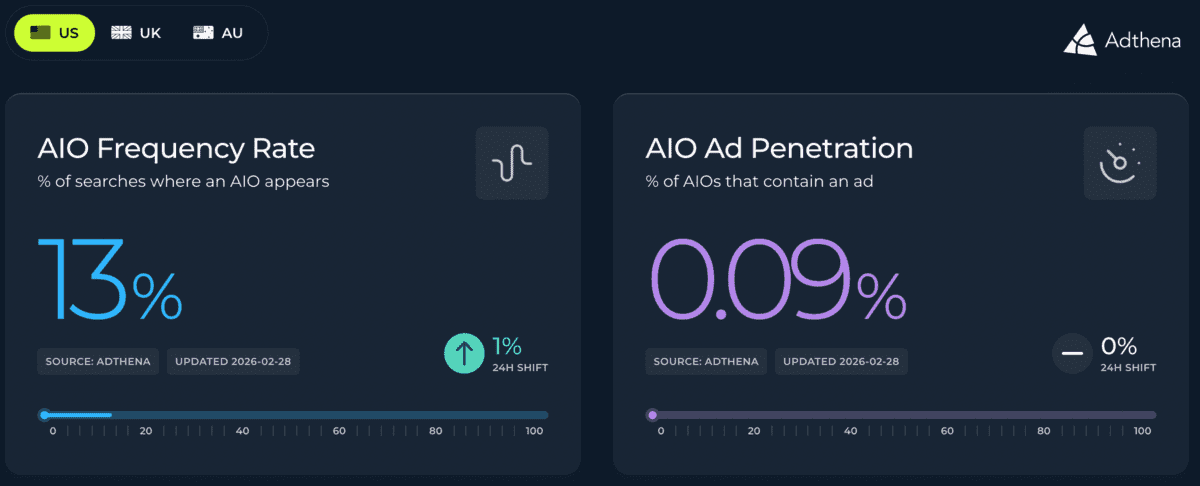
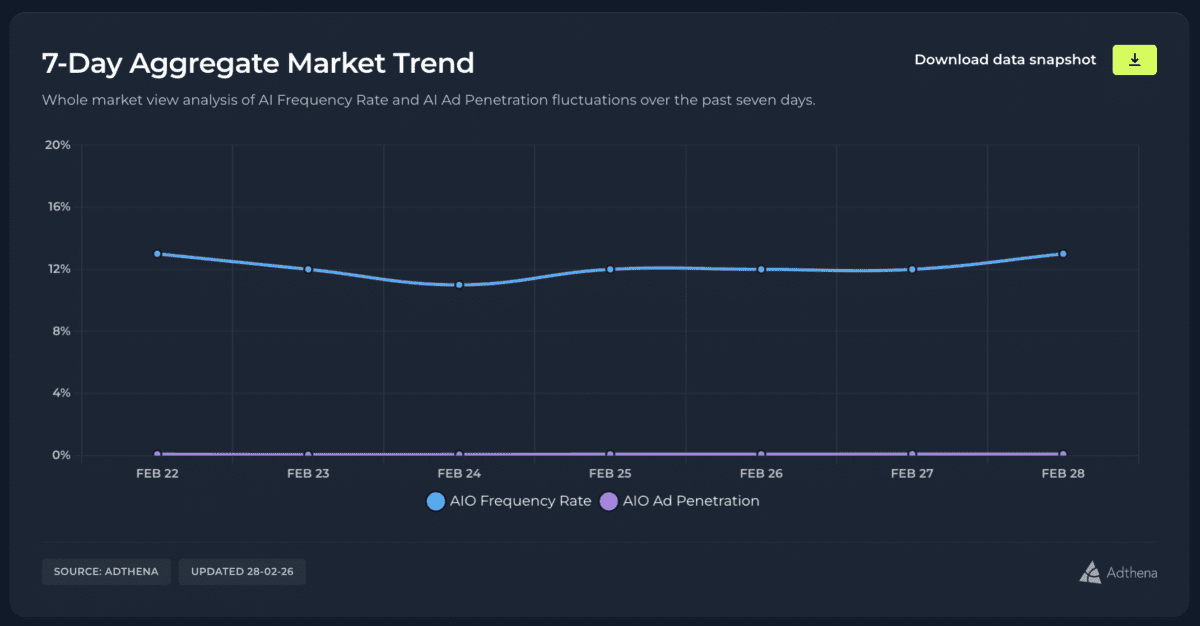
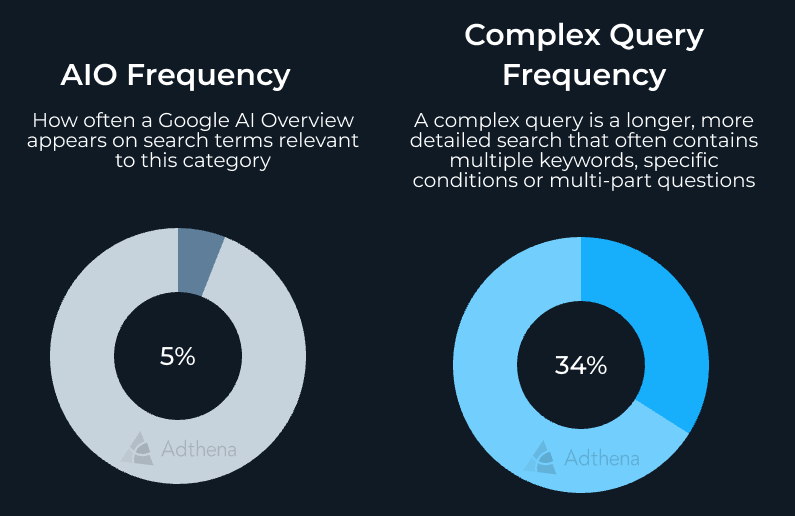
Data is only as good as the decisions it drives. Here is how to put the Index to work:
1. Contextualize your reporting: Use the Index to explain volatility to stakeholders. Instead of panic, offer clarity:
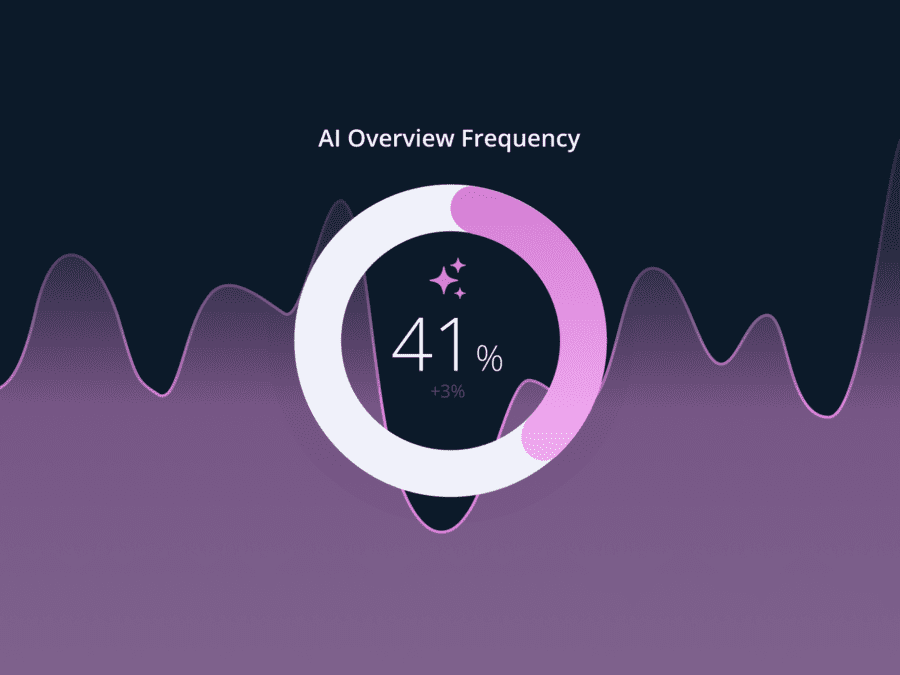
“While our non-branded organic traffic for ‘Insurance’ keywords dropped by 12% this month, the AIO Index shows a 15% increase in AI presence for the Finance sector. This confirms that Google is answering more queries directly in the SERP, shifting our value from ‘clicks’ to ‘brand impressions’ within the AI summary.”
2. Identify industry threats: Layer in Market Share reports to see if a specific competitor is aggressively capturing AIO citations in your vertical.
“In our latest Market Share report, we see a challenger brand now appearing in 40% of AIO citations for ‘Sustainable Footwear,’ despite them having lower traditional organic rankings. They are winning by using structured FAQ schemas that Google’s LLM prefers.”
3. Audit your domain: Use our homepage search bar to verify if your site is appearing in AI results or if you’re facing a visibility gap that needs immediate attention.
“After running our domain through the homepage search bar, we found a Citation Gap: we rank #1 for ‘Enterprise CRM,’ but we are completely absent from the AI Overview. This indicates our content is too dense for the LLM to summarize, and we need to add a concise TL;DR summary block to that page.”