AI Search is changing: Is your brand visible in ChatGPT and Perplexity?
As platforms like ChatGPT and Perplexity become default search engines for millions, digital marketers face a critical challenge: AI Search visibility.
If your brand isn’t showing up in LLM generated responses, you could be missing out on engagement that drives performance. How visible are you in AI search, and who’s getting the exposure instead?
The AI search landscape is undergoing a seismic shift. As Large Language Models (LLMs) like ChatGPT, Perplexity, and Google’s AI Overviews redefine how people find and consume information, advertisers are facing a new challenge: how can you remain visible?
Rather than relying on familiar paid or organic search results, users are increasingly turning to generative AI platforms that surface content in new ways. Brand visibility is being reshaped by models that decide which sources to include in their responses and which to leave out.
This is more than a shift in format. It’s a fundamental change in how users interact with your brand online. And yet, most marketers still lack the visibility to understand how these changes are affecting their campaigns.
So, the real question is:
Do you know how visible your brand is in these generative AI search results and which competitors are getting the exposure instead?
What are LLMs and why do they matter in search?
LLMs like ChatGPT and Perplexity are trained on vast datasets to generate human-like responses to complex queries. What began as tools for conversation and content creation are now being used as search engines in their own right. They recommend products, cite sources, answer questions, and steer users towards specific websites or domains.
Critically, these AI engines are influencing user behaviour in ways that sit outside traditional paid and organic frameworks. As Google introduces its own AI Overviews into live search, this new experience is quickly becoming part of the mainstream.
If LLMs are shaping how and where users find information, then visibility within these models matters, even if it doesn’t show up in your usual analytics.
For digital advertisers, that raises tough questions:
Are your paid campaigns underperforming because you’re not visible in AI-generated results?
Are competitors getting recommended, even when you outbid them?
Are traditional metrics like CTR and CPC losing context in a new search ecosystem?
The blind spot holding marketers back
Right now, PPC managers and digital teams are being asked to respond to changing performance patterns with little insight into what’s really happening. But if you have had almost zero visibility into how LLMs like ChatGPT and Perplexity influence brand presence, then you can’t track where your brand appears (or doesn’t), optimize your strategy, defend budget, or explain shifts in performance.
There’s frustration across the board:
A lack of clarity around why certain brands are getting visibility in generative answers
Unexplained performance drops in branded campaigns
Pressure from leadership to account for changing ROI without any supporting data
This lack of visibility creates risk. But it also creates an opportunity, if you can see what others can’t.
Introducing the GenAI Landscape Report
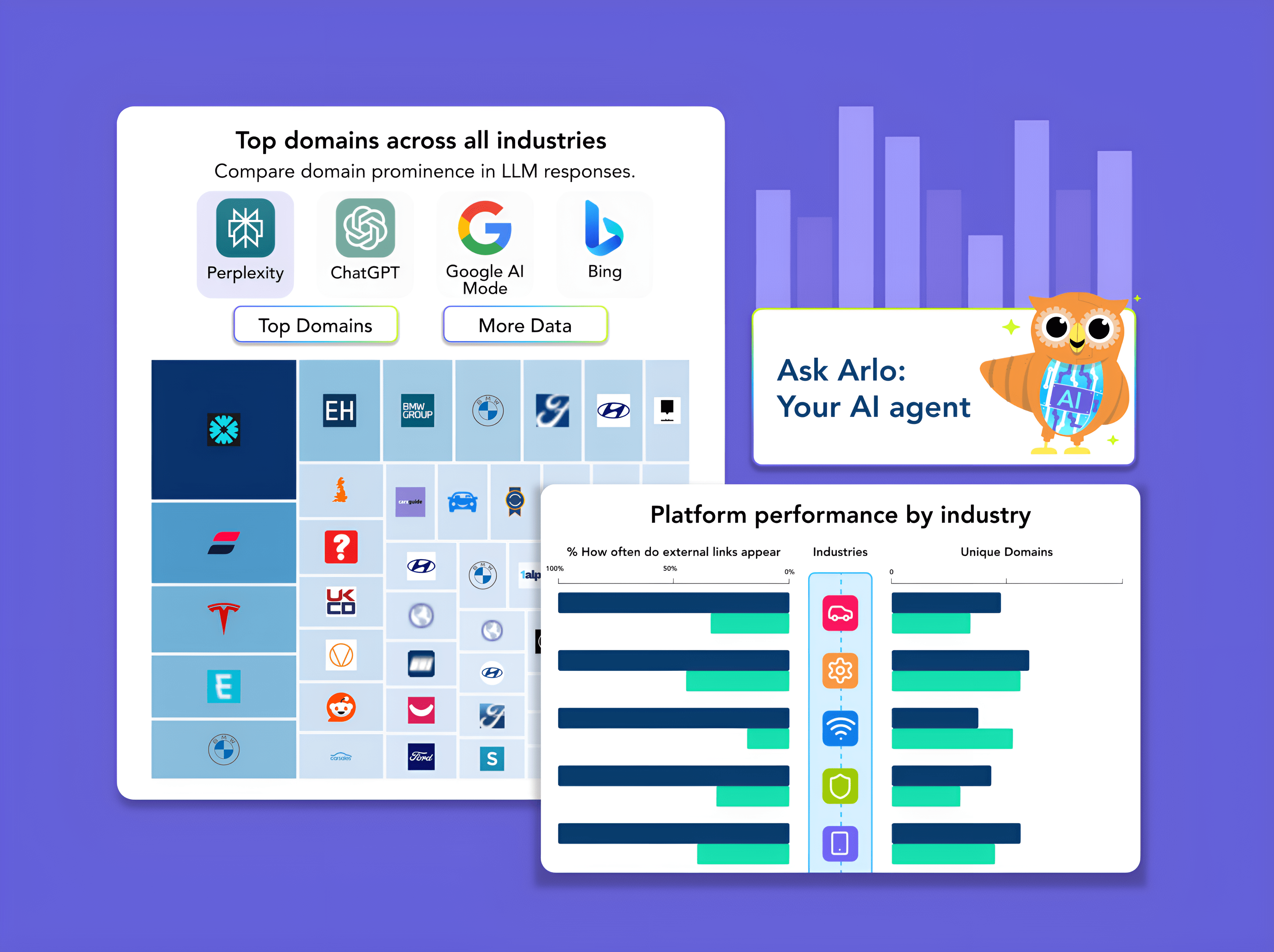
Adthena’s new GenAI Landscape is designed to address this exact challenge. It provides marketers with the visibility they need to understand how generative AI platforms are presenting brands, across sectors, domains, and platforms.
The dashboard reveals where your brand stands in LLM-generated results, shows which competitors are gaining exposure, and uncovers the domains most frequently cited by AI engines like ChatGPT and Perplexity.
This is about reclaiming visibility in a space where traditional tools fall short.
What data will you find in the report?
The GenAI Landscape doesn’t just surface raw numbers; it provides daily updates into context, comparisons, and clear insights. Here is a snap shot of the data it provides:
8,200+ queries analyzed across ChatGPT and Perplexity
1.7 million external links discovered
3,800+ unique domains tracked
62.2% of all LLM responses included external references
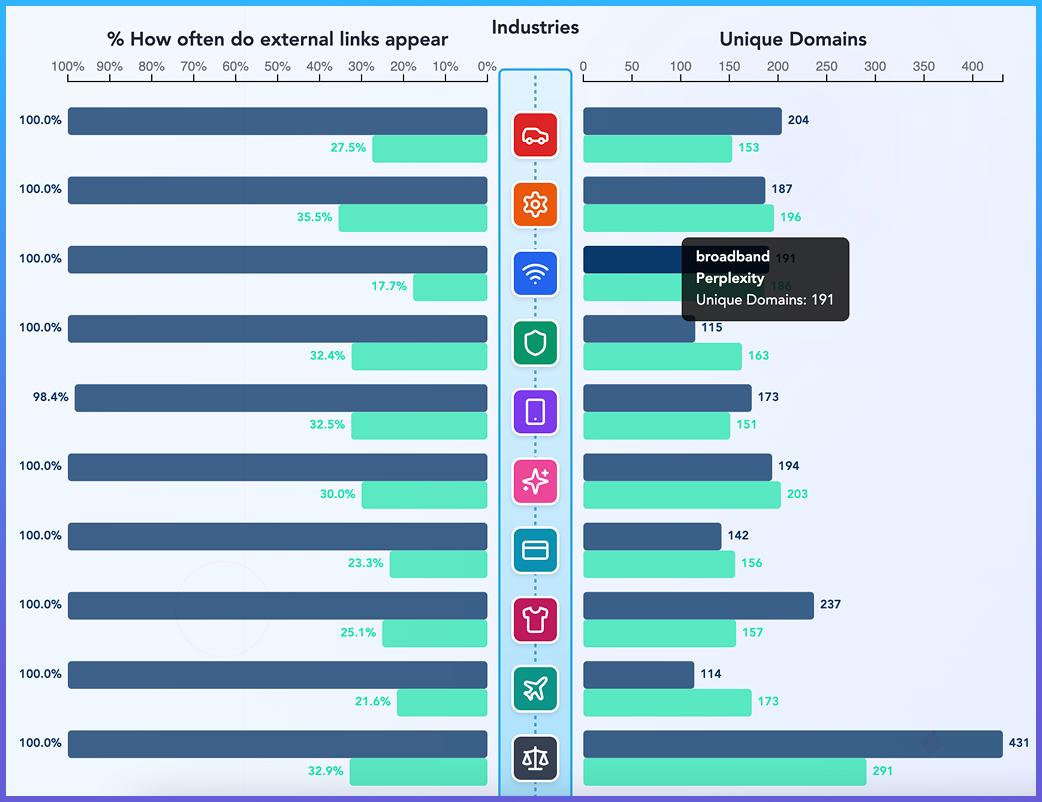
Platform performance by industry
View a side by side comparison of how often different industries are represented in LLM responses. See which sectors are most commonly cited across platforms, and where visibility is underdeveloped.
For example, Perplexity includes external links in nearly all responses (99.8%), while ChatGPT does so in just 25% of cases. This has major implications for how users in different verticals discover content.
Industry analysis
See how often external links appear in responses across 14 key sectors. Understand which industries benefit most from AI-generated exposure, and where your sector sits in the mix.
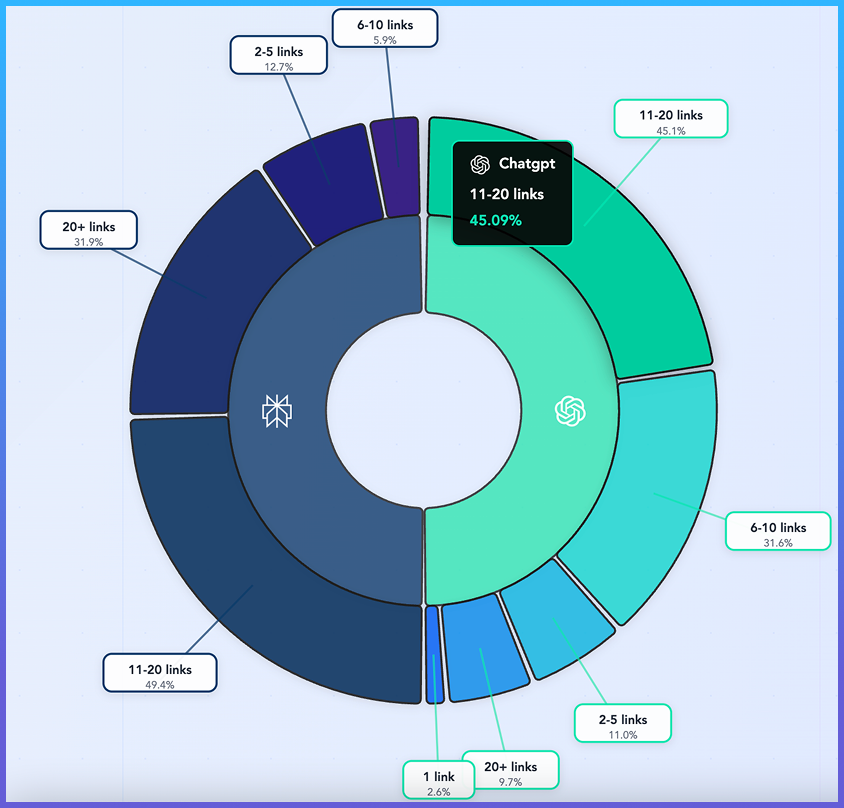
External link depth
The dashboard also shows how many links are typically included per LLM response, whether it’s just two or more than twenty. This insight helps marketers understand the competitive landscape within each individual query.
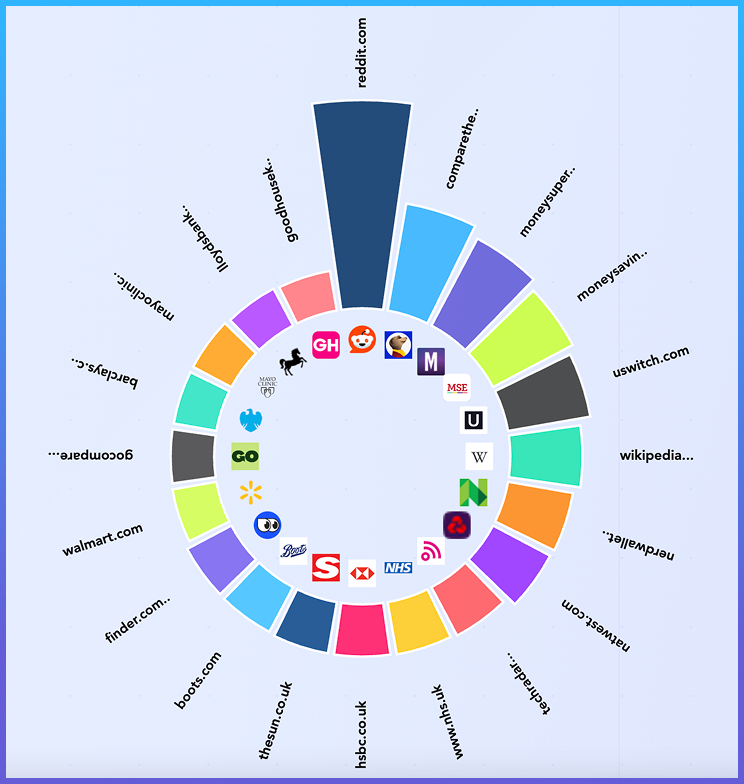
Most visible domains
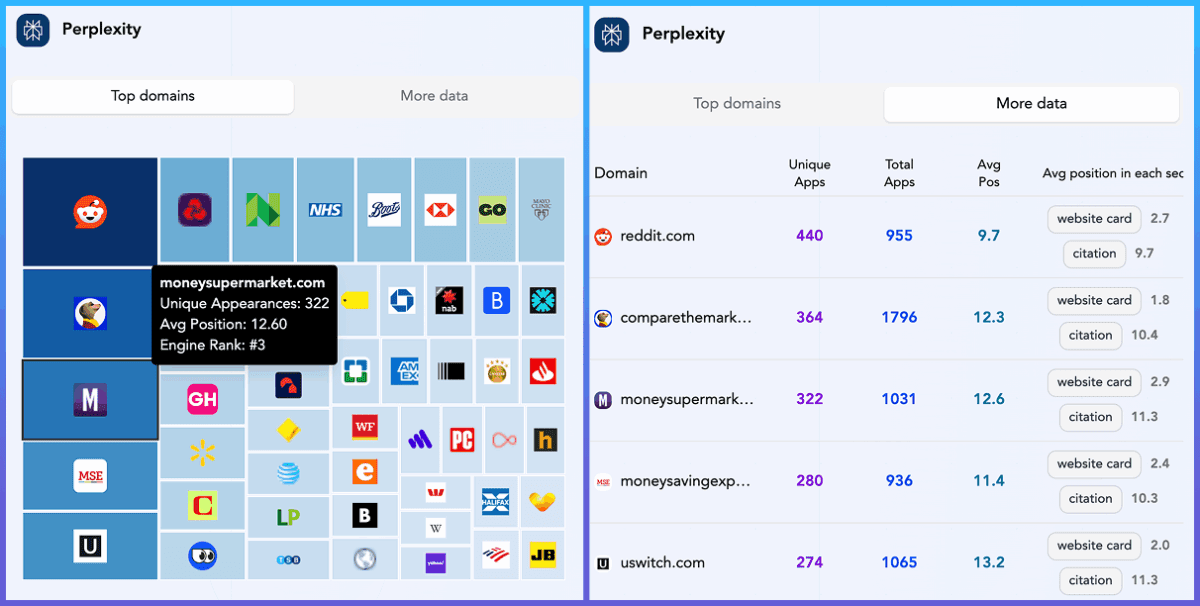
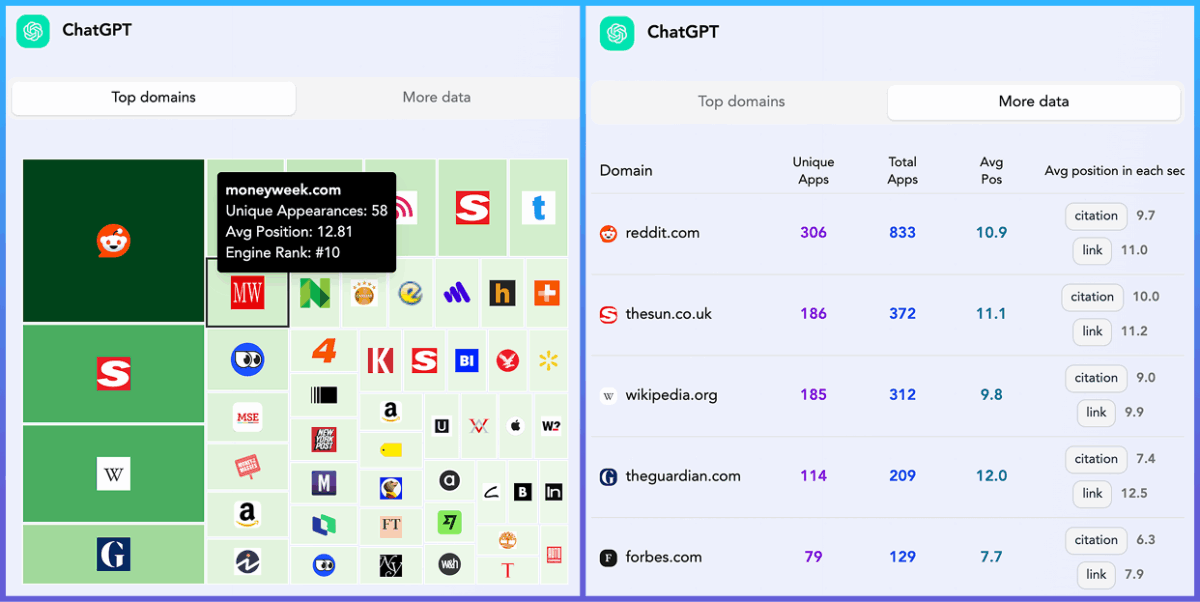
Explore the most frequently cited domains across both ChatGPT and Perplexity. Domains such as reddit.com, comparethemarket.com, wikipedia.org, and others regularly surface. But visibility isn’t guaranteed. Seeing where your brand ranks compared to these leaders is essential.
Domain-level performance
Search and analyze specific domains to see:
Visibility rank
Cross-platform presence
Engine-specific performance scores
This level of analysis helps teams track shifts, justify performance changes, and discover new optimization opportunities.
What can you do right now?
Even before accessing the GenAI Landscape, there are practical steps you can take to future proof your search strategy:
1. Optimize for AI
Ensure your content is structured, informative, and authoritative. LLMs tend to cite content that is well-sourced, clearly written, and aligned with real user queries. Collaborate with your SEO and content teams to prioritize educational resources that meet these standards.
2. Start tracking AI traffic
Use tools like GA4 to segment and monitor referrals from AI engines. It’s possible that your brand is already appearing in responses, you just may not be tracking it yet.
3. Rethink attribution models
As LLMs take a more active role in shaping the user journey, it’s worth considering how this impacts your understanding of campaign performance. Users may be engaging with your brand without clicking through to your site at all.
Why this matters for PPC leaders
LLMs are changing the rules of engagement. If your brand isn’t visible in generative search, you’re missing out on early-stage interactions that influence purchase behaviour. And if competitors are gaining that visibility instead, the impact on your paid performance could be significant.
Adthena’s GenAI Landscape gives you the clarity to:
Understand shifts in campaign performance
Identify competitors gaining traction in AI search
Adapt strategy in response to a rapidly changing ecosystem
This isn’t about adding more complexity to your workflow. It’s about surfacing the insights you need to stay competitive in a new kind of search environment.
Staying visible in the age of AI search
Generative AI is already reshaping how people search, discover, and decide. And in this new reality, visibility within LLMs is becoming just as critical as rankings in traditional SERPs.
The brands that succeed will be the ones who can see the full picture and act on it.
If you want to understand how your brand is really showing up in AI-driven search, request a demo today.