With Google’s AI Overviews (AIOs) now a permanent fixture, visibility on its own is no longer enough. Marketing leaders now need to understand why performance is changing, where AI is influencing user decisions, and how to respond before revenue-driving terms lose traction. The challenge is not recognising that AI Overviews exist, but translating their impact into clear, day-to-day actions across paid search, SEO, and wider marketing strategy.
This is where AI Overview data becomes operational rather than observational.
Adthena's AI Overview solution: At a glance
The Adthena AI Overview Solution helps teams quantify and act on the real impact of AIOs by connecting visibility directly to performance outcomes.
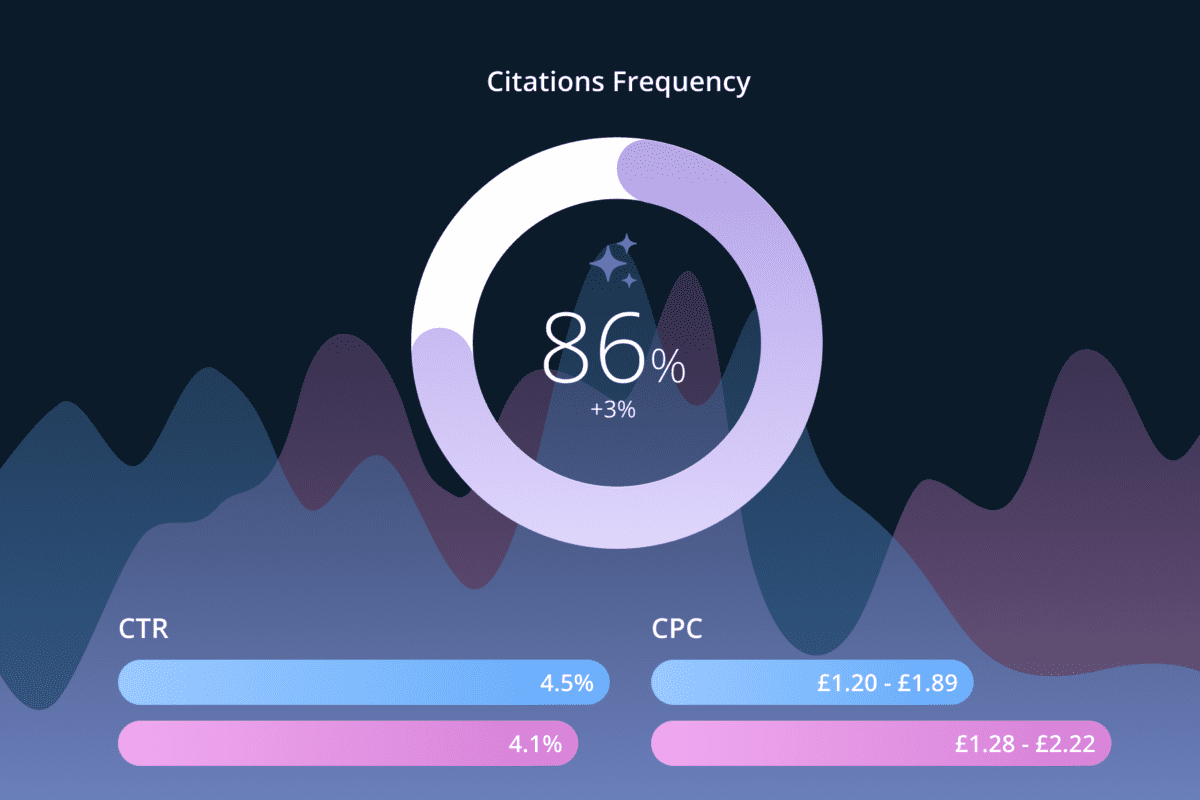
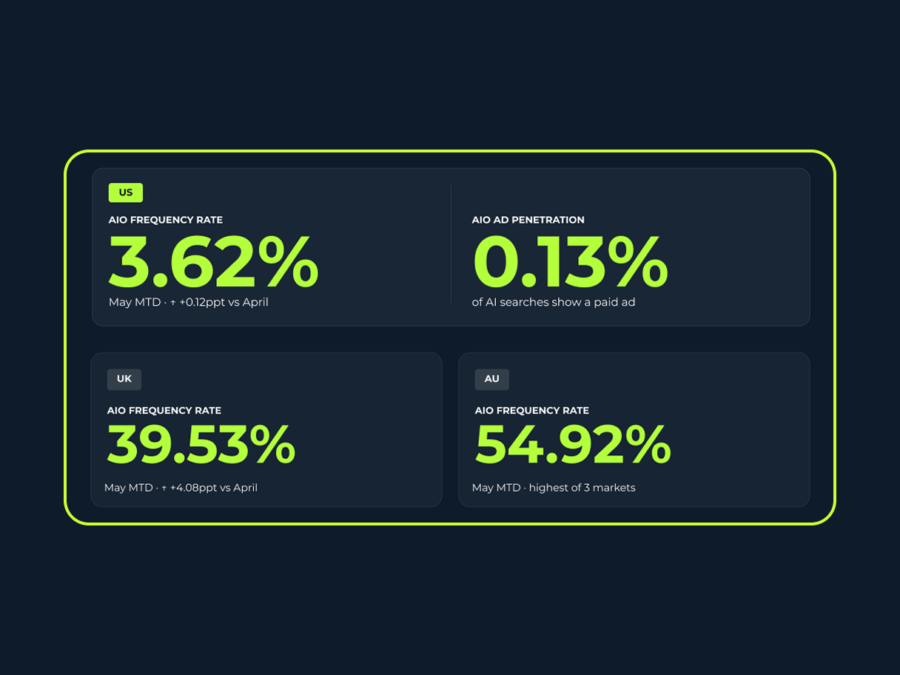
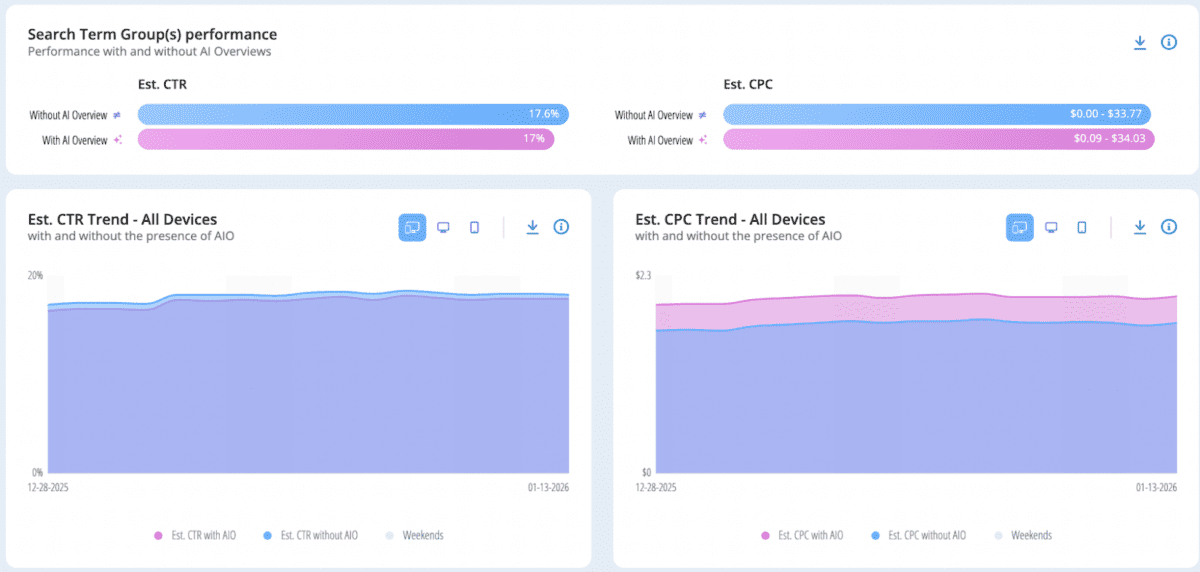
The solution demonstrates the change in performance driven by AI Overviews by quantifying their impact on Click-Through Rate (CTR) and Cost Per Click (CPC), while analyzing the frequency of AI Overview appearances across your search terms.
Features available
- AIO Impact Analytics: Direct visibility into how AIOs are impacting your Paid CTR and CPC.
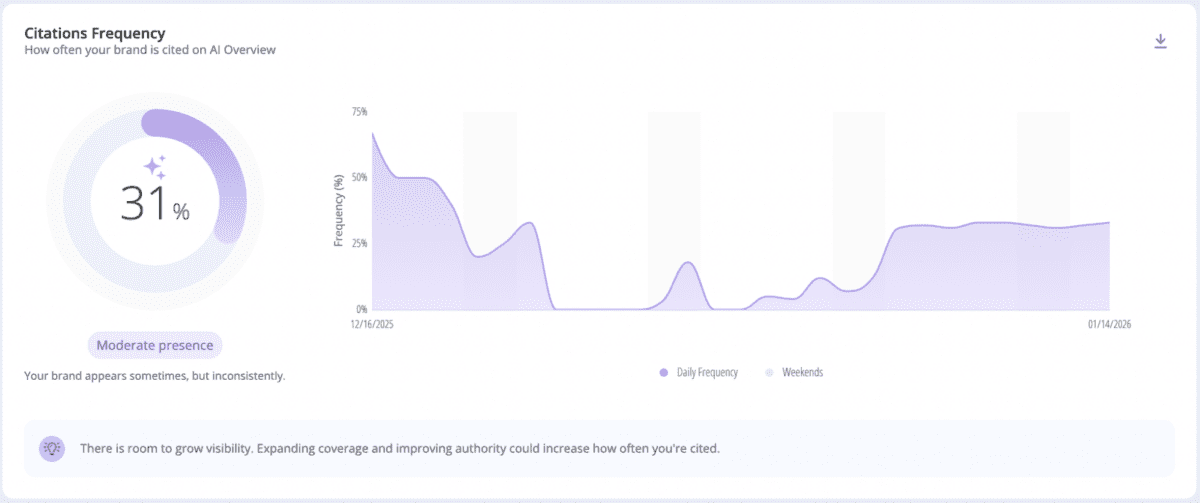
- Citation Tracking: Identifying which competitors are being cited over you and where your brand is missing.
- Ad Positioning: Tracking whether your ads appear above or below the AI Overview, a critical factor for CTRs.
- Sentiment Analysis: Understanding if the AI’s summary of your brand (or your competitors) is positive or negative.
So, let’s explore how this could be implemented within your brand’s team.
The action plan by each marketing persona
How should your team respond to this new reality? We’ve broken down the day-to-day actionability for three key marketing personas based on real feedback from the field when working with Adthena’s AI Overview data.
1. The CMO: Steering business strategy
For CMOs, AI Overview data is not just a digital metric. It is a strategic input for revenue protection and budget planning.
Identify revenue risks
Citation frequency highlights strategic blind spots. If revenue-driving terms show zero AI citations while competitors appear consistently, it signals the need to rethink your 2026 strategy.
Justify spend
When lead volumes drop, use AIO data to prove it’s not a campaign failure but a shift in user behavior (e.g., users preferring AI summaries over paid ads). This enables more informed conversations with leadership and supports smarter reallocation of budget into initiatives that matter at board level.
Set the right metrics
Rather than optimizing CPC in isolation, CMOs can push teams to measure performance with and without AI Overviews present, creating more realistic benchmarks for both internal teams and platform partners.
2. The Performance Marketer: Reacting to industry change
Performance marketers sit closest to the immediate impact of AI Overviews and need tools that turn insight into fast action.
Audit ad placement
If your ads are consistently appearing below the AIO, your CTR will likely plummet. Use this data to adjust bidding strategies or ad copy to regain above-the-fold visibility.
Investigation tools
If CPCs spike unexpectedly, AI Overview frequency can explain why. Increased competition for fewer available ad slots often drives costs up, and this context is essential for accurate optimization decisions.
Optimize for sentiment
In the Finance sector, for example, brands are already using sentiment data to see why AI views them favorably. Identifying which content the AI references allows teams to replicate success across other categories.
3. The Search Marketer: Closing the content gap
For Search Marketers and SEO agencies, AIO data provides a direct roadmap for the year’s content plan.
Bridge Paid and Organic
If you have a limited budget and can’t compete on expensive Paid Search terms, appearing in an AIO citation is more important than ever. Identify the gaps and brief your creative or SEO teams to build content that answers those specific queries.
Refresh based on reality
A brand in the Medical space recently used AIO frequency data to identify content gaps for specific “cost” related terms, leading to a full site refresh to ensure they were the “best” answer for the AI to pick up.
Weekly reporting
Move to a weekly cadence of checking AIO appearance frequency. This helps you stay agile, ensuring you can react to a competitor suddenly capturing a citation on your “hero” terms.
Turning insights into action
AI Overviews are already influencing how users interact with search and how brands capture demand. Teams that treat them as a reporting metric risk reacting too late to meaningful performance shifts.
By turning AI Overview visibility into actionable insight, from citation gaps and ad positioning to sentiment and performance trends, marketers can protect revenue, justify investment, and evolve their content and media strategies in line with real user behaviour. Adthena can help you move beyond awareness, enabling more confident decisions in an AI-driven search landscape.
Speak to a search consultant to learn more about our AIO solution.
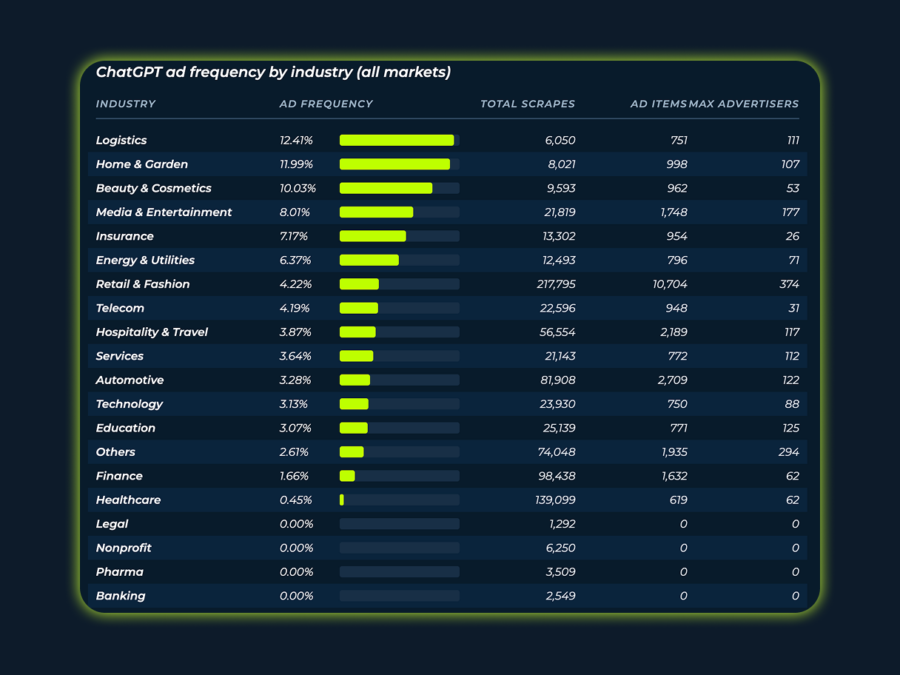
Tracking ChatGPT ads: Insights and upcoming reports
The ChatGPT ads trial represents a genuinely new frontier for paid search, not just another placement, but an entirely different decision making environment. Early testers are navigating high costs, limited controls, and minimal reporting, all while being asked to justify spend in a channel that looks nothing like traditional search.
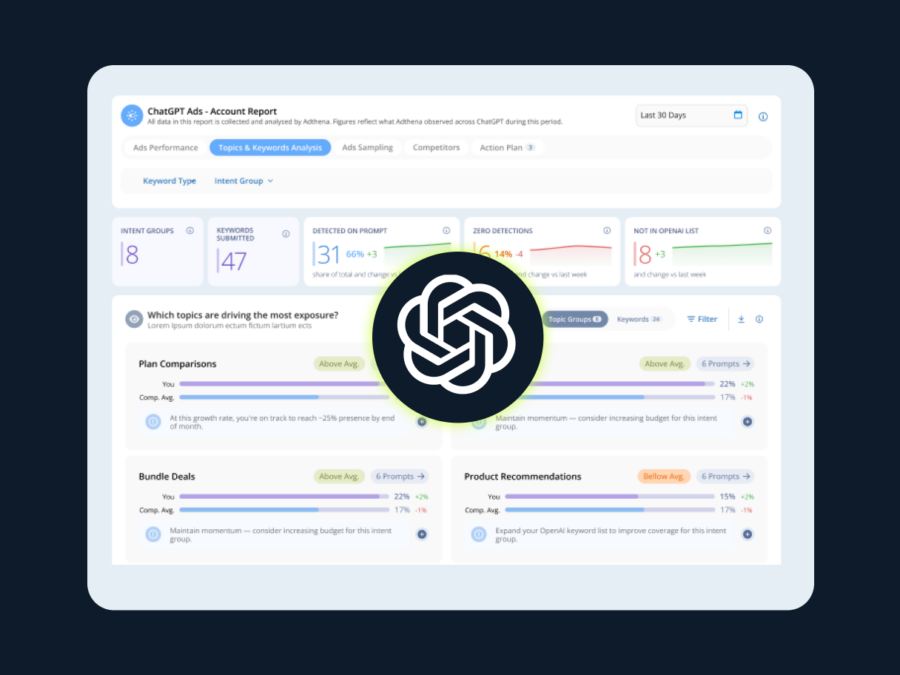
To help advertisers navigate this new ecosystem, Adthena is now actively collecting ChatGPT Ads data to provide insight into visibility and competitive dynamics. New reports and analysis, including our LLM Landscape and LLM Performance insights, are coming soon, designed to give marketers the intelligence they need to optimize in this evolving AI-driven ad environment.
For those who want early access and updates, you can join our ChatGPT ads waitlist.