ChatGPT ads trial: Adthena’s first sighting and what we found
Adthena has been tracking the ChatGPT ads trial in real time, and after analyzing over 1,500 prompts, we have the first clear picture of how it works, who’s in, and what enterprise PPC teams should do next.
ChatGPT
Published by Serra BensteadMarch 04, 2026
Share Resource
We’ve been waiting for this moment for a while. And now it’s here. Adthena has spotted the first live ads running inside ChatGPT, and after analyzing over 1,500 test prompts, we know exactly how they work, which brands got there first, and what it means for your search strategy.
What we spotted
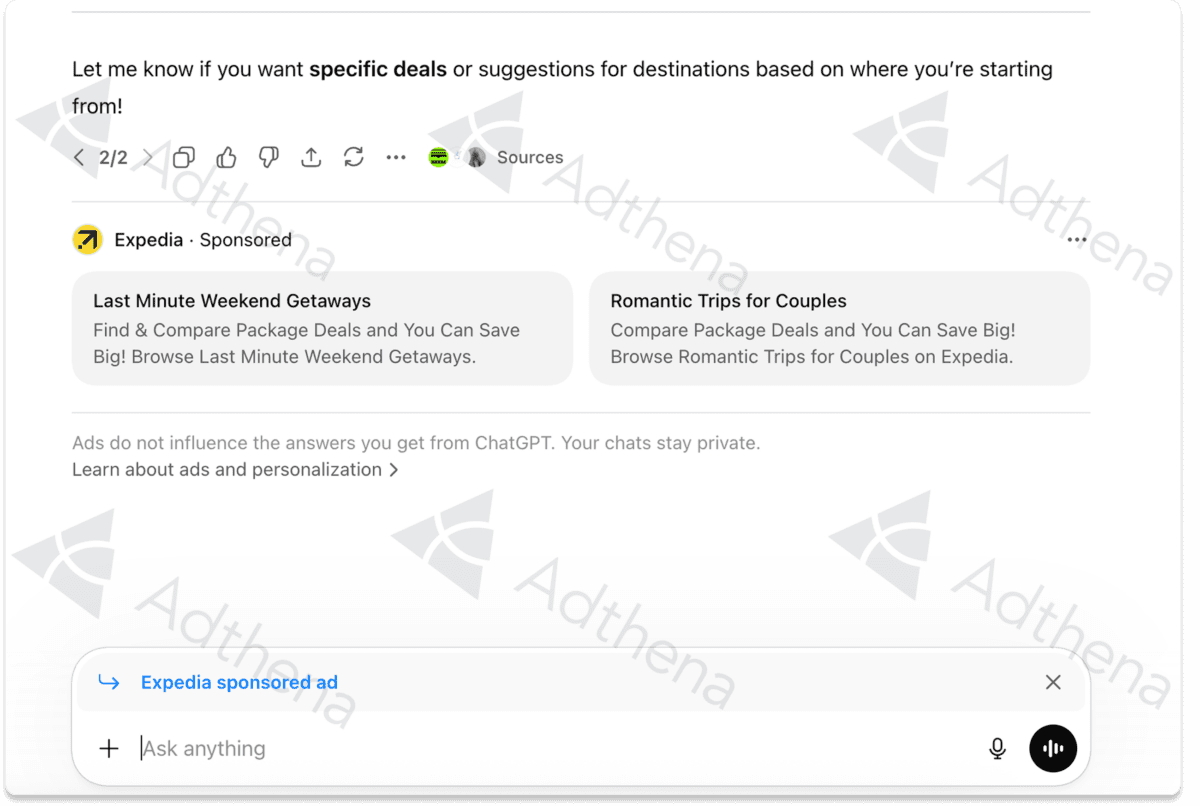
It started with a simple question. When we asked ChatGPT “What’s the best way to book a weekend away?”, Expedia appeared as a sponsored placement. No back and forth, no second message. The ad was right there on the first response.
That immediately challenged early predictions that ChatGPT ads would only show up after multiple conversational turns. In practice? High-intent queries get served ads straight away.
What the ads actually look like
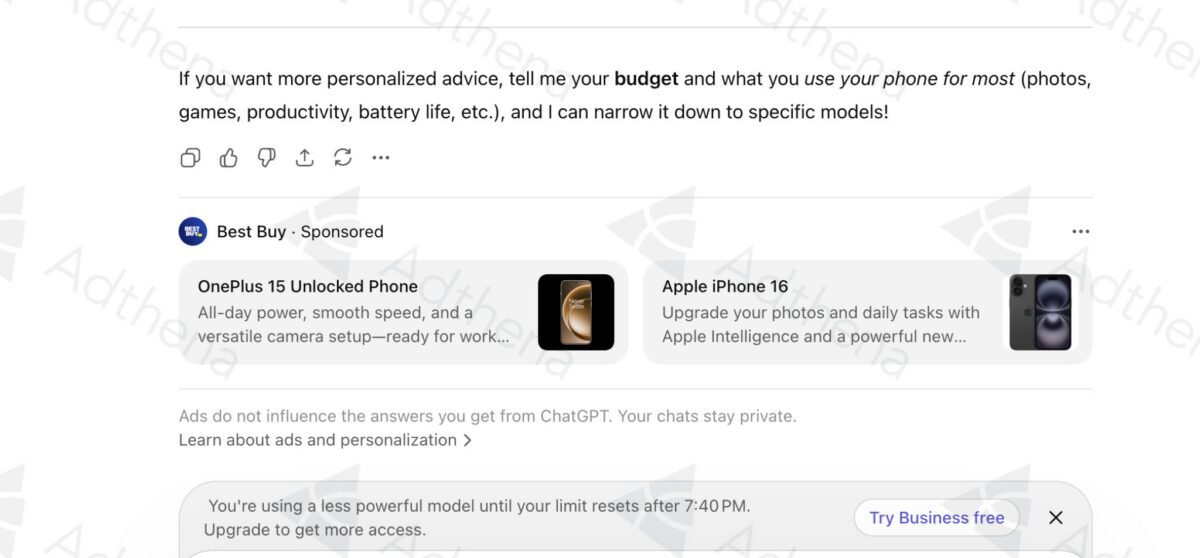
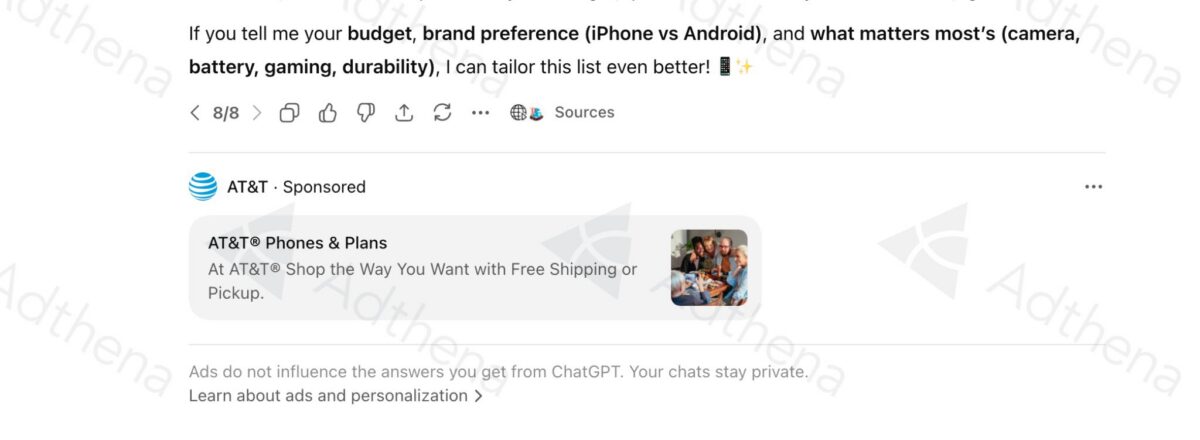
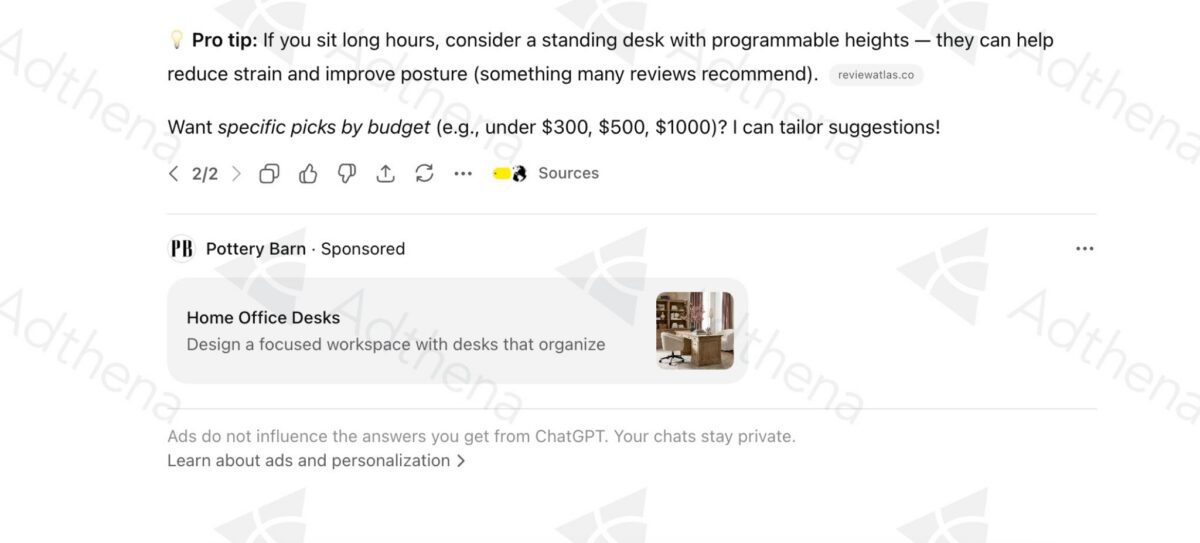
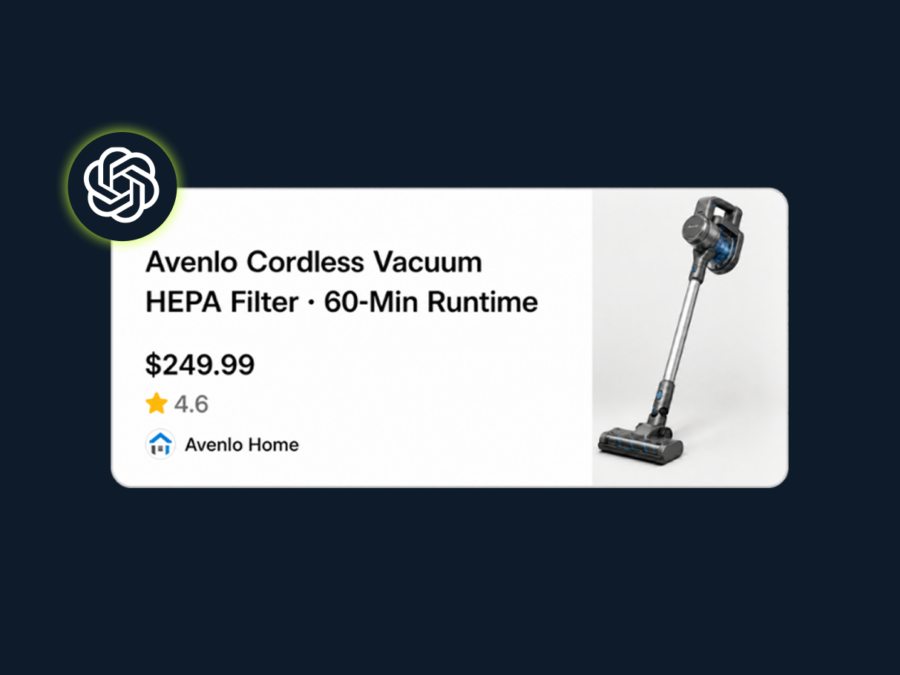
This isn’t Google. It isn’t Bing. The ad format is something new entirely. Ads appear as branded cards embedded right in the conversation flow, not in a sidebar, not at the bottom of a page. They carry a clear “Sponsored” label alongside a brand favicon, and they’re visually separate from ChatGPT’s AI answer. OpenAI has been deliberate about keeping the two distinct, and you can see why. Trust is everything on this platform.
From what we’ve observed, the ads are:
Clearly labelled with a “Sponsored” badge and brand logo
Embedded in the conversation, not tucked away in a sidebar
Completely separate from ChatGPT’s actual answer. The ads don’t influence the response.
Limited in number per response, which means competition for those spots is going to be fierce
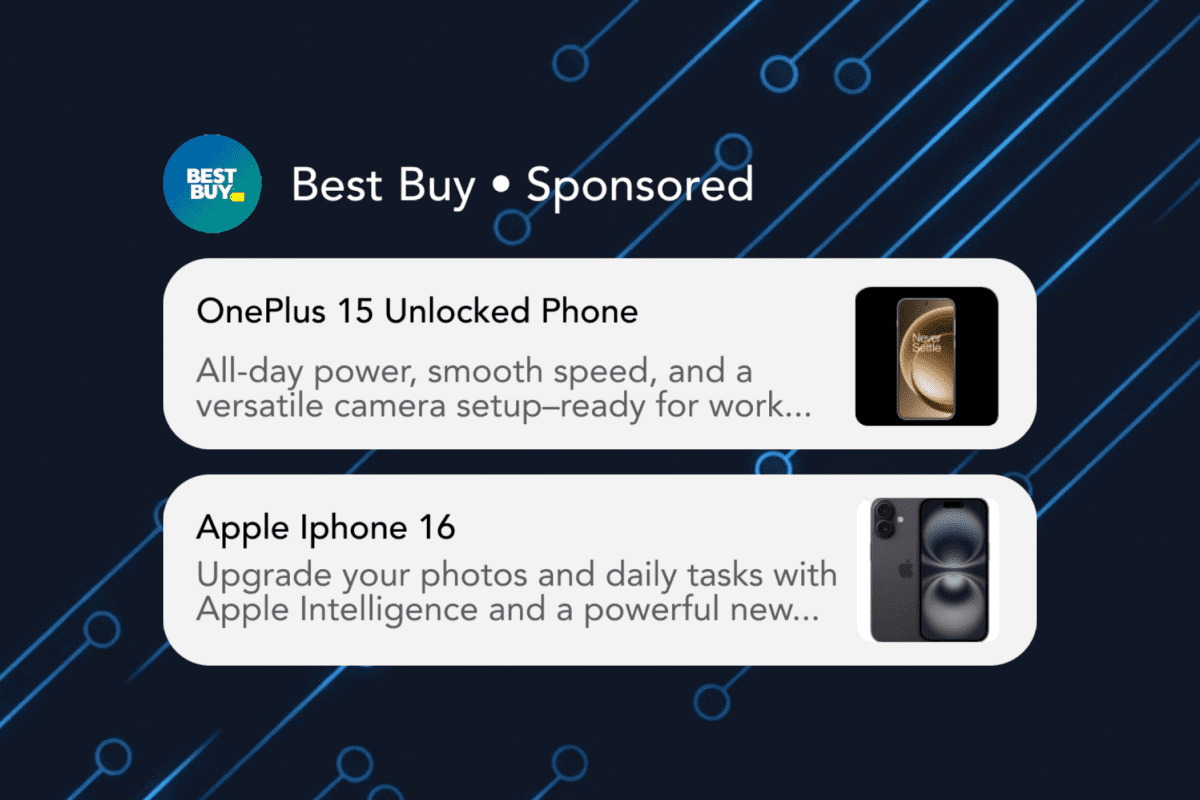
We also spotted something worth flagging: Best Buy secured two sponsored spots in a single response to an iPhone query. Double placement, one brand. The dynamics of this ad environment are already more interesting than anyone expected.
Who's already in
Since our first sighting, we’ve seen a clear week-on-week ramp in both the number of advertisers and the variety of ad placements. Six major brands are already confirmed active so far:
Best Buy
AT&T
Pottery Barn
Enterprise
Qualcomm
Expedia
Canva
Retail, telco, travel, tech. These are deliberate first movers, and they’re spanning commercial categories where intent matters most. The window to get in at a low cost per click (CPC) is open right now. It won’t stay that way for long.
How ads get triggered
No cookies. No user profiles. No audience segments. Ads on ChatGPT are matched to what a user asks, not who they are. That’s a fundamentally different model to everything in programmatic or paid search today, and it’s worth letting that sink in.
After running over 1,500 prompts, here’s what we found. Ad triggering is heavily weighted toward simple, high-intent modifiers. Words like “best,” “new,” and “buy,” along with phrases like “I am going to buy” or “what’s best?”, reliably fire ads. Emotional framing seems largely irrelevant at this stage. It’s the purchase signal that matters.
Timing varies too. Most ads appear on the first prompt, but some only trigger on the third or fourth attempt of the same query. OpenAI is clearly still calibrating frequency and relevance. This is a living, evolving system.
Who sees the ads?
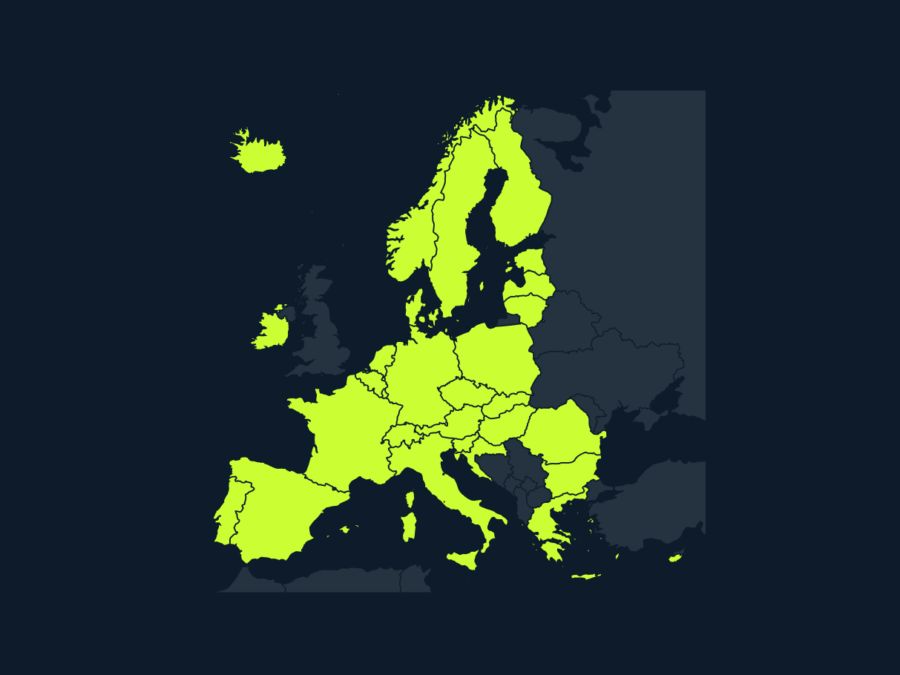
Not everyone. Right now, ads are only visible to logged-in adult users on ChatGPT’s Free and Go tiers in the US. Plus, Pro, Business, Enterprise and Education subscribers are ad-free. Global rollout hasn’t been confirmed yet.
That said, the Free tier is by far the largest user base. For enterprise brands chasing broad consumer audiences, this is still meaningful reach. And as the rollout expands, so will the opportunity.
The user controls OpenAI built in
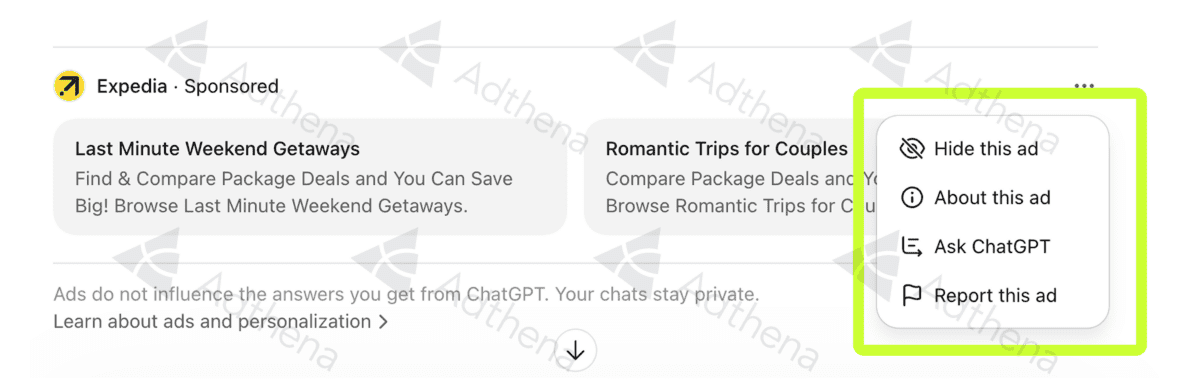
Honestly? The user controls are more robust than we expected. Each ad comes with a three-dot menu giving users four options:
Hide this ad removes it from the current session
About this ad shows who paid and explains why you’re seeing it (topic-matched, not personal data)
Ask ChatGPT lets users query ChatGPT directly about the advertised product
Report this ad flags ads for being misleading, sensitive or inappropriate
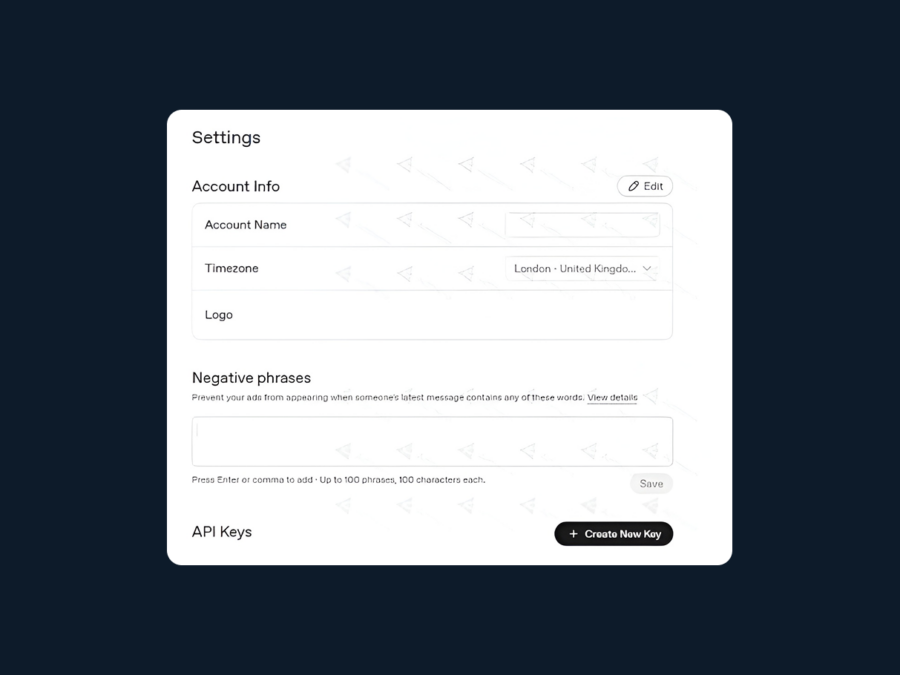
On the data side, advertisers get broad, non-identifying aggregate stats: total views, clicks, and which topics triggered the ad. That’s it. No chat history, no names, no personal identifiers. OpenAI knows that if it loses user trust on privacy, the whole thing falls apart.
Why this changes everything for PPC teams
The search results page has moved inside the AI. When someone asks ChatGPT what phone to buy or where to book a trip, they’re not opening a new browser tab. The consideration and the click can all happen within the same conversation. For PPC teams, this isn’t something to watch from a distance. It’s a live placement environment where your competitors may already be active.
Three things are clear from what we’ve seen so far:
Intent targeting is the only game in town. Ads match what people ask, not who they are. No cookies, no profiles, just the question sitting in front of them.
CPCs will only go one way. Placements are limited and more advertisers are piling in every week. The brands testing now are building a learning curve their competitors will have to pay to close.
The first movers write the playbook. Knowing which prompts trigger your ads, and your competitors’ ads, is going to become a real strategic advantage. We’re already tracking every ad, every trigger, and every brand.
Want the intel before your competitors do?
We’re monitoring ChatGPT ads in real time, tracking every advertiser, every trigger keyword, and every placement format as this channel evolves. Get the intelligence first by joining the waitlist.