The Great Search Shift, Episode 2: AI agents, ChatGPT ads, and search strategy

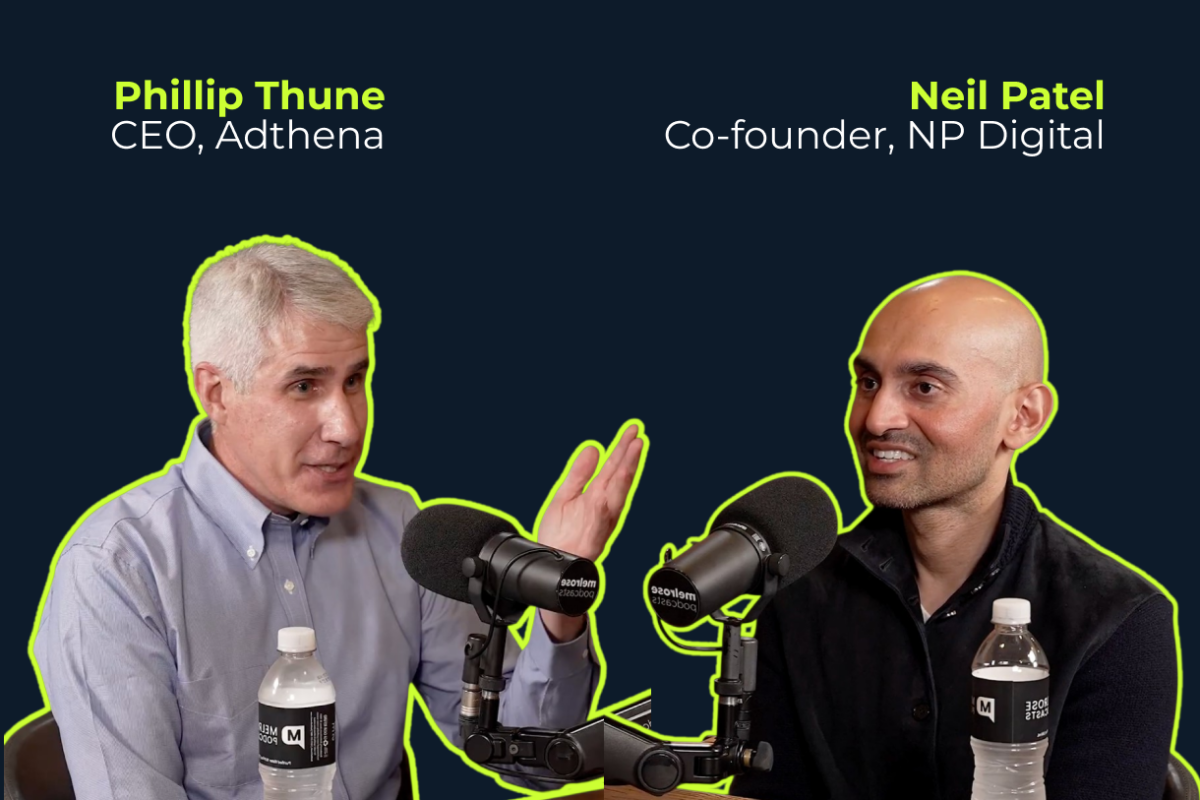
A conversation between Phillip Thune, CEO of Adthena, and Neil Patel, Co-Founder of NP Digital. Watch Episode 2 now.

The Great Search Shift, Episode 2: AI agents, ChatGPT ads, and search strategy

TL;DR

Search is changing faster than any single team can keep up with and the smartest organizations aren’t trying to. In Episode 2 of The Great Search Shift, Phillip Thune and Neil Patel get into the practical reality of managing AI-driven change: why paid and organic teams need to stop working in silos, why AI agents are more useful for B2B than consumer purchases, and what the ChatGPT ads data actually reveals about where the channel is heading. The verdict? The hype is real but overstated, the data is early but directional, and the winning strategy isn’t humans or AI; it’s both, working together.

Published by Serra Hale May 12, 2026

18 months ago, something major happened in search every month. Then every two weeks. Now it feels like every day.

That’s not just Phillip’s impression. It’s the lived reality for every paid search manager trying to keep up with AI Overviews, ChatGPT ads, agentic shopping, and a competitive landscape that looks different every time they log in.

But there’s something else worth noting. When Google had an algorithm update, it affected businesses. When ChatGPT makes an announcement about AGI or the future of work, it affects people. It creates anxiety at scale. That context shapes how marketers are responding to all of this, often with more panic than the situation warrants.

Episode 2 is the antidote to that panic. Here’s what Phillip and Neil actually think is going on.

The merging of paid and organic: Stop treating it like a problem

For years, paid search and SEO teams operated in completely separate worlds. Different KPIs, different reporting lines, different tools. In 2026, that separation is becoming a liability.

Why the silos have to go

At NP Digital, Neil has removed the barriers entirely. Paid and organic teams work together, full stop. The result isn’t just cultural harmony; both divisions perform better. When a paid team understands what’s ranking organically, and an organic team understands what’s converting in paid, the whole strategy gets sharper.

For in-house teams, this is harder but just as necessary. The brands that figure out how to connect paid and organic data will have a structural advantage over those still running them as separate functions. Adthena’s AI search intelligence gives you the full picture across both channels, so you’re not making paid decisions in isolation from what’s happening organically.

You can’t hire for everything. So hire for adaptability.

The pace of change also raises a talent question. Neil’s view is straightforward: it’s unrealistic to expect every person in your organization to be up to speed on every new AI tool or platform. The better model is to hire people who embrace change and love to experiment, and let them carry knowledge across the rest of the team.

Not every new platform deserves your attention anyway. Neil was skeptical of Clubhouse from day one as you could only consume content while you were live on the platform, which made it fundamentally inefficient. It was always going to fade. The ability to make that call quickly, without getting swept up in the hype cycle, is a skill worth cultivating.

AI agents: Useful, overhyped, and coming anyway

The agentic AI conversation is everywhere right now. The idea that AI agents will soon be doing all the shopping, and the human will never visit your website at all, is generating a lot of anxiety in paid search circles.

The reality check

Neil’s take is characteristically direct. If you’ve been married for 26 years and still don’t know exactly what your partner wants for dinner, how do you expect an AI agent to know which red heels to buy?

Personal consumer purchases are nuanced, emotional, and highly contextual. Agents are genuinely useful for corporate and B2B tasks such as booking travel, managing workflows, and processing repeat orders. But for the kind of considered consumer decisions that most paid search campaigns are built around, the agent is not yet replacing the human.

The H-AI model: humans plus AI

The most effective approach right now isn’t humans or AI. It’s what Neil calls H-AI: humans and AI working together. Automation handles the execution. Human strategy sets the direction and catches what the algorithm misses.

This matters practically for campaigns like Google’s PMAX. Automated bidding and creative optimization are powerful, but they still need human oversight to perform at their best. The brands winning right now aren’t the ones handing everything to the algorithm; they’re the ones who know when to intervene.

What the ChatGPT ads data actually tells us

Adthena was the first platform to detect ads inside Google’s AI Overviews and the first to track placements inside ChatGPT. In Episode 2, Phillip walks Neil through what analyzing 580 ad placements in a 24-hour window actually reveals.

High intent, bottom funnel

61% of ChatGPT ads trigger on prompts starting with “best.” Another 31% trigger on “X vs Y” comparison prompts. Open-ended discovery queries barely register.

The implication is significant. ChatGPT isn’t functioning as a top-of-funnel awareness channel. It’s a high-intent, bottom-funnel commerce engine – closer to a search network than a social feed, but with the ability to leverage user history in a way that could eventually make it more powerful than either. Users arriving at a ChatGPT ad are already deep in a buying decision.

Brand hijacking is real and growing

On 86% of “X vs Y” comparison prompts, the ad served is for a third, completely unrelated brand. Search “Drizly vs DoorDash” and ChatGPT serves Dollar General. Search “Chanel vs Dior” and you get Nordstrom.

This is the channel filling inventory with whoever is willing to bid. For brands not yet in the auction, it means competitors and affiliates are showing up at the exact moment your customers are comparing you. Adthena’s AdBridge lets you get your existing Google Ads campaigns live on ChatGPT in minutes, so you’re in that auction before someone else takes your spot.

Publisher affiliates are moving faster than brands

WSJ Buy Side, Forbes, and Top10.com already account for more than 10% of all ChatGPT ad placements. Affiliate publishers are more entrepreneurial, carry less internal bureaucracy, and have been running performance campaigns for years. They’re simply extending a proven playbook into a new channel.

The direct brands will catch up. But by then, the early arbitrage window will have closed.

OpenAI’s policies are already bending

When ChatGPT launched its ads trial, the stated rules were clear: no finance ads, no ads to non-logged-in users. Two and a half months in, finance ads are appearing and non-logged-in users are being served. As Neil puts it: “You’ve got all this inventory and all these costs. You’ve got to figure out how to pay your bills.” Economics always wins in the end.

Being present in AI search pays even when you're not mentioned

One of the sharper data points from Episode 2 concerns AI Overviews. Being present in an AI Overview is generally positive for revenue, even if your brand isn’t explicitly named in the text of the overview itself.

The signal matters more than the mention. Users who see your brand adjacent to an AI-generated answer are primed. Brands that treat AI Overview presence as binary, “are we mentioned or not?” are missing the more important question, which is: are we visible in the moments that matter?

The bottom line for paid search managers in 2026

The search industry is changing faster than it ever has. But the fundamentals haven’t changed as much as the noise suggests.

High intent still converts. Brand presence still matters. Human judgment still outperforms pure automation. And the platforms that say they’ll never run ads always end up running them.

The practical playbook right now: connect your paid and organic teams, stay skeptical of hype while staying curious about new channels, test ChatGPT ads while CPMs are low and competition is thin, and make sure you know what’s happening to your brand in AI search before your competitors do.

Episode 3 is where Phillip and Neil make their predictions for the next 12 months: agents, Gemini, and what paid search actually looks like by the end of 2026. 

Watch Episode 1 of The Great Search Shift. Episode 3 is coming soon.

Related content