Google Marketing Live 2026: What marketing leaders need to know

If I/O announced the agentic Gemini era, GML translated it into the ads roadmap. Here’s our recap of what Google announced and how marketing leaders should be planning around it.

Google Marketing Live 2026 | Adthena

TL;DR

Google Marketing Live 2026 rebuilt the ads stack around Gemini: new Gemini-built ad formats inside AI Mode, the cross-merchant Universal Cart, Asset Studio with Gemini Omni for creative, Meridian inside Analytics 360 for measurement, and Ask Advisor as one agent across Ads, Analytics and Merchant Center. AI Max for Search is now the foundation. Where I/O made the surfaces agentic, GML moved the ad stack to match.

Published by Joss Froggatt May 21, 2026

Google Marketing Live 2026 walked advertisers through a marketing stack rebuilt around Gemini: new ad formats inside AI Mode, an open cross-merchant cart, an AI-first creative studio, a marketing mix model integrated into Analytics 360, and a single agent stitched across the platform. The throughline is consistent with what Google laid out at I/O the day before. Google is asking advertisers to hand more of the execution layer to Gemini and spend their attention on goals, inputs and guardrails.

1. New ad formats inside AI Mode

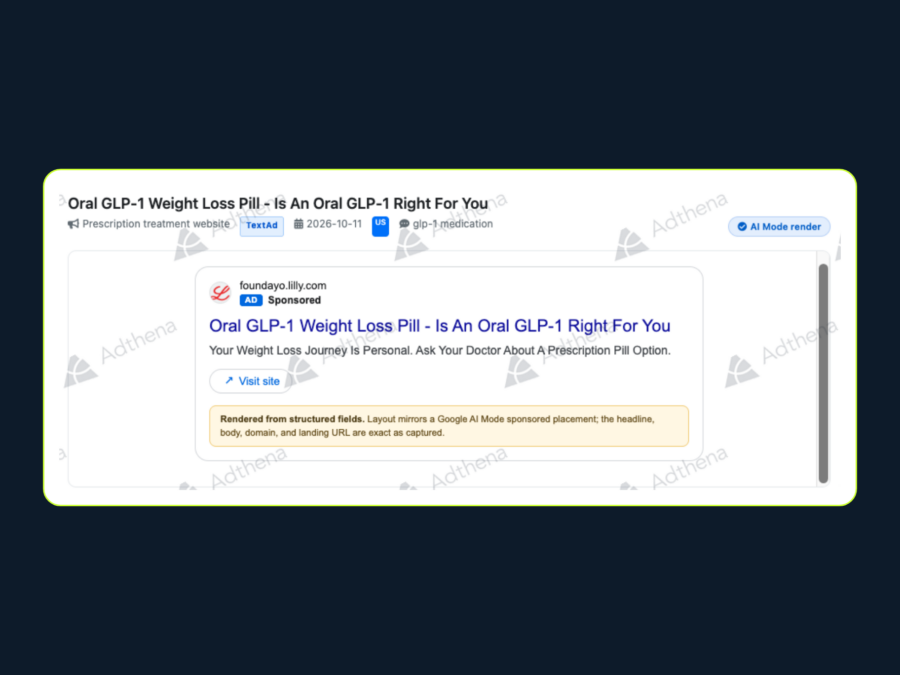
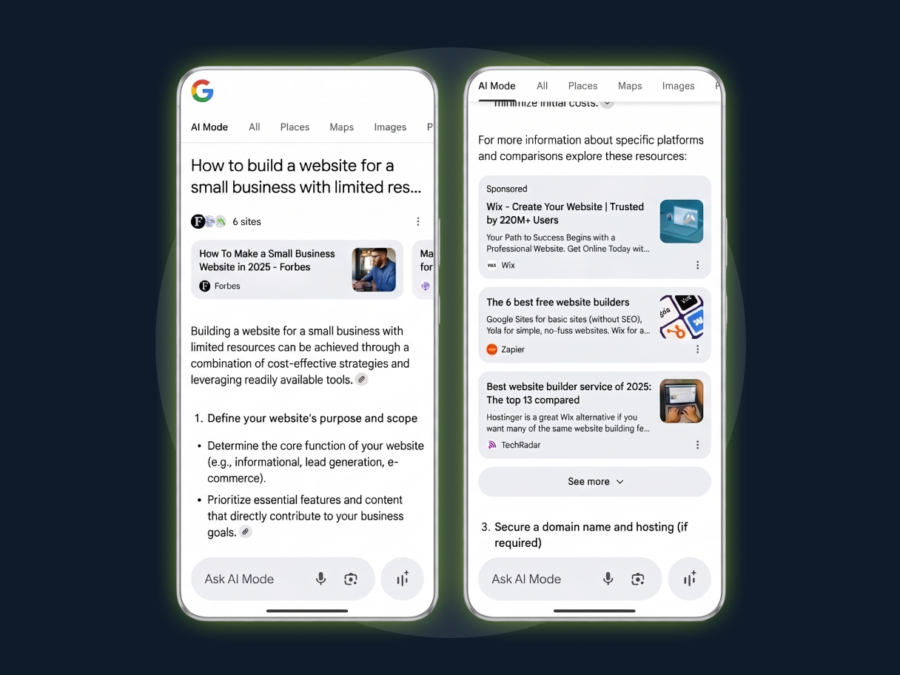
What Google announced: Two new Gemini-built ad formats are being tested inside AI Mode. Conversational Discovery ads generate creative tailored to a specific query, paired with an independent Gemini-written explainer of the product or service. Highlighted Answers make ads eligible to appear inside AI Mode’s list-style recommendations. Both remain clearly labelled “Sponsored.” Two more formats are coming to wider Search in the coming months: AI-powered Shopping ads, which surface relevant products and write a custom explainer per query, and Business Agent for Leads, which replaces static lead forms with a chat agent grounded in the advertiser’s website (starting in education, automotive and real estate).

Google was direct in its own blog: “To take full advantage of all these new AI-powered formats, build a strong foundation with AI Max for Search, AI Max for Shopping campaigns and Performance Max.” 

What it means for marketing leaders: Ad units are no longer static creative inserted into a results page. They’re dynamically generated answers, sometimes accompanied by an independent Gemini explanation Google writes alongside your creative. Visibility tracking has to follow: clicks alone won’t tell you which conversations your brand appeared in.

2. Direct Offers and the Universal Cart

What Google announced: Direct Offers, the promotions pilot launched in January with brands like Chewy, Gap and L’Oreal, is expanding. Promotion bundling lets advertisers upload discounts, giveaways and local coupons; Gemini constructs the most compelling deal per query, guided by AI Brief. Native checkout via the Universal Commerce Protocol lets shoppers redeem inside the ad. Travel partners Booking and Expedia will surface offers inside AI-assisted trip planning.

Universal Cart is a cross-merchant cart that works across Search, the Gemini app, YouTube and Gmail. It began rolling out in the US on May 19. UCP rolls out to Canada and Australia in the coming months, with the UK to follow, and expands into hotel booking via AI Mode and food delivery via Google Maps.

What it means: Commerce is being pulled inside Google. The shopper completes the transaction in the result, the ad or the cart, rather than on the brand’s own site. That reshapes the data flow brands depend on (less site analytics, more signal sharing with Google) and reweights what “winning a query” means. It’s the offer, the bundle and the checkout that close the deal now, not just the click-through.

3. YouTube Demand Gen

What Google announced: Demand Gen gains AI video creation through Asset Studio, the ability to boost authentic creator partnership videos directly from the asset picker, dynamic product videos tied to real-time user interest, Google Maps inventory placements, and checkout links in nine new markets. Product feeds expand to new surfaces and verticals including automotive. On measurement: one-click Demand Gen campaign creation from Performance Max, Campaign Type Attribution, Uplift Experiments, and privacy-safe third-party integrations including TransUnion.

What it means: YouTube is being positioned squarely as a performance channel, not a brand reach channel, with the measurement updates designed to support that pitch internally to finance.

4. Asset Studio and Gemini Omni

What Google announced: Asset Studio is gaining Gemini Omni, the multimodal model launched at I/O, for video asset generation. The studio adds 1-Click Creative Testing against existing top performers and a brief-to-asset workflow that accepts natural-language refinement. Asset Studio is also opening to external creative sources via Adobe and Canva integrations, with API access for partners. Global English rollout is planned for this summer.

What it means: The cost and time barrier to high-volume creative generation drops further. Volume of ad variants is no longer the bottleneck. Differentiation comes from brand consistency, what you choose to test for, and the rigour of your read on what worked.

5. Measurement: Meridian inside Analytics 360

What Google announced: Meridian, Google’s open-source Marketing Mix Model, is being integrated directly into Google Analytics 360. The integration combines first-party and cross-channel data, supports scenario planning through a natural-language interface, and analyses performance across Google, TikTok, Pinterest and Snap in one place. Two new metrics arrive alongside it: Attributed Branded Searches, available in Google Ads and Google Marketing Platform, tracks short-term intent created by an ad; Qualified Future Conversions, Gemini-powered, connects branded searches and site visits to predict conversions up to six months out. 

What it means: Measurement is moving from backward-looking attribution to predictive signals, and from advertiser-built MMMs to a Google-built one inside the analytics platform you already use. The convenience is real. So is the question marketing leaders should be asking: if Google measures my ad performance, on Google, and reports the lift, what’s my independent reference point? This is where Adthena’s Whole Market View comes in, providing the competitor activity, share of voice and SERP context to interpret Google’s own performance claims with an external benchmark.

6. Ask Advisor: one agent across the stack

What Google announced: Ask Advisor is a single Gemini agent that spans Google Ads, Analytics, Merchant Center and Google Marketing Platform. A natural-language request such as “find new customers for my hair care products” pulls product data from Merchant Center, sets up a Google Ads campaign, and feeds performance back through a shared memory layer. It’s in beta for English-language accounts, with broader rollout later this year.

What it means: Routine campaign setup and reporting work consolidates into a conversation. Speed goes up, and expertise has to move up the stack with it. The strategist who can brief Ask Advisor with the right inputs and read the right signals back is the one who gets the return.

Final thoughts

Two days, two events, one direction. I/O made the surfaces agentic. GML moved the ad stack to match. For marketing leaders, that’s an opportunity and a visibility problem. The opportunity is real efficiency, real cost savings, and faster routes to test. The visibility problem is that the data, the placement, the creative match and increasingly the measurement all sit inside one model.

At Adthena, our role doesn’t change in this version of the market. AIO Impact tells you what AI Overviews and AI Mode actually surface in your category. Whole Market View shows you which competitors are taking share where Google can’t or won’t show you. 

If your team is reshaping the annual plans around this shift, we’re happy to talk it through.

Book a demo with Adthena.

Related content