ChatGPT Ads just learned to spend your money for you: What OpenAI’s July updates mean

Eight updates landed in ChatGPT Ads Manager in a single week. Together they say one thing: this platform is getting serious about spending your budget.

ChatGPT Ads changes July blog image

TL;DR

OpenAI shipped eight ChatGPT Ads updates in one week (product updates email, July 24, 2026): conversion-optimized campaigns (oCPC), automatic advanced matching, AppsFlyer and Adjust integrations, average daily budgets, intraday pacing, geo exclusion, a Bulk API, and richer product cards with prices and star ratings. The pattern is clear. ChatGPT Ads is moving from experiment to a channel you can plan a quarter around, and it is optimizing more of your spend on your behalf. What Ads Manager still doesn’t show you is where your ads actually appear at the prompt level, or where your competitors’ do.

 

Published by Joss Froggatt July 29, 2026


ChatGPT Ads Manager has been easy to dismiss as elementary. A shiny new surface with genuine novelty, but missing the load-bearing functionality you’d expect from a mature performance platform. You could run ads. You couldn’t do much of the boring, important stuff around them.

OpenAI’s latest product updates email (dated July 24) changes that read. Eight updates landed, and each is worth a look on its own. Together they say something bigger: this platform is beginning to behave like a grown-up surface you can plan around.

Here’s what each one means for your budget.

oCPC is the headline: The platform now has a point of view on your clicks

The update that matters most is conversion-optimized campaigns. Pick a conversion objective and you’re effectively running a conversion-optimized CPC strategy, which OpenAI calls oCPC: delivery leans toward the clicks most likely to drive your conversion event, while you still pay per click. That’s a real step up from “here’s a budget, go find clicks.” The system is finally being asked to decide which of your clicks are actually worth having.

Pair that with automatic advanced matching, which uses hashed customer information to attribute more conversions back to ads, and with new mobile measurement partner integrations with AppsFlyer and Adjust for app installs and in-app events, and the direction is clear. OpenAI is building the measurement spine you need to prove value and defend budgets.

Better conversion optimization is genuinely good for advertisers. It’s also the mechanism that lets the platform spend your money more confidently on your behalf. And the more the black-box features optimize, the more you need your own read on what they’re really doing with your budget. Hold that thought.

Average daily budgets and pacing: the Google Ads rulebook is being ported

Less glamorous, but important. Daily budgets are moving from fixed daily limits to average daily budgets: individual days can now swing over or under while total spend holds inside the weekly cap. Budgets also pace automatically through the day instead of sprinting out of the gate and tapping out by lunch.

If you’ve run Google Ads, both are familiar. Both arriving on ChatGPT Ads in the same week is the clearest signal yet that OpenAI is porting the matured platform rulebook rather than reinventing it.

It can’t port everything, though. Conversational intent has no Google Ads equivalent, so volume-backed topics and categories, richer segmentation, and testing functionality will have to be built natively. The easy ports ship with velocity. The native builds will take longer.

Geo exclusion and the Bulk API make room for real accounts

Geo exclusion is the small update worth more than its billing. Excluding specific locations, rather than only targeting them, is a feature you never notice until you need it, usually because your ads are showing in a market you don’t serve. It’s a maturity marker precisely because it’s unglamorous. Nobody writes a launch post about a negative, yet negatives are half of how a real account gets steered.

The Bulk API is the one that matters if you run at scale: creating and updating campaigns, ad groups, and ads in bulk, asynchronously. That’s the difference between managing a few test campaigns by hand and operating a proper account. Reading between the lines, OpenAI is making way for agencies and larger advertisers who won’t build every campaign in the UI one careful click at a time.

Product cards with prices and ratings point straight at retail

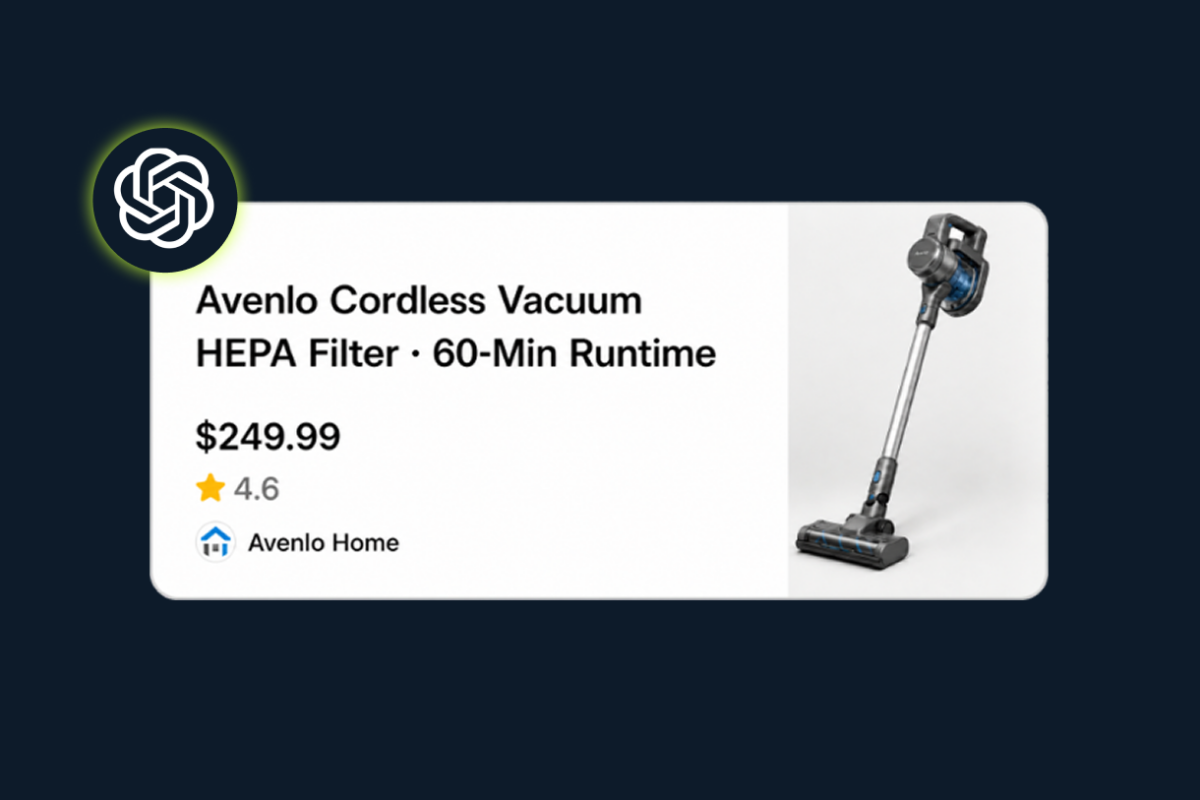
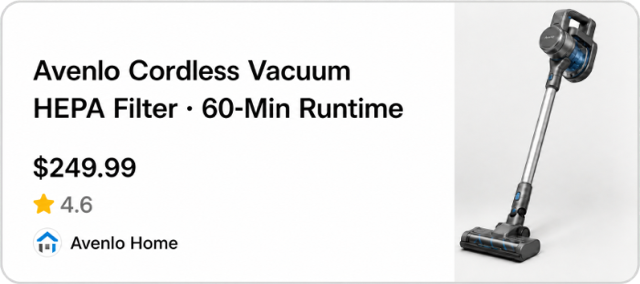
Watch this one closely: a refreshed product card format for product feed campaigns, now rolling out with prices and star ratings on show. The ad unit is becoming more shoppable, closer to the retail-style results you already see across Google. Is OpenAI prioritizing retail and commerce advertisers early in the platform’s life? The direction of travel is hard to miss when the ad format grows a price tag and a review score in the same week the measurement stack grows up.

Chatgpt OpenAI Ads changes blog

The catch: the more it optimizes, the less you can see

This was a good week for advertisers. The gap between “interesting experiment” and “channel you can plan a quarter around” just narrowed.

But the faster a platform matures, the more it optimizes on your behalf, and the less you can see from inside its own reporting. Conversion objectives, advanced matching, shoppable product cards: every one changes where and how your ads surface, and none tells you which prompts your ads appear on or where your competitors show instead. Ads Manager shows you your account. It doesn’t show you the battlefield.

That’s where an independent, prompt-level view earns its keep. Adthena’s ChatGPT Ads Intelligence shows which prompts trigger ads, whose ads show, and whether your spend is landing on-brand or drifting, where Adthena has coverage. The cleverer the optimization gets, the more that outside-in check is what keeps you honest.

What to do this week

  • Test oCPC on one campaign against your straight CPC baseline before moving core budget.
  • Once average daily budgets roll out, judge spend weekly, not daily. Individual days will swing.
  • Add geo exclusions for markets you don’t serve. Five minutes, stops quiet waste.
  • Running at scale? Get your ops team on the Bulk API now. First to template moves fastest.
  • Start monitoring where your ads and competitors’ ads actually appear. Ads Manager won’t show you, and a baseline is cheapest now.

The top-line read stands. ChatGPT Ads spent last week moving closer to spending more of your budget. It’s a more capable platform than it was a week earlier, and the trajectory is steep enough that any analysis dates like a viral TikTok sound: trending on Monday, cringe to reference by Friday.

These updates give you more control over your account. Whether you also get the same (partial) visibility you’re used to on Google or Microsoft Ads, or you’re left hoping the black box is on your side this time, is the question that decides how much budget this channel deserves.

The window to be an early mover in this channel is open. It won’t stay open forever. Start your free trial.

Related content