
The top 5 use cases for Adthena AI Overview data

Your competitors are already showing up in AI Overviews, earning citations, shaping narratives, and capturing clicks before users ever scroll to a paid ad. The question is: are you? And if not, do you know what it's costing you?

Share Resource

The search landscape is undergoing a constant, fundamental reconstruction. With AI Overviews (AIOs) now firmly embedded in Google’s ecosystem, marketing leaders must move beyond passive observation. The imperative is two-fold: prevent being blindsided by changes and establish a clear, immediate action plan for when new data arrives.

Based on the Adthena customer feedback provided on our AI Overview solution so far in 2026, here are the top five actionable steps marketing teams are taking to navigate the AI Search landscape:
1. Pivot long-term business & website strategy

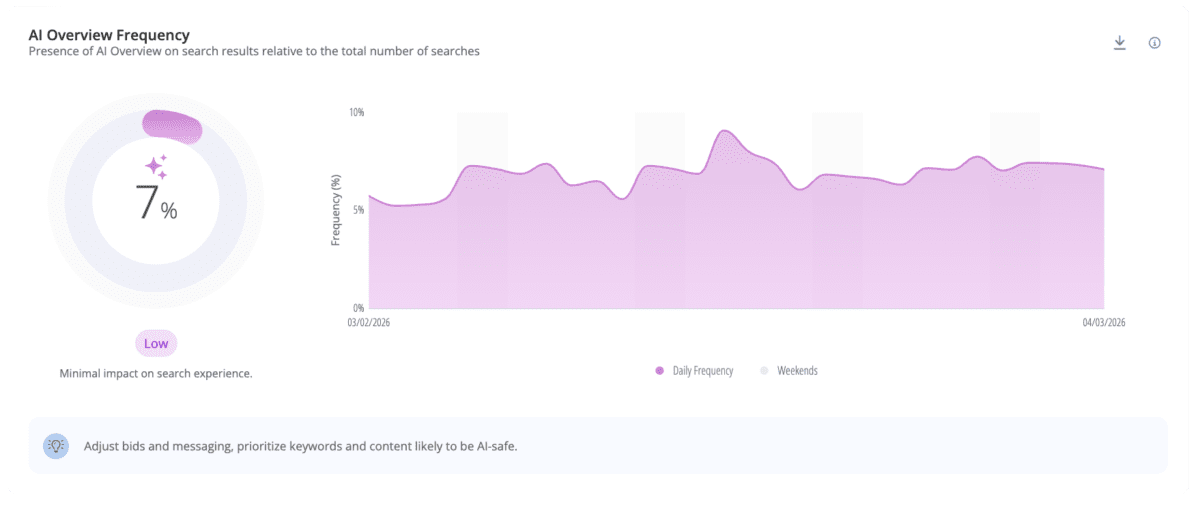
  • Analyze performance drops: Use AIO frequency data to determine if a drop in lead volume is caused by users preferring AI Overviews over paid ads.
  • Inform site refreshes: Share data on “content gaps” with Creative Directors to inform website updates and ensure the brand is positioned to be “the best” answer for AI.
  • Future-proof planning: Use AIO insights to pivot search strategies for the upcoming year (e.g., 2026 planning).
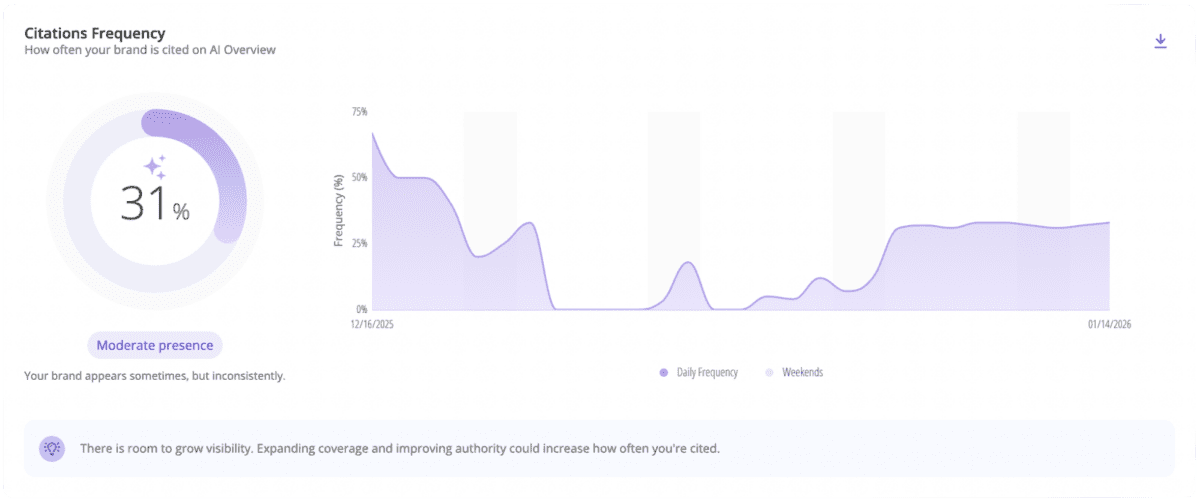
AIO Frequency

2. Bridge the Paid Search & SEO gap

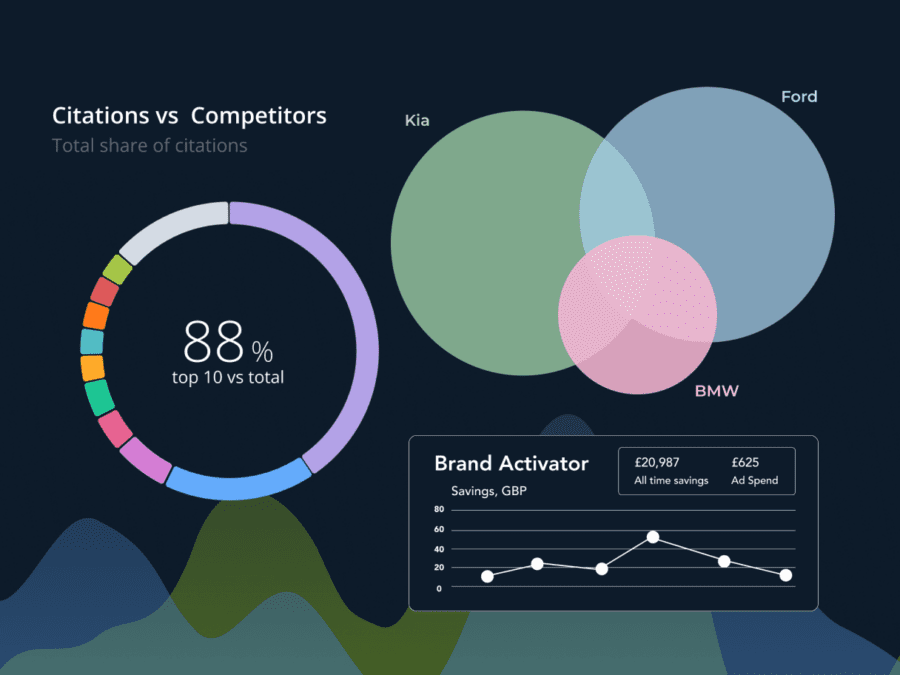
  • Identify citation gaps: Monitor key revenue-driving terms where citation frequency is 0% but competitors are appearing.
  • Direct agency action: Introduce SEO agencies to the data so they can align on which specific search terms require new on-site content to capture AI citations.
  • Budget efficiency: For brands with limited budgets, prioritize appearing in AI Overviews as a cost-effective alternative to aggressive Paid Search bidding.

3. Elevate insights to executive leadership

  • Engage the C-suite: Use high-level metrics (like 78% AIO frequency on key terms) to fascinate CMOs and Presidents of business groups.
  • Advocate for budget: Position AI search tools as a “competitive necessity” to secure long-term funding from leadership who view AI as a priority.
  • Strategic reporting: Share insights at levels previously unreached to influence broader business strategy beyond standard search metrics.

4. Monitor performance impact & ad positioning

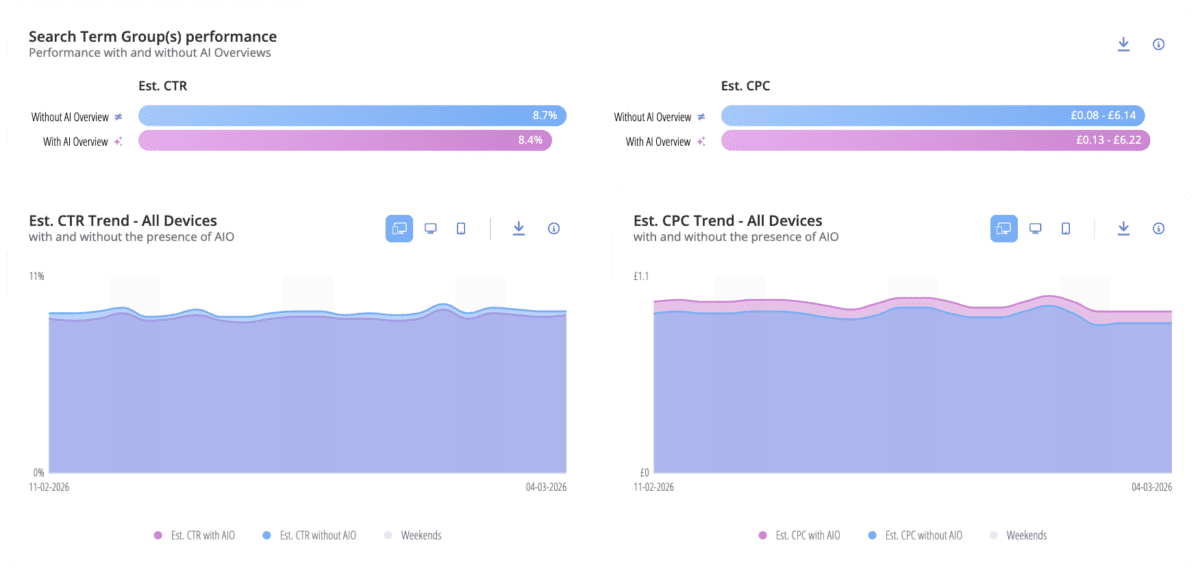
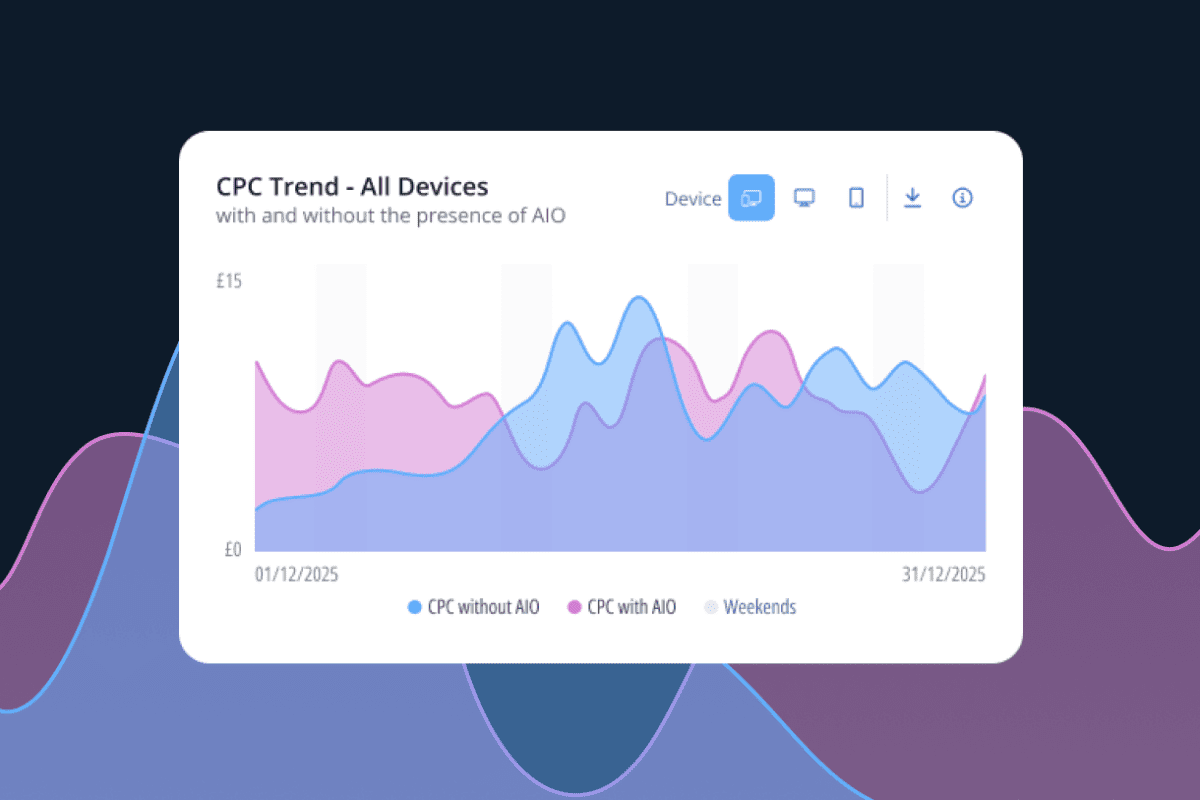
  • Weekly performance tracking: Review AIO data weekly to understand how appearance frequency impacts CTR and CPC.
  • Assess ad hierarchy: Use the Summary tab to check if ads are appearing above or below the AI Overview, as this positioning is critical for click-through success.
  • Investigate anomalies: Use AI data as a supplementary tool to explain sudden changes in campaign performance.
Review AIO data weekly to understand how appearance frequency impacts CTR and CPC.

5. Optimize content based on sentiment & intent

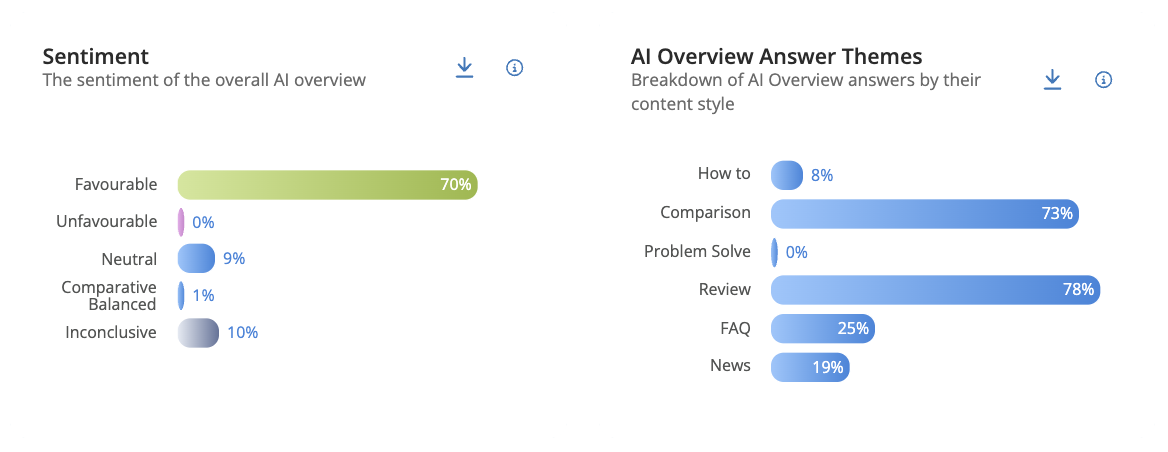
  • Replicate positive sentiment: Identify which terms have favorable AI sentiment (e.g., 16% favorable) and analyze the content being cited to duplicate that success elsewhere.
  • Address negative narratives: Monitor for unfavorable sentiment to identify exactly what is being said and change the underlying content.
  • Analyze search intent: Utilize intent distribution data to better understand how users are searching and refine keyword analysis accordingly.
Identify which terms have favorable AI sentiment (e.g., 16% favorable) and analyze the content being cited to duplicate that success elsewhere.

Ready to see AI Overview data in action?

Don’t let competitors own the AI search conversation while you’re still catching up. Book a demo with our team to see how Adthena’s AI Overview insights can sharpen your strategy, protect your market share, and give your leadership the data they need to act.

Book a demo.

Related content