TL;DR: The 2026 search balance
The old debate of Brand vs. Generic has evolved. In an era where AI Overviews (AIO) dominate the top of the SERP, search marketers must move beyond simple traffic volume. Success in 2026 requires AI-powered PPC optimization to defend your brand’s Share of Model while using AI keyword targeting to capture high-intent generic demand before it’s intercepted by competitors.

Published by Sarah Mason
April 02, 2026
The new SERP reality: AIO and erosion
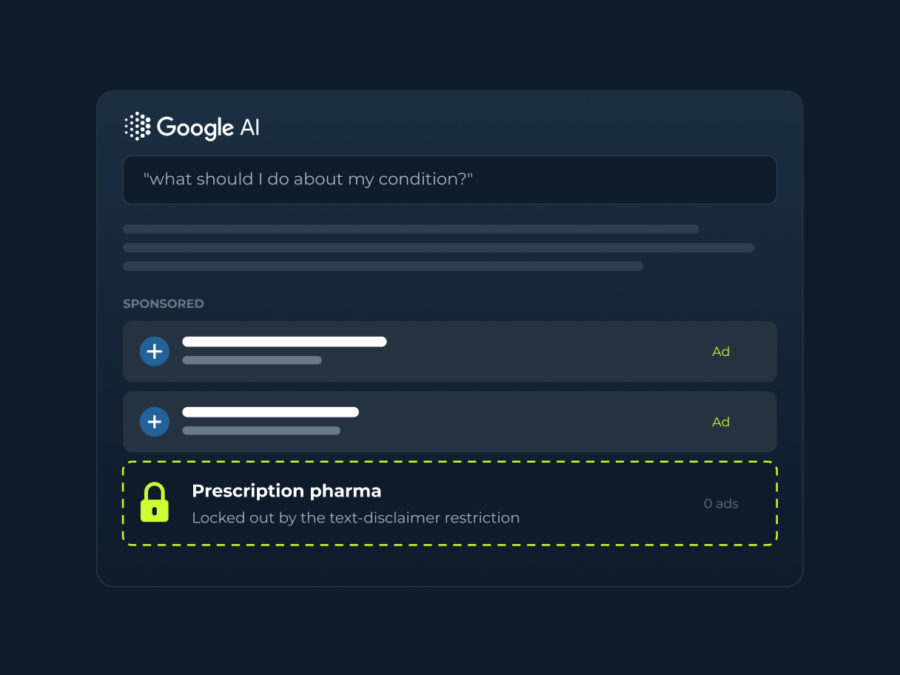
In 2026, the primary challenge of balancing your search mix is real estate erosion. Google’s AI Overviews now claim significant space, often pushing standard organic results below the fold.
Data from Adthena shows that when an AIO appears, official brand listings can see a 12-15% drop in CTR if not supported by a strategic paid ad. Balancing brand and generic terms is no longer just about ROI, it’s about visibility insurance.
PPC brand best practices
Your brand terms are your most valuable assets and they may be under constant pressure from competitors bidding on your traffic, and a growing number using generative AI to mimic your brand voice and intercept your highest-intent customers.
1. Stop the “Double Charge” with Brand Activator
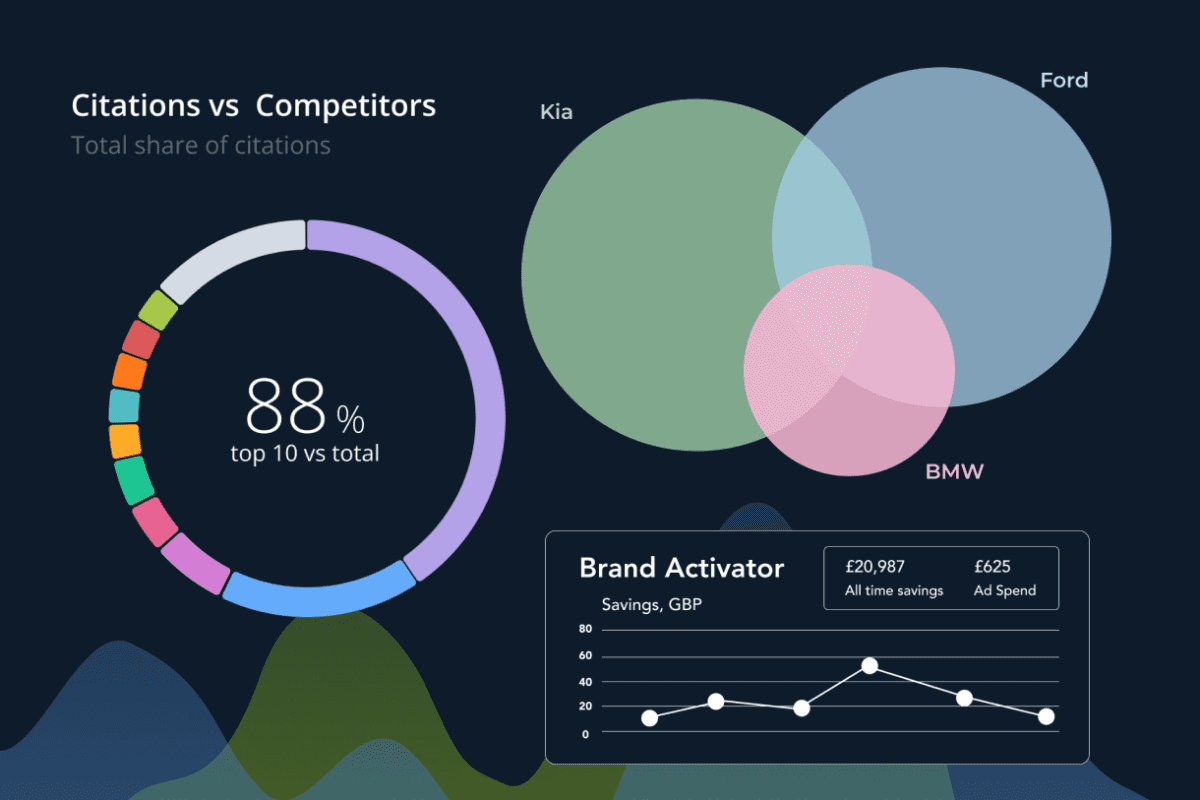
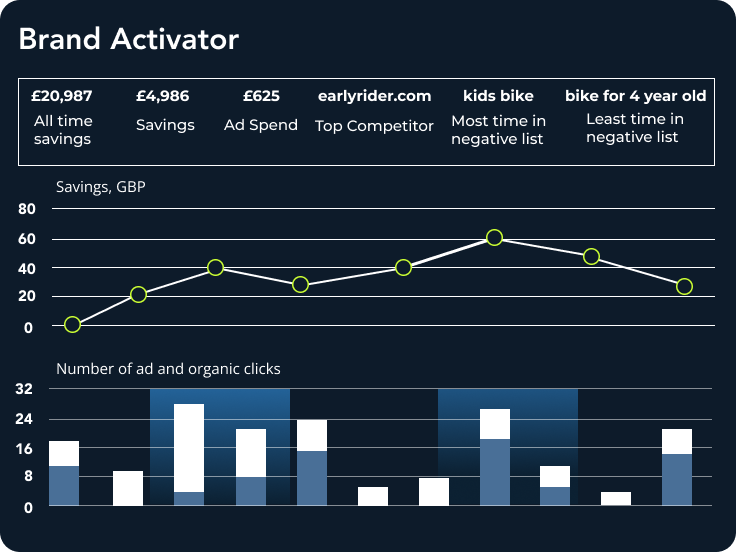
One of the biggest wastes in PPC is bidding on your own name when you already dominate the SERP. Adthena’s Brand Activator uses predictive AI to identify “Lone Rangers” – branded terms where you rank #1 organically and face no competitor ads.
- The Action: Brand Activator automatically pauses these bids, saving you an average of 20% in budget that can be reallocated to high-growth generics.
2. Counter-act AI Overviews
If a user searches for your brand, you want to be the Cited Source in the AI summary. Adthena Search intelligence allows you to monitor your AIO Citation Share to ensure that when AI answers questions about your brand, it’s using your data – not a competitor’s.
AI keyword targeting for generics
Generic terms (e.g. best cloud security software) are the engine of new customer acquisition. Generic bidding has now shifted from short phrases to conversational search.
1. Capturing conversational intent
Users now ask search engines complex questions. AI keyword targeting identifies these long-tail, natural-language queries. By using Adthena’s Whole Market View, you can spot emerging generic trends weeks before they show up in traditional keyword planners.
2. Protecting Generics from black box automation
While Google’s Performance Max (PMax) is powerful, it can often overspend on low-value generics. Search intelligence pulls back the curtain, showing you exactly which generic auctions your AI-driven campaigns are winning – and which ones are being wasted on bot traffic.
How to balance brand and generic paid search
First, let’s redefine our search categories, using electronics as an example:
- Generics: Terms with no brand linkage, such as “best laptops for students.” These are frequently intercepted by AI Overviews (AIO), making AI keyword targeting essential to remain a cited source.
- Brand generics: Terms pairing a brand and a generic term, such as “Apple laptop” or “MacBook Pro 2026.” These terms now face AI Cloned – competitor ads generated by AI to mimic your brand’s voice.
- Pure brand: Terms wholly brand-specific, such as “MacBook.” These require defensive PPC strategies to protect against conquesting.
Step 1: Map the AI-driven buyer journey
Your first step is mapping these terms to the modern, conversational buyer journey. A customer asking a search assistant, “What laptop is best for video editing?” is in a high-intent awareness stage. Meanwhile, a specific query like “MacBook Pro M5 vs. Dell XPS” is deep in the consideration phase.
Adthena’s AIO Impact reporting is vital here. It provides insights into where AI Overviews are eroding your organic visibility, signaling exactly where you need to reallocate budget to paid ads to maintain your Share of Search.
Step 2: Automate your monitoring with AI Search Intelligence
Tracking shifts in real-time is essential in a market where AI-driven competitors can launch hundreds of ad variations in seconds. Use Adthena’s suite of tools to automate this heavy lifting:
- Smart Monitor: This tool automatically tracks your search term groups and alerts you to key competitor movements. Smart Monitor detects when new competitors enter your space and alerts you so you can protect your brand instantly.
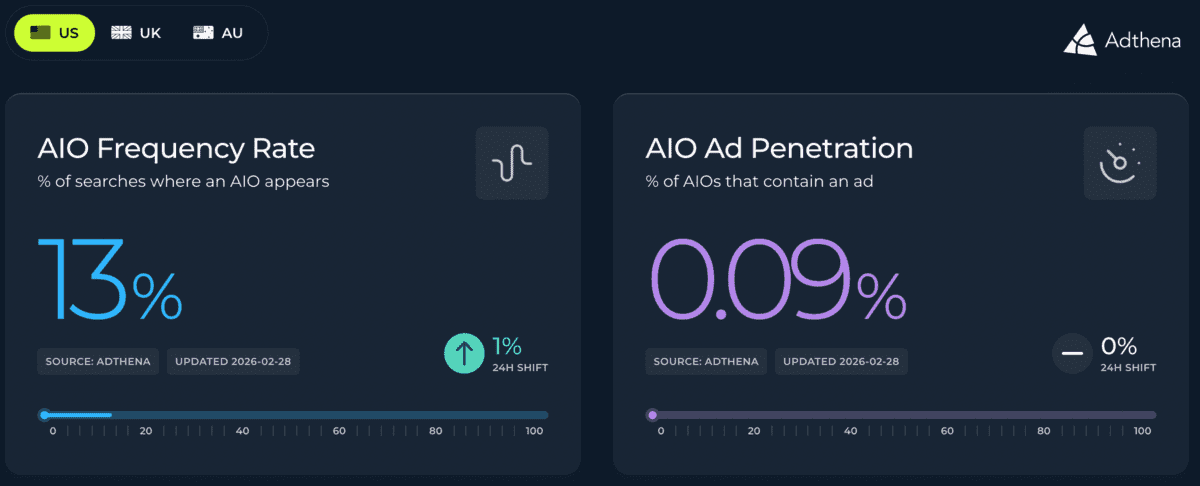
- AIO Impact Index: This monitors how often your brand (and your competitors) are appearing in AI Overviews. The AIO Impact Index helps you identify if a generic search is being swallowed by an AI summary and whether you need a paid ad to claw back that drop in CTR.
- Ask Arlo: Ask Arlo is your GenAI search analyst. Instead of digging through spreadsheets, you can ask Arlo: “Which generic terms are currently being cannibalized by AI Overviews?” or “Show me the brand-generic terms where our competitors have higher citation shares than us.” Arlo provides instant, visual reports to guide your strategy.
Step 3: Deploy Brand Activator to eliminate waste
The most advanced step in balancing your mix is ensuring you aren’t paying for clicks you’d get for free. Adthena’s Brand Activator uses predictive AI to find “Lone Rangers” – brand terms where you rank #1 organically and no one else is bidding. By automatically pausing these ads, Brand Activator saves budget that you can immediately reinvest into competitive generic terms, ensuring your spend is always optimized for maximum growth.
Step 4: Stay tuned with Market Trends
The paid search landscape is now an algorithmic one. Use Adthena’s Market Trends to monitor long-term shifts in consumer behavior.
By tracking your average top position for both paid and organic listings alongside your AIO Citation Share, you can identify gaps where competitors are outperforming you in the AI-generated answers. Decisions based on solid data, not guesswork, ensure your brand remains dominant across the entire search ecosystem.
FAQ: Brand vs. Generic in the AI Era
How is AI changing keyword bidding for brand terms? It has shifted from manual CPC to Value-Based Bidding. AI now evaluates user intent and the presence of an AI Overview in real-time to decide if a branded bid is necessary to secure the click.
Should I reduce generic spend if AI Overviews are answering the user’s question? Not necessarily. If you are the cited source in that AIO, your brand authority increases. Use AIO Indexing to see if your generic ads are appearing alongside the AI summary to capture the follow-up click.
Can AI help me lower my generic CPCs? Yes. By identifying “frequency swings” in competitor behavior, Adthena’s Market Shift Alerts tell you when a generic auction is becoming too expensive, allowing you to pivot to more efficient, long-tail conversational terms.
Conclusion: Striking the 2026 balance
The brands that win in 2026 won’t be the ones with the biggest budgets, but the ones with the best search intelligence. By using AI to automate your brand protection and identify new generic intent, you can ensure every dollar spent is a dollar protected.
Ready to see the AIO impact on your brand vs. generic mix? Request a personalized demo with an Adthena search consultant.