TL;DR
Google is sunsetting Dynamic Search Ads and migrating them to AI Max from September 2026. AI Max combines keywordless matching, AI-generated ad copy, and dynamic URL expansion to bridge the gap between manual campaigns and full automation. While it hands more control to Google, new brand safety tools and external intelligence platforms like Adthena mean you can still audit, steer, and protect your strategy without flying blind.

Published by Joss Froggatt
April 20, 2026
How do you feel about AI in Google Ads? Many search managers view Google’s increasing use of automation, AI (generative and now agentic included) with skepticism, and for good reason. It often feels like trading control for a black box. However, the reality of the 2026 SERP means we have to evolve from executioners to strategic auditors.
The end of Dynamic Search Ads is closer than you think
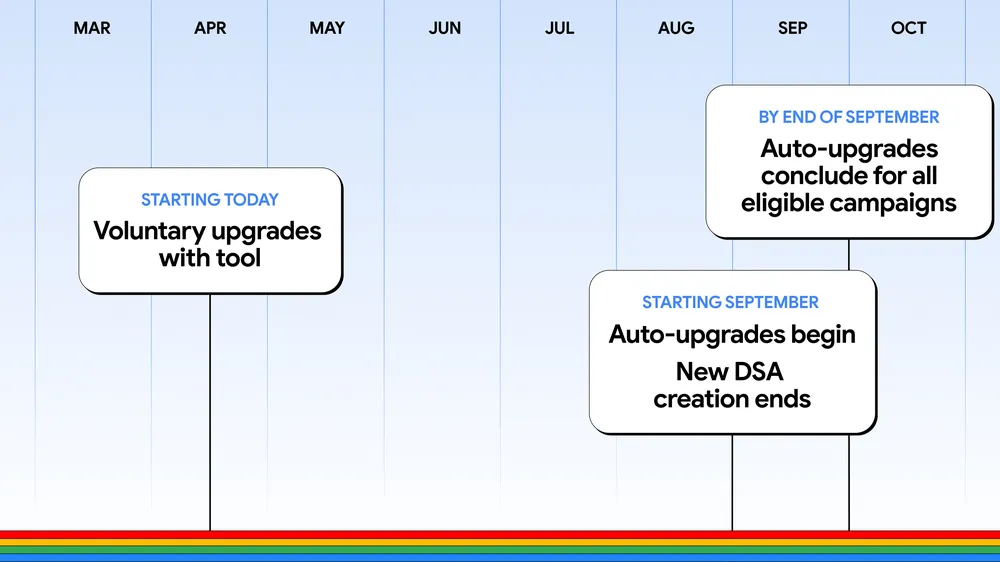
If you’re still skeptical around using it, you may be feeling even more pressure, especially as the timeline for Dynamic Search Ads (DSAs) ads being transitioned to AI max was just announced by Google. Starting in September any DSA campaigns and ad groups will be moved automatically to AI Max. Our recommendation would be to migrate over any DSA activity you have ahead of time, so you can test, fine-tune and ensure your new setup is achieving your desired results.
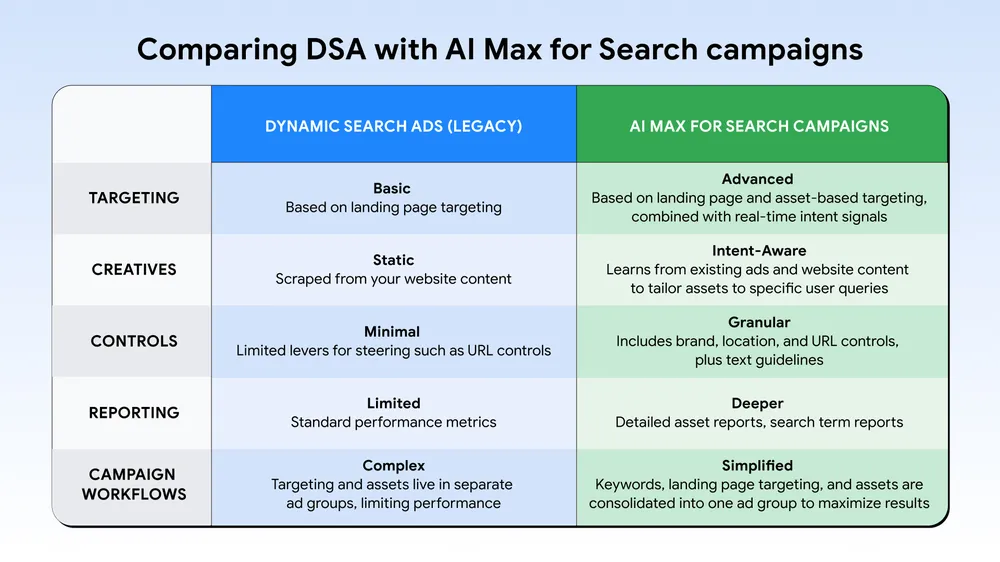
How does DSA and AI Max compare? AI Max replaces the fragmented, page-scraped targeting of legacy DSA with a consolidated workflow that integrates real-time intent signals and asset-based creatives. Summarized by Google in the below chart:
DSA updates aside, with the use of AI features in search the only entry point for your ads in AI Overviews and AI Mode, it feels like any control onceheld is diminishing. It doesn’t have to be this way. Here’s a breakdown of the latest AI features housed in Google Ads, how they actually impact your strategy, and what advantage you can leverage from Adthena to win on the SERP.
What is AI Max?
AI Max isn’t just another automation layer, or a new keyword type, it’s a one-click upgrade designed to bridge the gap between manual keyword control and the full-funnel automation of Performance Max. Unlike PMax, which can surface ads across the entire Google ecosystem, AI Max is strictly focused on the Search and AIO (AI Overview) placements. It allows you to keep your manual bids and keyword match types intact while using AI to expand your reach.
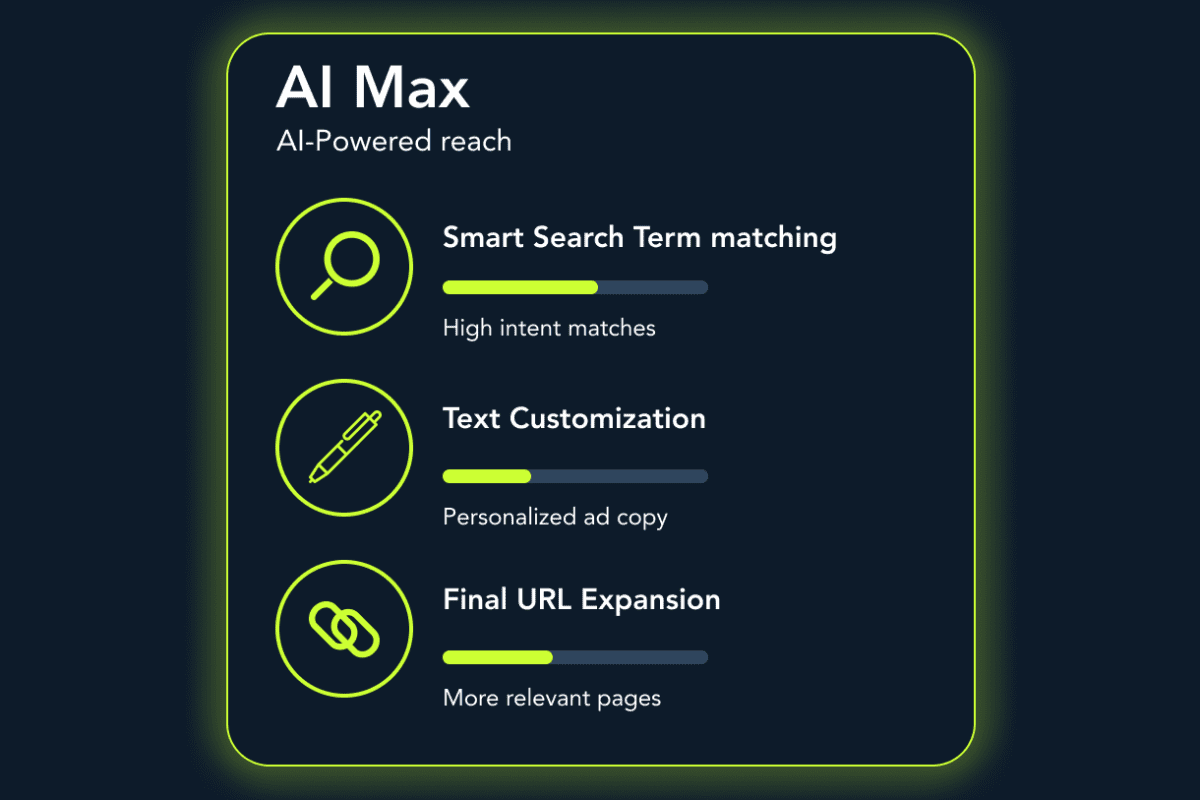
AI Max operates on three core pillars:
- Smart Search Term Matching: This uses keywordless technology to find queries that match the intent of your existing keywords. It treats your current list as a seed to explore semantically related territory.
- Text Customization: Generative AI scrapes your landing pages and high-performing ads to draft headlines and descriptions tailored to answer a user’s specific query in a personalized manner.
- Final URL Expansion: If the AI finds a more relevant deep link on your domain than the one you specified, it overrides your choice to reduce user friction. Note any pinned assets in RSAs will no longer be respected with this enabled.
The tethered element: Features #2 and #3 are tethered. To get the most out of personalized, AI-generated copy, the AI needs the flexibility to send that user to the most relevant page on your site.
Brand safety: No longer a black box?
A common misconception is that AI Max is a set and forget tactic which risks your brand’s reputation. As of February 2026, Google introduced Text Guidelines, which transform AI Max into a steerable tactic. You can now set a global brand voice policy across markets, moving beyond the initial US-English beta.
Additionally, new granular Brand Inclusions and Exclusions allow you to specify exactly which brands your ads should (or should not) be associated with. You also have URL Inclusions/Exclusions to ensure the AI never sends traffic to broken or off-brand pages.
AI Max vs. Broad Match vs. Smart Bidding Exploration: The real difference
Don’t confuse AI Max with Broad Match keywords.
- Broad Match is a match type which expands based on searches. Even though Broad Match looks at intent, user location, and recent search history, it is fundamentally trying to find a query that relates back to the specific keyword you provided.
- AI Max is a campaign-level targeting layer. It leverages Large Language Models to understand the deep semantic meaning of your website content and the user’s journey. It can match a user’s query to your ad because it understands your solution solves their problem, even if the user didn’t use any of the text on your page or in your keywords.
Furthermore, Smart Bidding Exploration acts as the bidding layer. While AI Max finds the where, Exploration determines the how much. It allows Google to temporarily loosen ROAS targets to bid on unique, untapped search categories that your regular bidding strategy might ignore to play it safe. This is often where advertisers see budget leakage, and one area where external monitoring can help plug these leaks.
How Adthena restores your visibility
Google’s reporting is often a black box in terms of competitor context. This is where Adthena’s Search Intelligence becomes your audit layer:
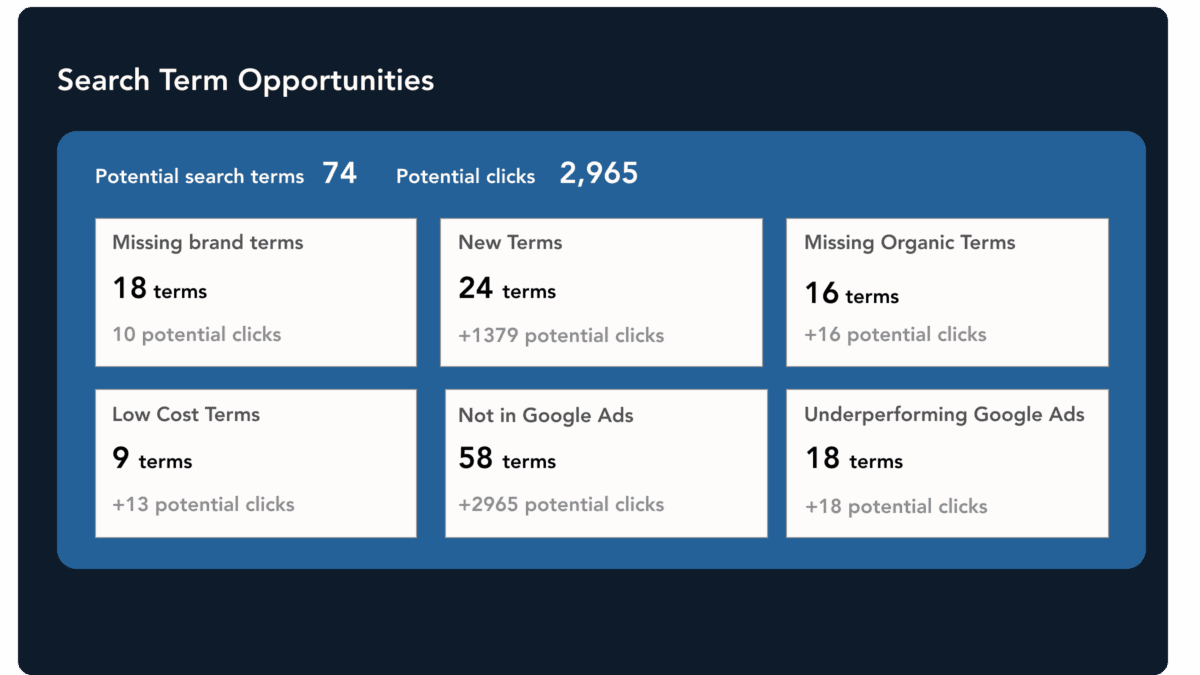
Search Term Opportunities
While Google explores, Adthena surfaces the high-frequency terms Google might hide or aggregate as “other”. This allows you to build robust negative lists and stop intent drift before it drains your budget.
 Ad Copy Insights
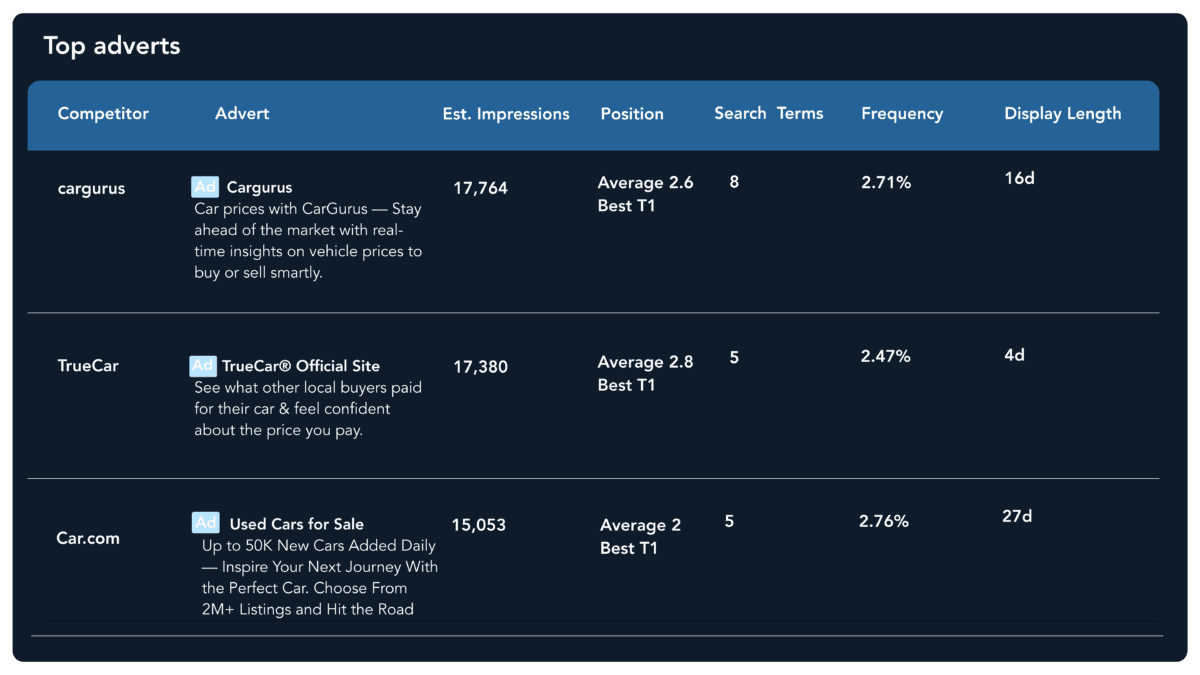
AI-generated copy can sometimes feel generic or hallucinated. Review your ad copy in the Adthena platform, and using Whole Market View, see if your AI-generated messaging is 1, on Brand, and 2, actually competitive against your peer set or just adding to the noise.
Competitive Protection
As the traditional funnel disappears and discovery happens more instantly on the SERP, Adthena monitors competitor creative shifts in real-time. We ensure your automated campaigns aren’t just running, but winning.
Brand Protection
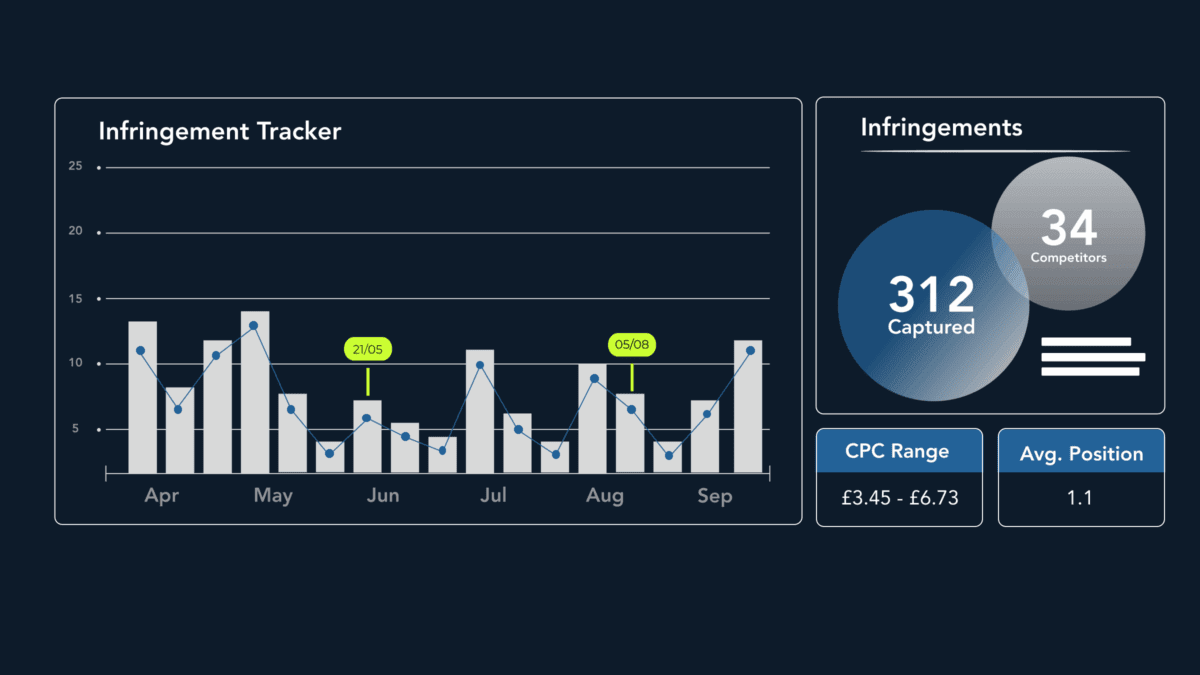
It won’t be just you adopting these new AI features and broadening the search queries you serve across. Adthena Brand Protection tools support you in the era of increased competition so you can track brand bidding and infringements from partners and competitors, allowing you to safeguard your valuable brand keywords.
What’s next?
It might feel like a manual keyword strategy or feed based structure is dead. The reality right now is that this is still important ‘fuel’ for the AI and intent signals to drive performance. So whether you’re an advocate or a skeptic already, you might have little choice in relinquishing a little more control and adopting some of these new features if you wish to remain visible across the traditional SERP, AI Overviews and AI Mode.
AI Max is built to spend. Adthena is built to help you win. Automation and AI use in your search ads shouldn’t mean abdication. If you’re ready to stop guessing what happens outside of the Google Ads vacuum and start auditing your AI-driven strategy, it’s time to talk.