Pharma in Google AI Mode: 50,000 ads served, zero from prescription brands

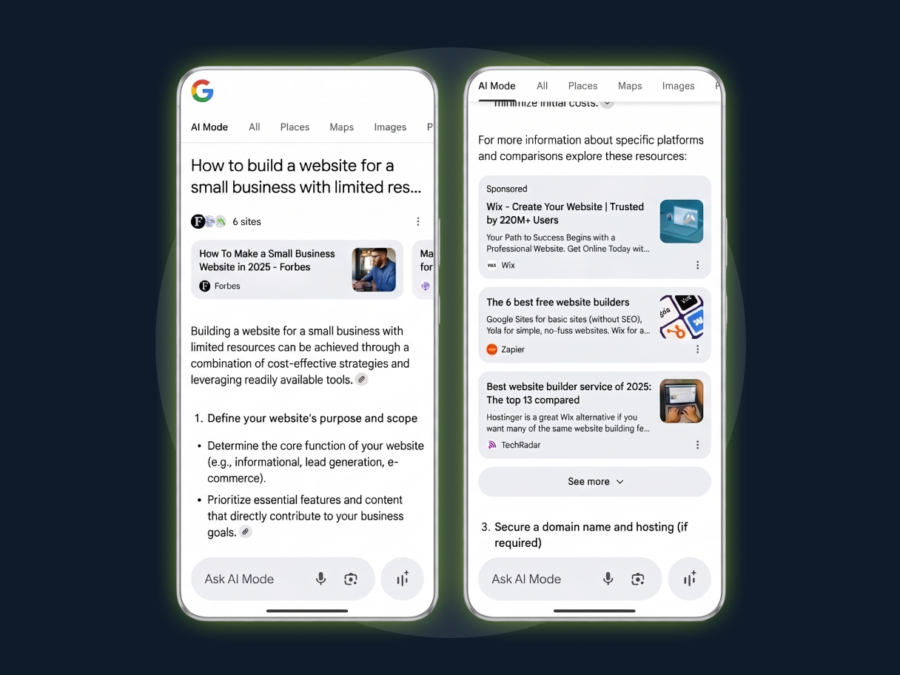
Healthcare ads are now serving inside Google's AI Mode answers, and while the space around pharma is filling fast, prescription brands are still locked out at zero.

Pharma in Google AI Mode: 50,000 ads served, zero from prescription brands | Adthena

TL;DR

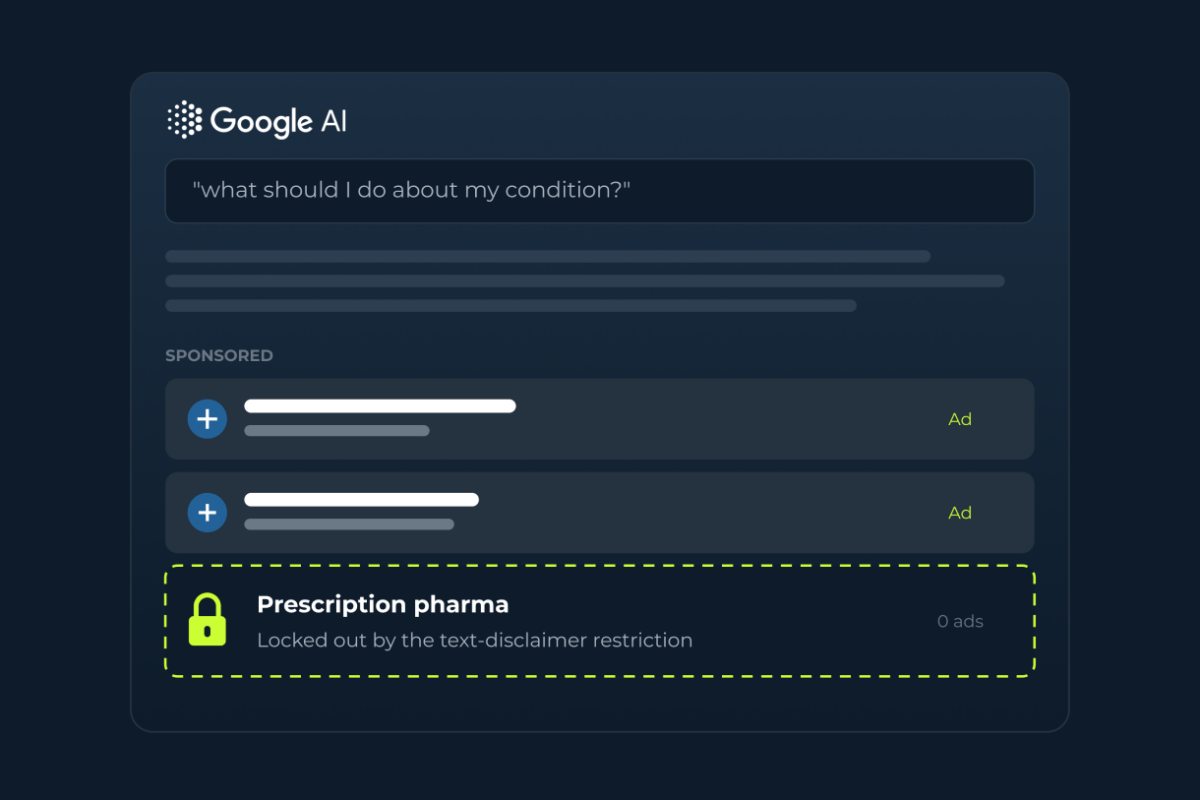
Google is testing healthcare ads inside AI Mode, the first regulated vertical allowed inside its AI answers rather than above or below them. Prescription brands, which Google doesn’t count as “healthcare,” stay locked out by a text-disclaimer restriction, which reads like sequencing, not a permanent line. Adthena data shows 491 health-adjacent advertisers already serving across 50,000 US placements in August. Prescription brands sat at zero. The test is small and US-only. For pharma marketers, it’s the starting gun.

Published by Tom Larkin September 04, 2026

What changed

Since Google began monetizing its AI surfaces, healthcare sat on the excluded list. Ads could appear above or below AI Overviews, never inside the answer itself. That changed at Google Marketing Live in May. On June 2, Google Ads Liaison Ginny Marvin confirmed a small test of ads in AI Mode for the healthcare vertical. 

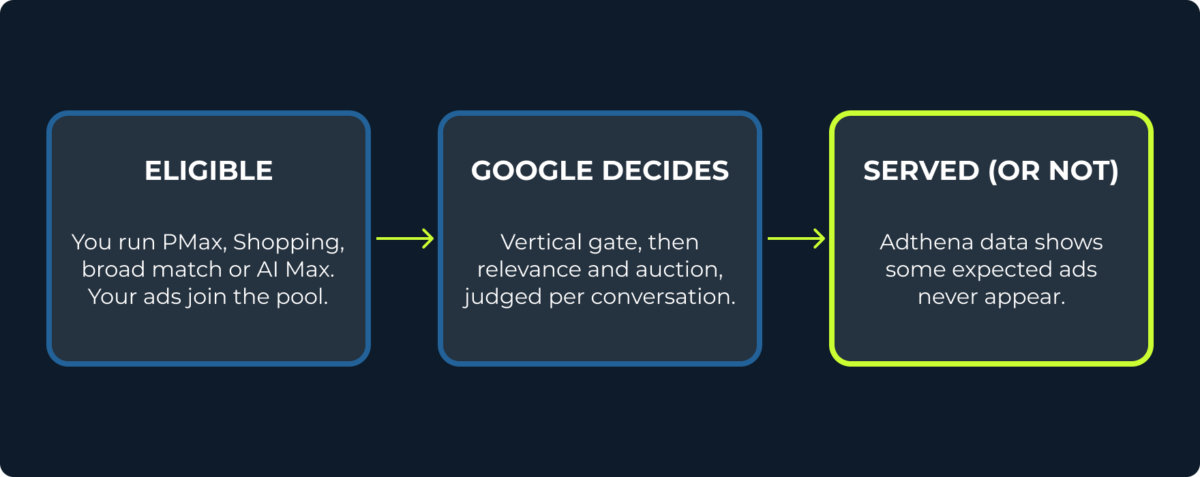
There is no AI Mode campaign type and no opt-in switch. Google draws AI Mode inventory from campaigns you may already run: Performance Max, AI Max with search term matching, Shopping, and broad match. Running those puts your ads in the pool Google pulls from. It does not, on its own, clear you to serve. A vertical gate sits on top of that pool, and in this test, healthcare is the vertical Google just opened.

Why you won't see prescription brands yet

Here’s where the gate bites for pharma. The first iteration of the test excludes creatives that use pinning or text disclaimers. Prescription advertising is built on exactly those mechanics: fair balance language, safety information, mandatory disclosures. So a pharma brand can run PMax and broad match all day, sit squarely in the pool Google draws from, and still not serve in AI Mode, because the disclaimer restriction rules the creative out.

That restriction reads like a sequencing decision, not a permanent position. Google has been steadily unblocking regulated categories across its AI surfaces, and the healthcare test follows the same pattern: start narrow, expand. When the creative requirements catch up with the regulatory ones, prescription brands enter a surface where their category conversations are already happening.

What's actually serving today

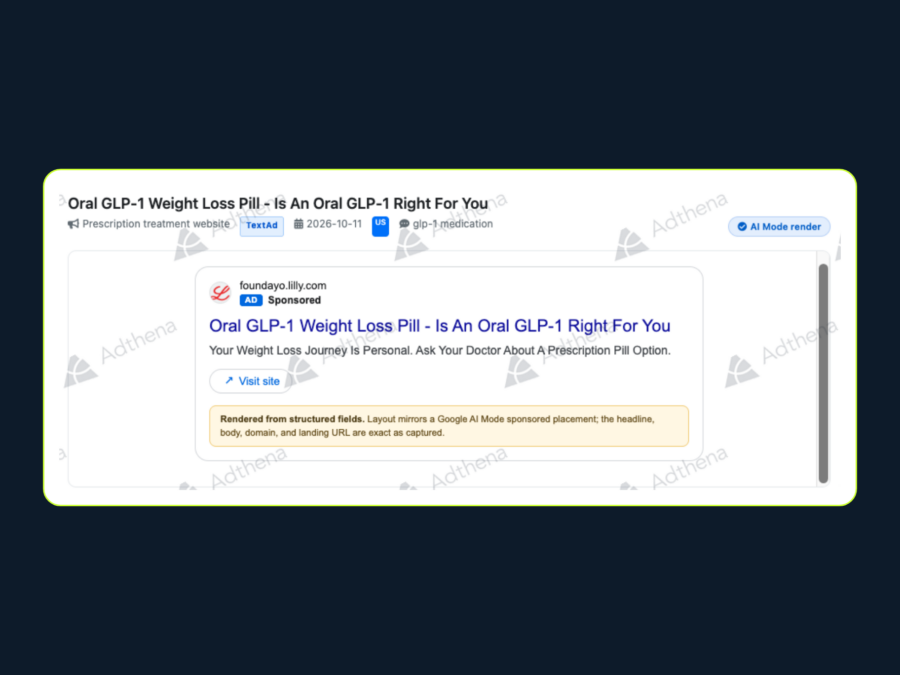
We track ad placements across AI search surfaces. A sample collected between August 2 and 25 captured 50,000 US placements in AI Mode, and the healthcare periphery is clearly live: medical alert systems, Medicare plan comparisons, medical billing and coding courses, medspa management software, appointment booking via Zocdoc, OTC brands like Vicks, and dermocosmetics like La Roche-Posay all appeared against health-related questions.

We did not find a single ad from a major pharmaceutical manufacturer or leading prescription brand in any of those 50,000 placements. That matches our Q2 tracking, where healthcare queries carried ads on just 0.38% of Google AI results. The regulated core of the category is still dark. The space around it is filling in fast.

One finding matters for pharma specifically. Across every AI surface we track, a search for a brand by name rarely triggers an ad. AI Mode serves against condition, treatment, and comparison questions, the “what should I do about this” prompts, not brand-name lookups. A strategy weighted toward defending brand terms will be structurally invisible here.

Eligible is not the same as serving

eligible vs serving pharma blog

This is the part we’d flag hardest, because our monitoring keeps surfacing it. Some advertisers have been told that adopting AI Max, or running eligible campaign types, means their ads will show in AI Mode. Being in the pool only makes you eligible. Whether you actually serve depends on winning the auction and Google’s relevance judgment against the conversation. With no AI placement reporting in the platform, nothing in your account confirms it happened.

We have already tracked cases where advertisers who expected AI Mode delivery weren’t appearing against their category’s prompts at all. Nothing was broken. Being eligible and being served are two different states, and only one of them shows up in your data. If AI Mode visibility matters to your plan, verify it independently rather than assuming eligibility did the job.

What pharma marketers should do now

Know your exposure, and verify it

If you run PMax, Shopping, AI Max, or broad match in the US, your campaigns are already in the pool Google draws AI Mode inventory from. Prescription creative won’t serve yet, but your unbranded and condition-level activity can. Baseline those campaigns now and confirm through independent tracking whether you’re actually serving, because Google Ads offers no reporting to tell you either way.

Map the conversation, not the brand term

Build a view of the condition and category questions your audience brings to conversational search. Those are the prompts where ads serve, and where your competitors and the comparison sites will appear first.

Start the MLR conversation early

If the disclaimer restriction lifts, the advertisers who move first will be the ones with this work already past the finish line. Aligning compliance, creative, and media on what a compliant AI Mode presence looks like is work you can do now.

Watch the surface independently

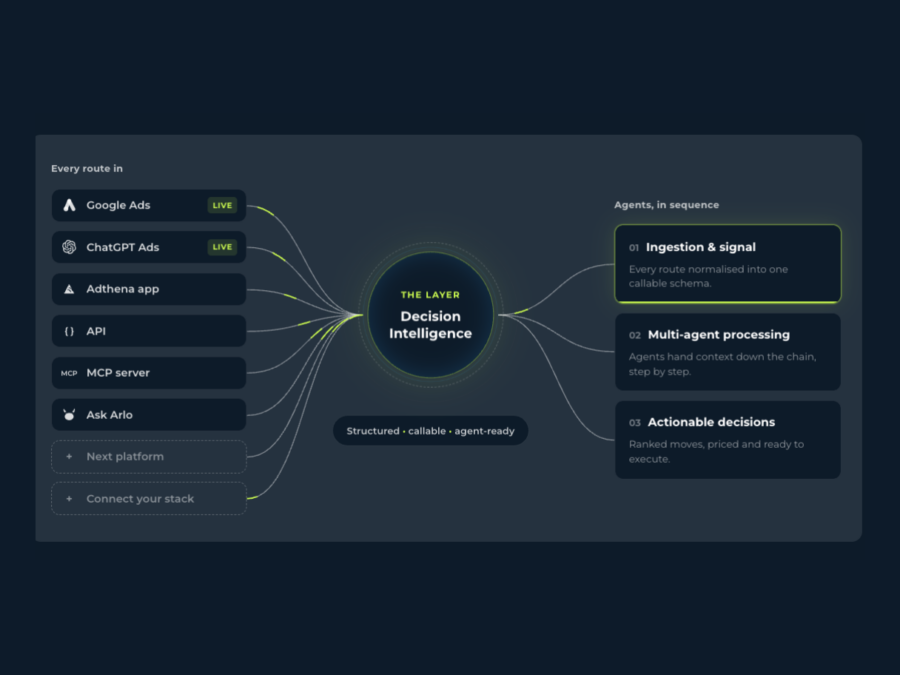
With no reporting inside Google Ads, third-party observation is currently the only way to see what’s serving against your category, and who’s winning it. That visibility is what we built AI Ads Intelligence for, covering both AI Mode and ChatGPT Ads.

The bigger picture

This is one door opening in a sequence, and the sequence is happening inside AI Mode itself. Healthcare is the first regulated vertical Google has allowed inside its AI answers. The creative restrictions on the test are the next thing to watch. And the ad formats are already multiplying: Google announced native AI Mode formats like Conversational Discovery ads and Highlighted Answers at Marketing Live this year. Meanwhile AI Mode ads stay US-only while the experience itself is live in more than 200 countries, so every other market is expansion waiting to happen.

Pharma brands that use this test period to get ready won’t just be first onto AI Mode. They’ll have the playbook in hand for every AI surface that opens to the category after it.

Adthena tracks ads across every AI search surface where available, alongside more than 14 years of paid search intelligence. AI Ads Intelligence gives you visibility into your presence and the competitive landscape inside both AI Mode and ChatGPT Ads, so you can track what’s serving, analyze competitor ad copy, and find the prompt opportunities to capture share early.

If you want to see what’s serving against your category in AI Mode today, talk to us.

Related content