ChatGPT Ads creative enhancements: What changes Oct 30

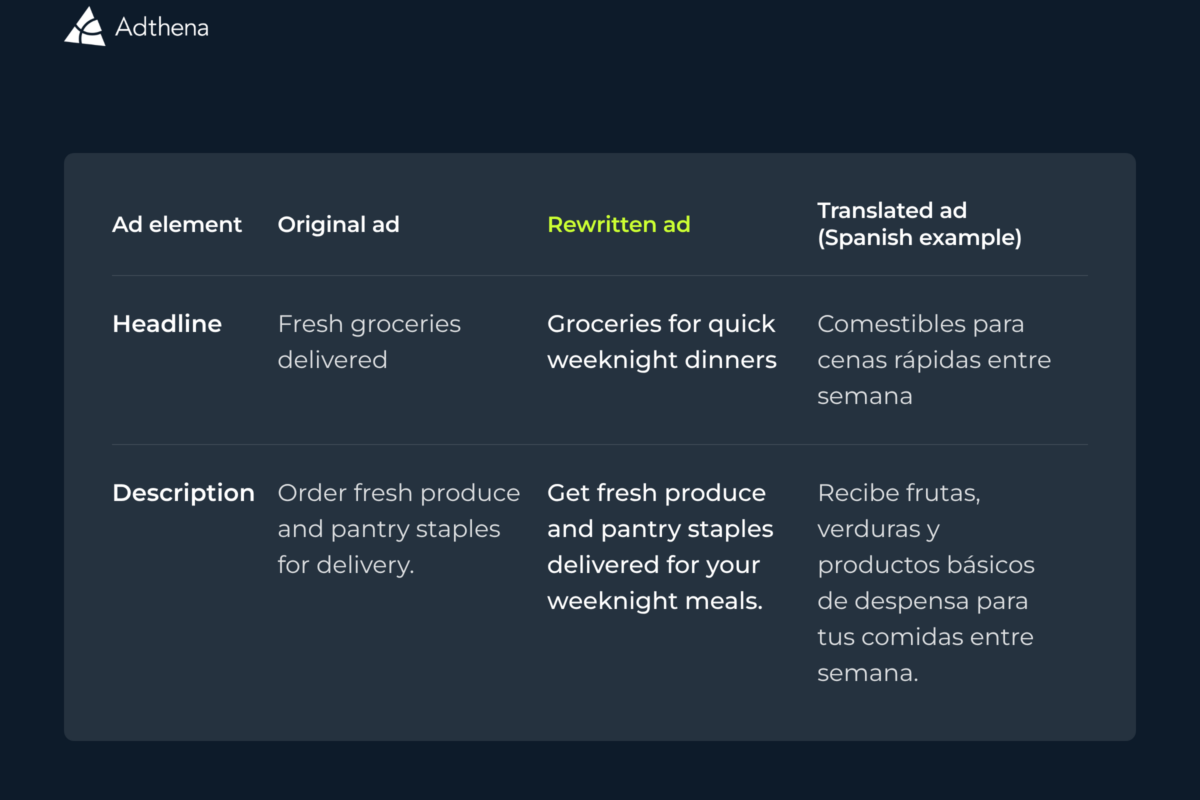
Example of how ChatGPT Ads can rewrite and translate an ad based on the conversation. The original headline “Fresh groceries delivered” is rewritten as “Groceries for quick weeknight dinners,” then translated into Spanish as “Comestibles para cenas rápidas entre semana.” The description gets the same treatment and is reworked to focus on weeknight meals.

TL;DR

From October 30, OpenAI is switching on creative enhancements by default for self-serve ChatGPT Ads campaigns. ChatGPT can rewrite headlines and descriptions, point ads to different pages on your site and translate them into other languages, sometimes in real time, without you approving each version. That creates new risk for tracking, testing and regulated advertisers at a point when visibility into where ads appear is still limited. Review your opt-out settings before the date, and look beyond ChatGPT Ads Manager to see how your ads are actually showing up in the market.

Published by Joss Froggatt October 22, 2026

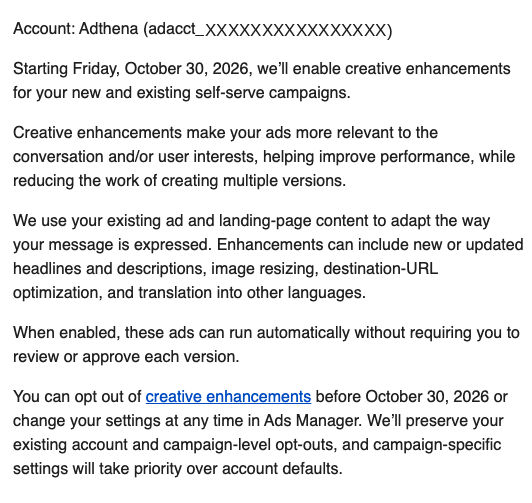
This week, ChatGPT Ads advertisers started receiving an email from OpenAI. From Friday, October 30, 2026, creative enhancements will be switched on by default for new and existing self-serve campaigns. Once they’re live, ChatGPT can adapt how your ad is expressed to fit the conversation, and those versions can run without you reviewing or approving each one.

What creative enhancements actually do

According to OpenAI’s email and its help center article, creative enhancements use your existing ad and landing page content to adapt your message. The enhancements can include new or updated headlines and descriptions, image resizing to fit ad formats, destination URL optimization to a relevant page on your website, and translation of ad text into other languages.

The help center adds two details worth noting. Variations may be prepared in advance or generated in real time based on the conversation, and the experience does not preview every variation. Reporting remains at campaign, ad group and ad level, covering metrics such as impressions, clicks, spend, CTR and attributed conversions.

Your existing account-level and campaign-level opt-outs are preserved, and campaign settings take priority over the account default. You can change the setting at any time in Ads Manager.

OpenAI Chatgpt ads | Adthena

The case for it

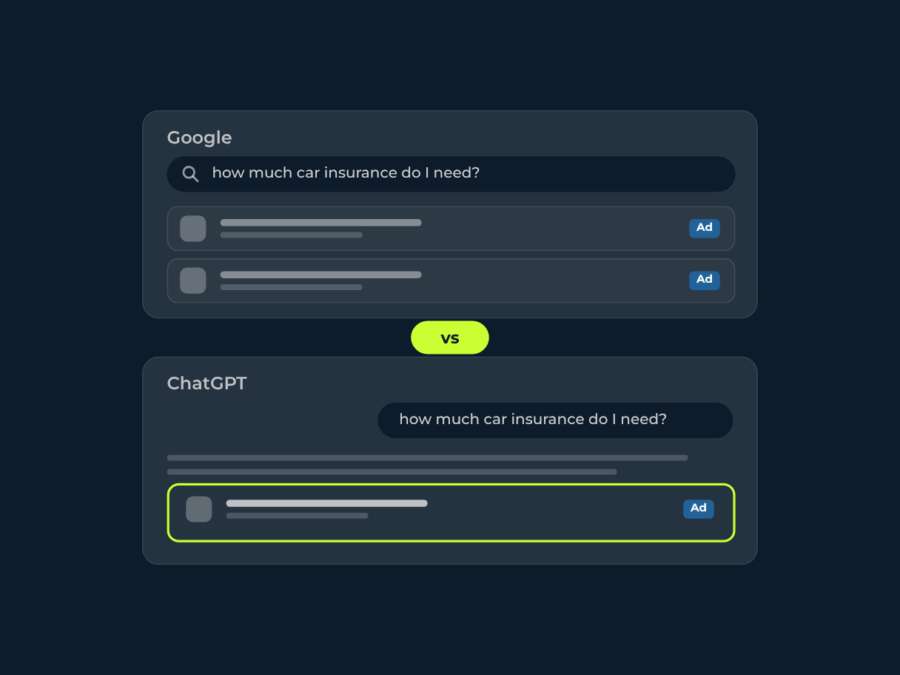
Conversations are far more varied than keyword queries we all know from Google. A single ad written for one intent will often sit next to a prompt phrased in a way the advertiser never anticipated, and very few teams have the time to write dozens of variants by hand. Adapting copy to context is a logical response, and Google has gone a similar way with automatically created assets in Google Ads.

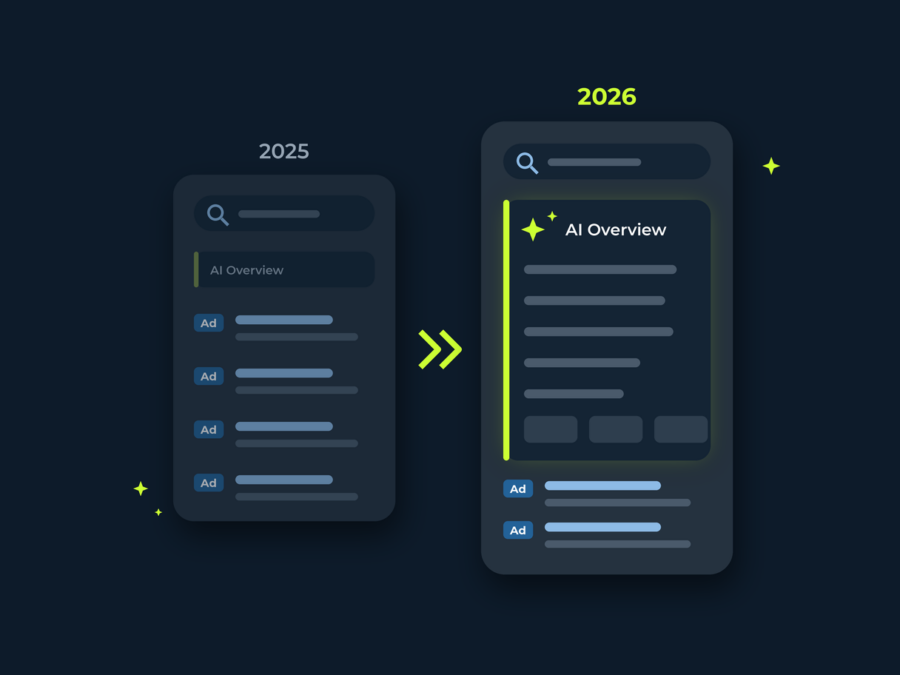
The difference is the order things arrived in. Google advertisers had years of search term data before the platform started generating copy on their behalf. In ChatGPT, visibility into where ads appear is still limited, and now the message can change too.

Four risks to review before the switch

Destination URLs

Rewritten copy gets most of the attention, but URL changes may carry more operational risk. If ChatGPT sends a user to a different page on your site, your UTM parameters, conversion tracking and landing page tests may not hold up. A page built for one audience can end up serving another.

Regulated categories

OpenAI’s help center says creatives and landing pages must comply with its Ads Policies, but it doesn’t describe a separate review of enhanced versions or specific handling for regulated categories. In financial services, healthcare, pharma and other regulated sectors, responsibility for what an ad says typically stays with the advertiser, whoever drafted the words. If your landing page contains claims, rates or terms that only make sense in context, assume they could appear in a headline, without context.

Measurement

When the platform produces its own variants, a clean A/B test becomes harder to run. If results move, it’s difficult to tell whether the enhancements caused it or something else did. OpenAI’s help center says as much: changes over time don’t, on their own, show the effect of enhancements.

Translation

Translated ad text can reach users in a language your team never provided ad copy for. Pricing, offers, product availability and legal wording often differ by market, and a translation of accurate English copy could still be inaccurate for the reader who sees it.

What to do before October 30

  • Decide your account default deliberately rather than inheriting it.
  • Set campaign-level opt-outs for regulated products, active tests and any campaign where copy needs sign-off.
  • Review landing pages as if they were ad copy, since they now feed the enhancements.
  • Check tracking on every page ChatGPT could reasonably send traffic to, not just your chosen destination.
  • Annotate the change date in your reporting so any shift in performance has context.
  • If you keep enhancements on, consider holding back a comparable campaign with them switched off as a reference point.

Seeing the market around your own reporting

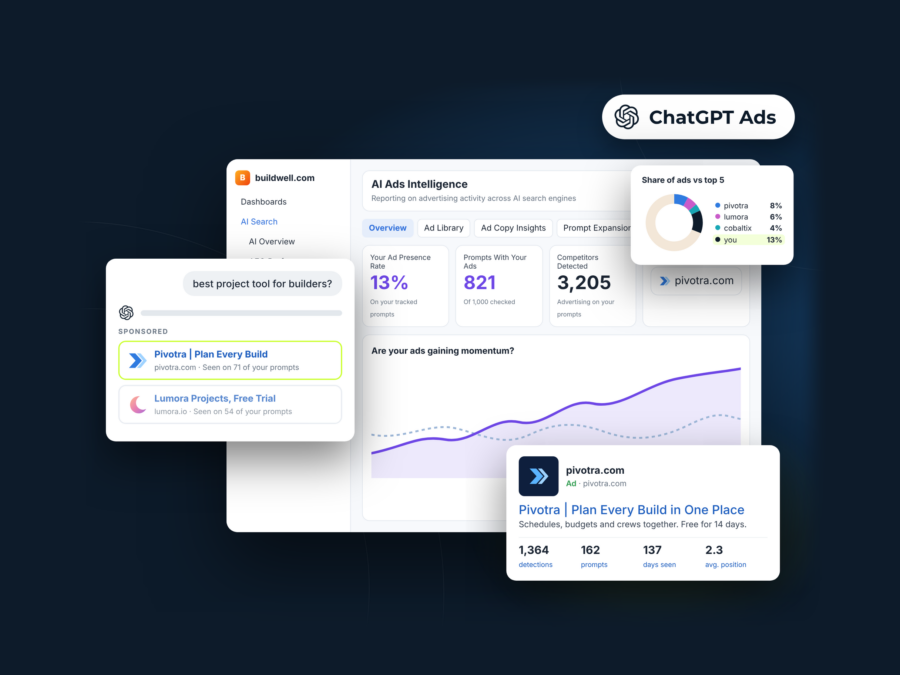
Ads Manager shows you your own performance. It won’t show you how your ads appear next to competitors, or how other advertisers are adapting their messaging on the same prompts.

That’s where ChatGPT Ads Intelligence helps. It monitors a defined set of prompts across the topics you care about and records which advertisers appear on them. The Ad Library captures ad copy word for word, so you can see how your ads and your competitors’ ads are being expressed on the prompts you track, and spot when headlines, descriptions or landing pages shift. Ad Copy Insights benchmarks headlines and landing pages against the market median, which gives you a reference point once copy starts varying.

It’s worth being clear about what that view is. AI Ads Intelligence gives you a directional, representative read across the prompts you monitor. It doesn’t capture every variant served to every user, and real-time versions tailored to individual conversations or user interests won’t all be visible. Treat it as an early warning signal that sits alongside your own Ads Manager data, so changes in how your brand shows up don’t go unnoticed.

Whether you opt out or stay in, make the decision before October 30, and make sure you can see enough of what follows to judge whether it was the right one.

Start a 21-day free trial of ChatGPT Ads Intelligence | Book a demo 

Related content