ChatGPT Ads quietly adds negative phrases: What it means for advertisers

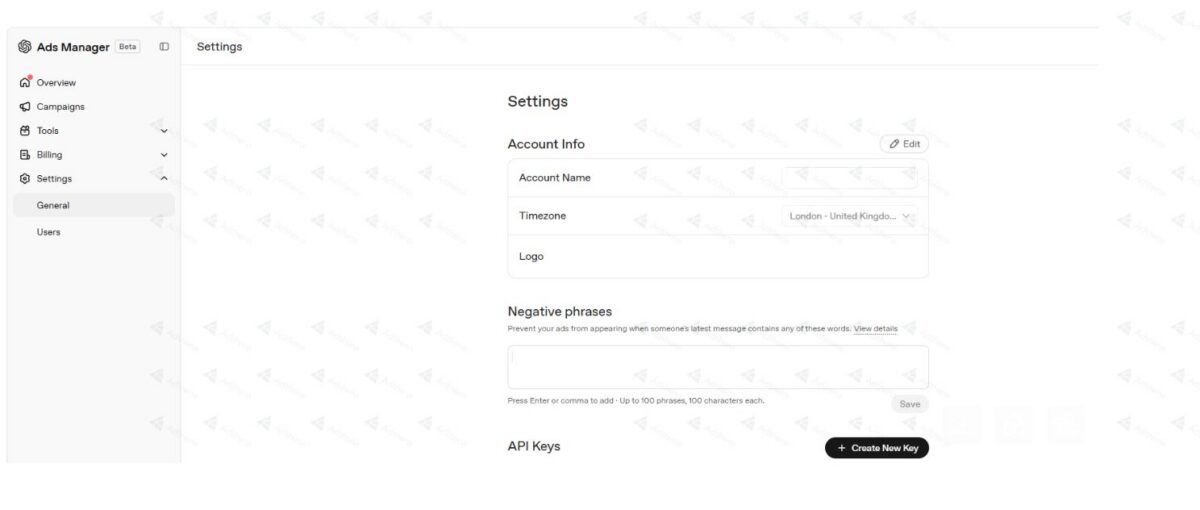
OpenAI has quietly added a negative phrases field to ChatGPT Ads Manager, spotted in a live UK account before any public notice. It's a small change with a big signal: ChatGPT Ads is starting to behave like search.

ChatGPT Ads Negative Phrases blog image

TL;DR

OpenAI has quietly added a negative phrases field to ChatGPT Ads Manager, spotted in a live UK account before any public notice. It lets advertisers block their ads from showing against specific words, a hard exclusion that works like negative keywords in search. It’s a small change with a big signal: ChatGPT Ads is starting to run on the same discipline as search.


Published by Ashley Fletcher August 21, 2026

What we spotted in a live account

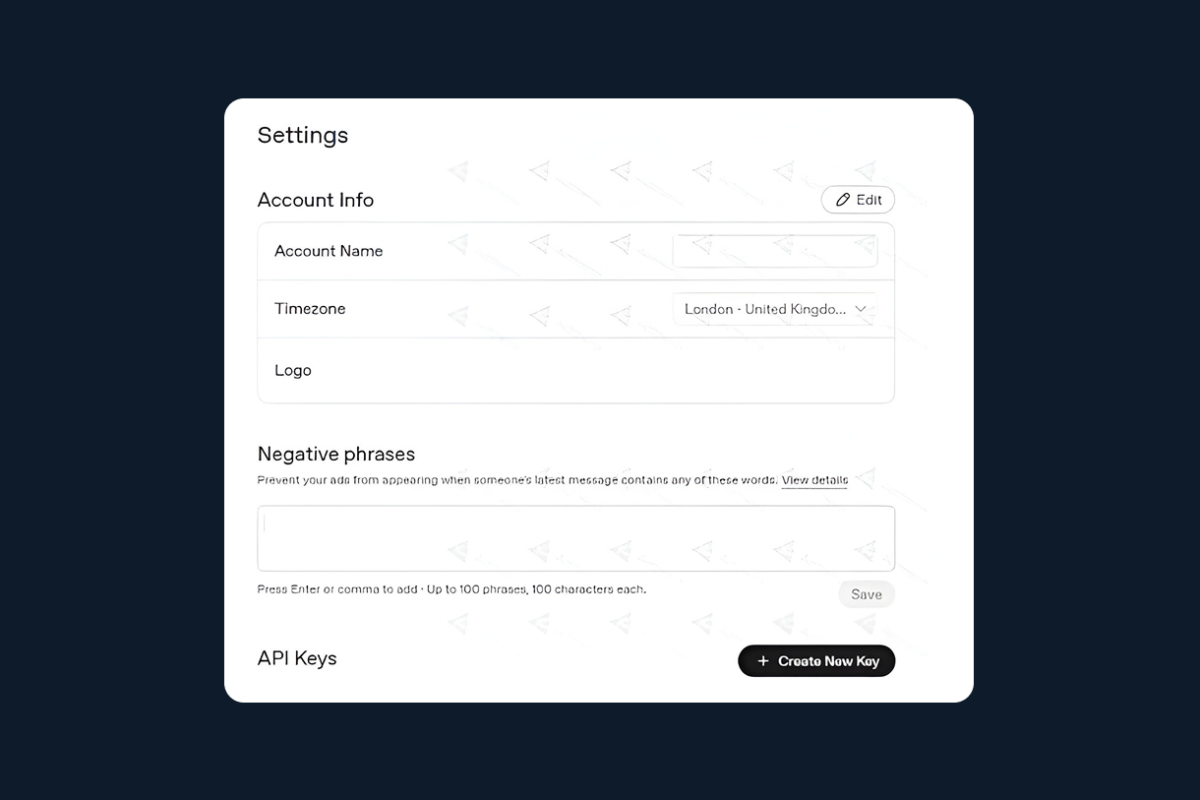
We caught something new inside a UK advertiser’s ChatGPT Ads Manager account this week, ahead of any public rollout notice. Under Settings, OpenAI has added a field called Negative phrases: a place for advertisers to list words or phrases, up to 100 of them at 100 characters each, that block an ad from showing whenever a user’s message contains them.

ChatGPT Ads Negative Phrases blog

Why this is more than a settings tweak

Until now, the main lever for shaping where ads appeared was context hints: a lighter touch that nudged the topics an ad could run against rather than ruling anything out. Negative phrases work as a hard exclusion instead, much closer to how negative keywords have functioned in search for two decades.

That’s a real shift. It pulls ad placement control on ChatGPT toward the precise, rule-based targeting performance marketers already rely on in Google and Bing. Brands get a way to keep spend out of conversations that would never convert, or that could sit badly next to their name.

What it signals for the channel

The rollout still looks limited and this is early. But it’s a meaningful step toward LLM advertising running on the same discipline as search advertising already does. When a channel starts adding negative keywords, brand-safety controls and exclusion rules, it’s maturing from an experiment into a place serious budgets can operate.

It also fits the wider pattern. As ChatGPT Ads expands across Europe, the buying surface is arriving ahead of the tools that give advertisers control and visibility. Negative phrases is one of those controls catching up, and it won’t be the last.

What advertisers should do

If you’re already active on ChatGPT Ads, check your Settings for the field and start building an exclusion list the way you would in search: block terms tied to wrong intent, competitor confusion, or contexts that don’t fit your brand. If you’re not active yet, treat this as another sign the channel is professionalising, and worth a baseline now rather than later.

At Adthena we’re watching this closely as part of tracking how ad controls evolve across ChatGPT and the wider AI answer engine landscape. ChatGPT Ads Intelligence monitors 300,000+ prompts daily to show who’s advertising, on which conversational triggers, and how the channel’s mechanics are shifting week to week.

Want to track ChatGPT Ads? Start your free 21-day trial.
Related content