TL;DR
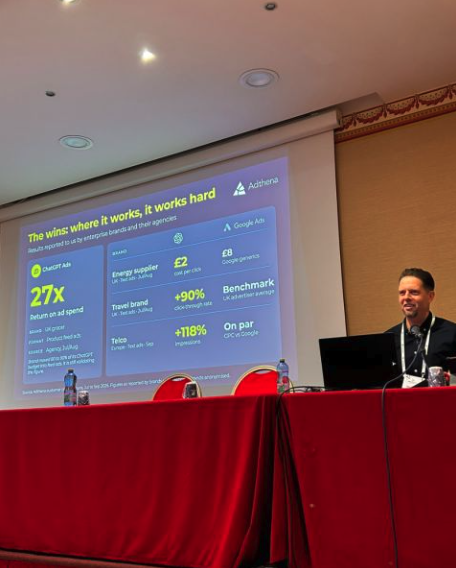
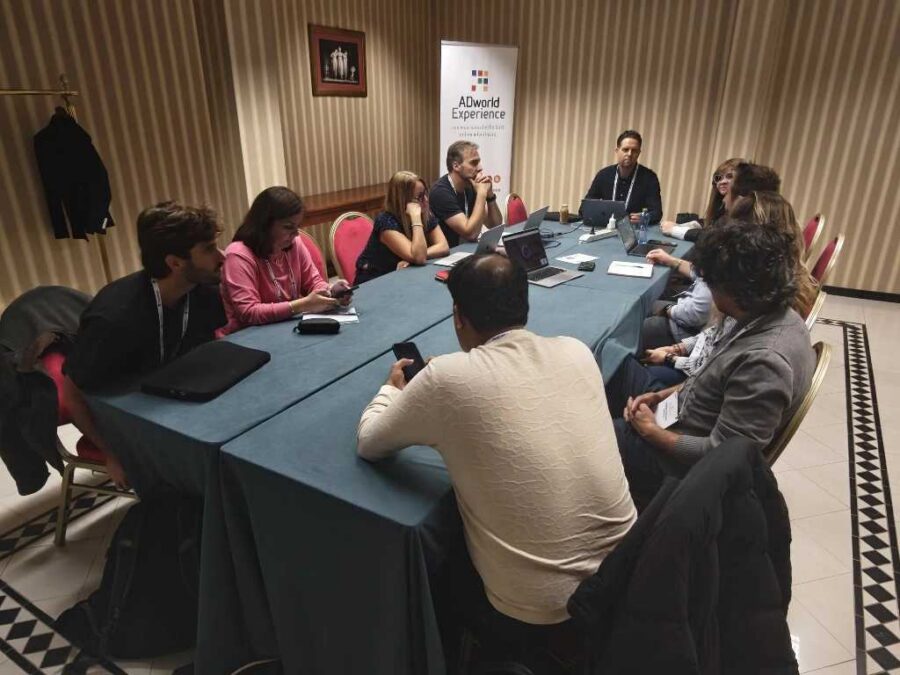
At AdWorld Experience in Bologna on October 15, 2026, Adthena CMO Ashley Fletcher shared what our data and enterprise customers reveal about ChatGPT ads performance. Of 30 enterprise brands that shared results with us, 52% are struggling to make spend pay back, while 26% are matching or beating Google. Much of the difference comes down to how tightly brands control where their ads appear. Meanwhile, AI Overviews more than doubled in 2026, and US ads now sit inside them.

Published by Serra Benstead
October 28, 2026
ChatGPT ads weren’t meant to look like Google Ads. Now they do
In November 2025, Search Engine Land reported that ChatGPT ads were coming and wouldn’t look like Google Ads. Eight months after the first ads went live, they look a lot like Google Ads.
The first ads appeared in the US in February 2026 with a $250,000 minimum buy-in. By May, there was a self-serve Ads Manager with CPC bidding and no minimum. The UK followed in June, 31 European markets opened in August, and September brought conversion bidding, pixel measurement, audience targeting and shopping ads.
OpenAI’s ads business reached a reported $1B annualized revenue run rate in August 2026. In September, Adthena tracked 4,764 unique advertisers in the UK and more than 15,000 in the US.
Panels miss most of the ads in ChatGPT
Panel-based monitoring sees ads on roughly 1 to 2% of prompts. Adthena’s direct prompt indexing sees ads on 20 to 40% of the prompts we track. With ChatGPT taking 80.5% of AI chatbot referral traffic in September 2026 (StatCounter), a panel view shows you a small fraction of the channel.
Half of enterprise brands are struggling with ChatGPT ads
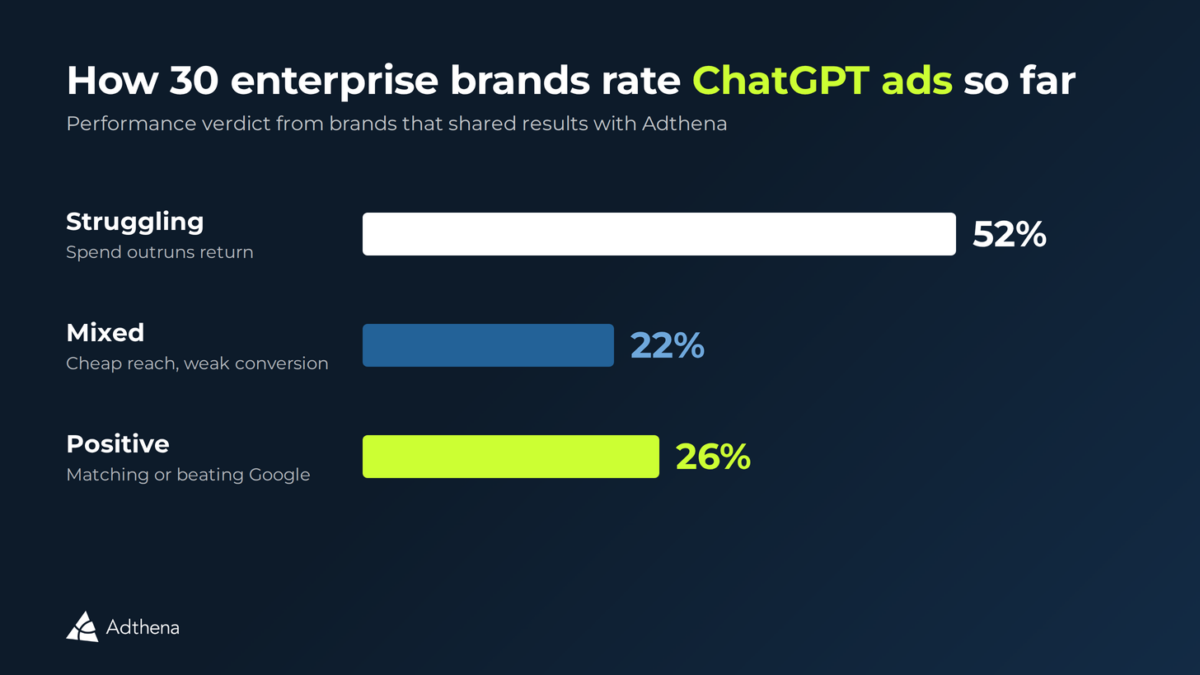
Between July and September 2026, 30 enterprise brands shared their ChatGPT ads performance with us:
- 52% are struggling, with spend outrunning return
- 22% report mixed results: cheap reach, weak conversion
- 26% are positive, matching or beating Google
Most treat it as an upper-funnel test, ranked below search and above display and social. As one global asset manager put it: “It performs worse than standard search, but better than standard display.”
The problems were consistent. Thirteen brands hit compliance and policy blocks. Eleven saw ads on irrelevant prompts, like a pension provider appearing next to sippy cups. Ten flagged tracking gaps; one UK retailer saw 198 clicks in the platform and 6 in GA4.
Where it works, it works hard
These results were reported to us by brands and their agencies:
- A UK grocer reported a 27x return on ad spend from product feed ads, and is still validating the figure.
- A UK energy supplier paid £2 per click, against £8 on Google generics.
- A UK travel brand saw a click-through rate 90% above the UK advertiser average.
- A European telco grew impressions by 118%, with CPCs on par with Google.
Your competitors may own prompts with your brand name
“You’d never leave Google brand terms unprotected,” Ashley told the room. “On ChatGPT ads, you already have.”
On prompts naming a leading denim brand, 0% of the ads came from that brand. Zalando took 37.6% of the ad space, followed by Roman at 15.1% and Next at 11.8%.
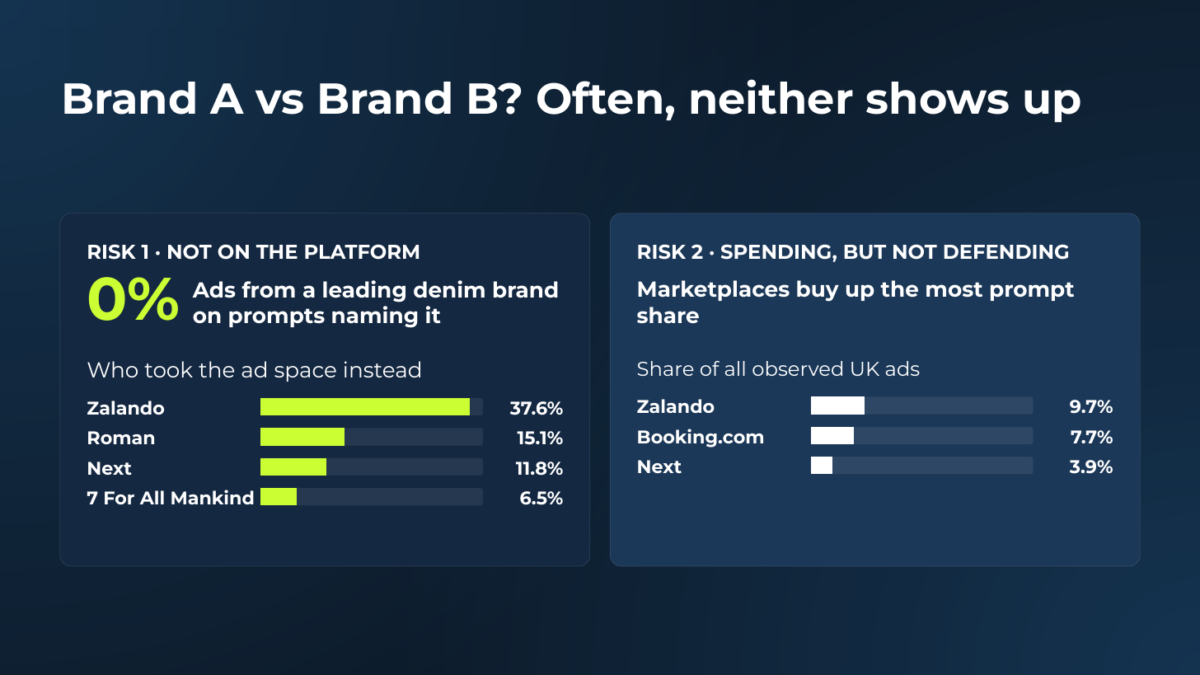
We tested the fix on Adthena’s own account. Our ad frequency on comparison prompts went from 0% to 22% within days. We audited every comparison prompt where we were missing, built dedicated ad groups with tight context hints, and sent traffic to a value-first landing page in place of a hard-sell form.
One context hint can make or break a campaign
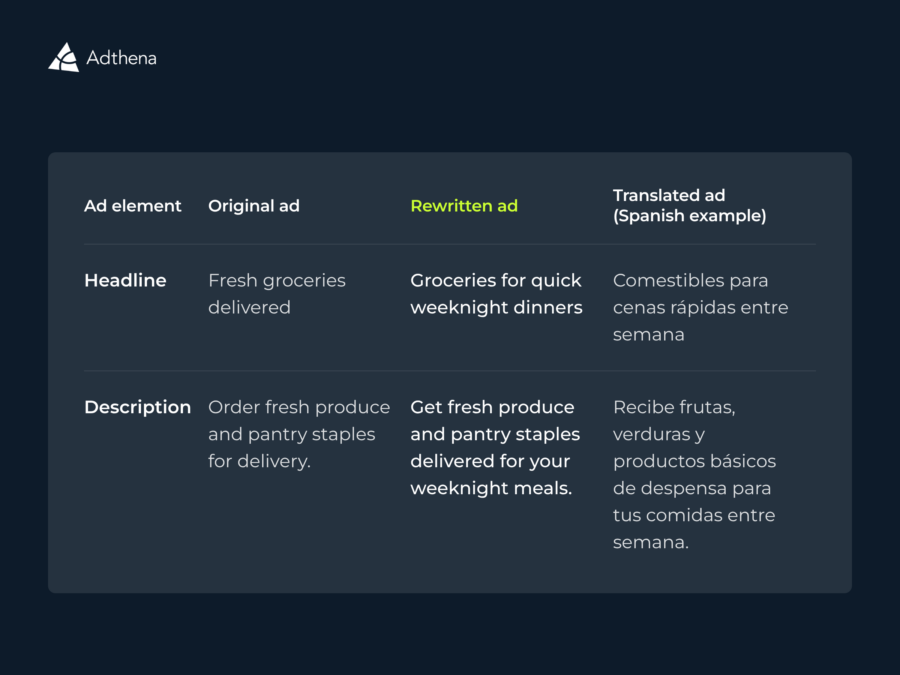
Without negative keywords for most advertisers, the context hint does most of the targeting work. On our own account, a broad hint covering six or seven ideas matched us to prompts like “channel 4 vs itv advertising.” Rewritten around one tightly drawn idea, every off-brand prompt disappeared.
ChatGPT gets relevance right 90% of the time, across more than 50,000 UK placements we analyzed in September 2026. The other 10% wastes budget and puts ads in rivals’ comparison conversations.
Small changes can do a lot of damage, fast. A UK mobile network saw CPC rise 86% in 10 days after a copy-paste edit overwrote its targeting hints, costing around £7,100 a month. Without daily checks, budget leaks for weeks.
AI Overviews more than doubled in 2026
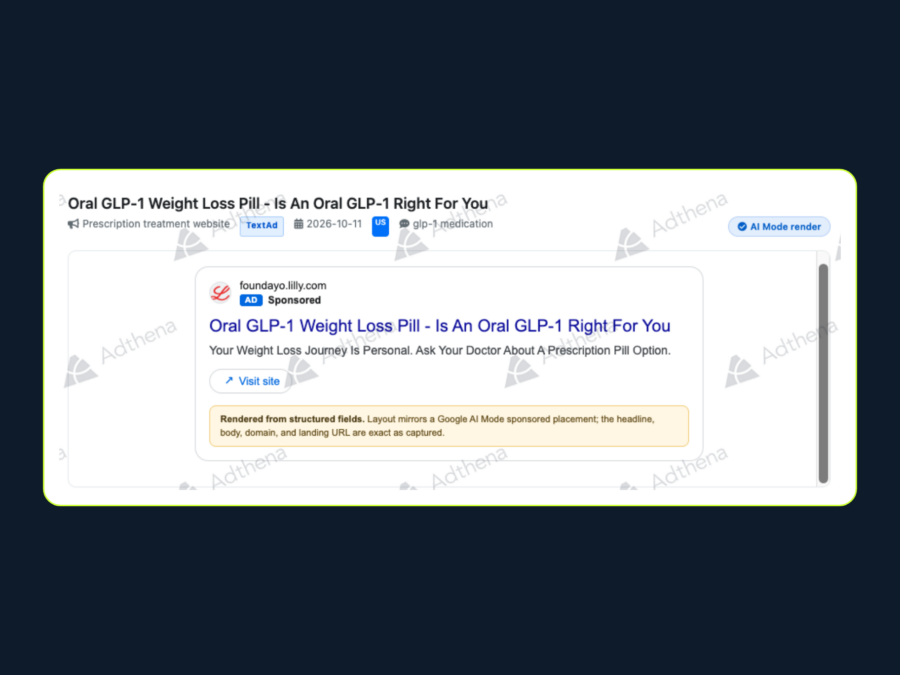
The same shift is happening on Google. Ads now appear inside AI Overviews, the AI-generated summaries at the top of search results. Across Adthena client accounts, the share of US searches showing an AI Overview rose from 24% in January to 61% in September 2026. In the UK, it rose from 13% to 50%.
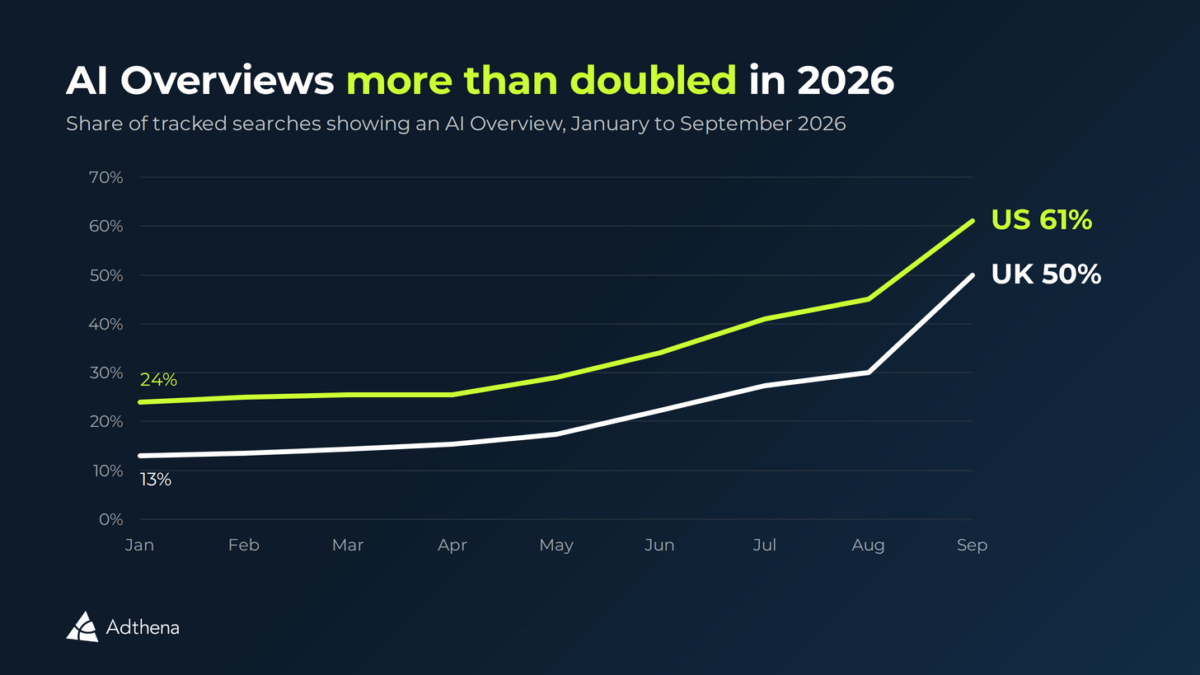
So far, that’s a US story. Up to 11% of one US brand’s text ads now sit inside the AI Overview, while every UK and Italian account we checked was at 0%. (These figures are directional, based on an unweighted average of client accounts.)
Ashley’s four checks while ads in AI Overviews grow:
- Find your AIO queries. See which of your terms trigger an AI Overview, and whose ads sit inside it.
- Audit broad match, AI Max and PMax. Their search terms decide where you show in AIO placements.
- Track rivals in the answer. Log who appears in AIO ads on your money terms.
- Prepare for AI Mode. Ads have started appearing in Google AI Mode in the US, so build the same habits there now.
Ashley closed with a prediction. Google stitches intent together from clues. ChatGPT is told intent turn by turn, from “Turkey holidays?” to “Hotel A or Hotel B?” Once conversion bidding matures, he expects spend to pile onto those final turns.
What to do now
“Nobody has the manual yet,” Ashley said. “We learn on the day, take aim and adjust.” Three places to start:
- Tighten your intent signals. Context hints on ChatGPT and search terms on Google both decide where you appear.
- Watch every AI surface. ChatGPT ships new ad features monthly, and AI Overviews and AI Mode are moving fast. Check your accounts daily.
- Monitor competitors across AI search. Start with Adthena’s free ChatGPT Ad Index and the AI Search Ads report.
The brands winning in ChatGPT ads today are the ones watching it closely. Start your free trial to see where your brand and competitors show up.