Google AI Mode ads: Google is rebuilding your search ads for every conversation

Google is serving your existing search ads inside AI Mode, but never the same finished ad twice. Here's what our US data shows, and what to check before it reaches the UK.

Ads have arrived in Google's AI Mode

TL;DR

Ads are live in Google’s AI Mode in the US, pulled automatically from Performance Max, Shopping, AI Max, and Broad Match campaigns you already run. No opt-in, no opt-out, no separate reporting. Fresh Adthena data (35,892 US ad items, August 3 to 16) shows how they’re served: Google reassembles your existing responsive search ad assets into a new headline for almost every conversation. The UK has had AI Mode for a year. The ads are the missing piece, so here’s what to prepare while it’s still someone else’s market.

 

Published by Joss Froggatt August 26, 2026

Ads are live in AI Mode, and you can't opt out

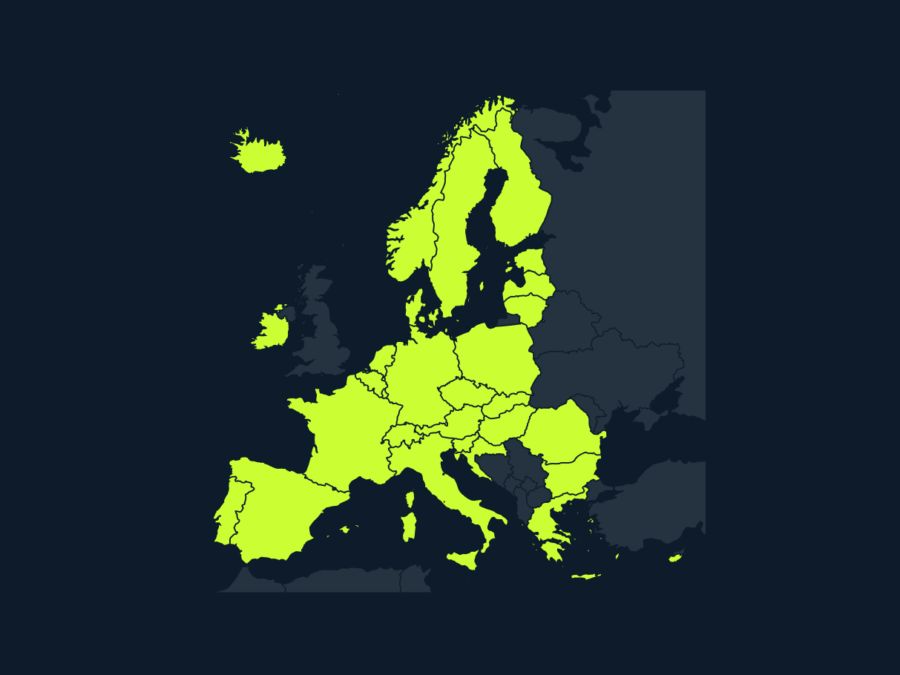
Ads have been running inside Google’s AI Mode since last autumn, though only in the US so far, with India named in the rollout too. If you run Google Ads in the UK, you can use AI Mode every day without seeing an ad. That won’t last. Google has said more countries are coming, and if the AI Overviews (AIOs) rollout is any guide, “coming” tends to arrive faster than most teams are ready for.

Quick definition, because there’s still confusion. AI Mode isn’t AIOs, the summary stitched to the top of the standard results page. It’s a separate tab inside Google Search, alongside “All” and “Images,” that replaces the results page with a conversational answer built on Google’s Gemini models. You ask, it answers, you follow up, and it behaves like an LLM chat with citations. Google reports around 1 billion monthly users, and Alphabet says AI Mode queries run roughly three times longer than traditional searches. Longer, messier, “here’s my situation” questions.

Google AI Mode ads: Google is rebuilding your search ads for every conversation

How an ad ends up inside it

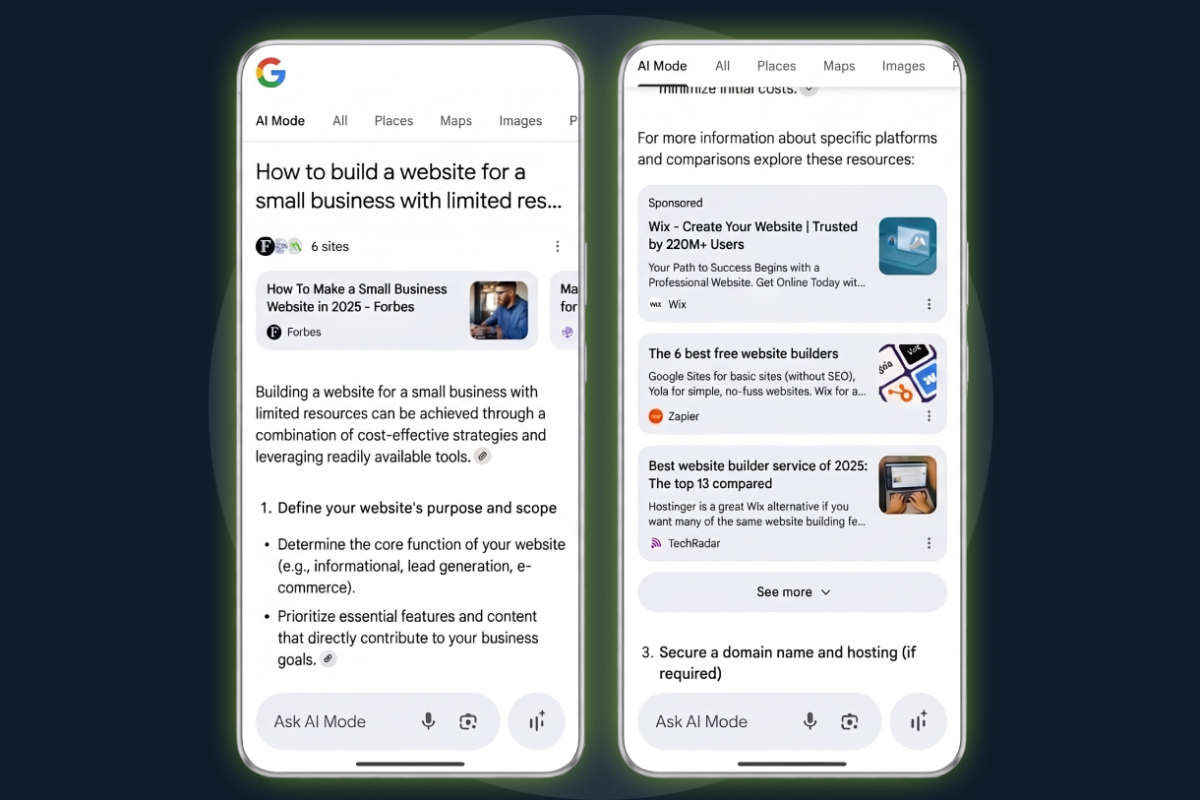
You can’t target AI Mode, and you can’t avoid it. There’s no campaign type and no placement checkbox. Ads are pulled automatically from campaigns you’re likely already running: Performance Max, Shopping, and Search using broad match, including AI Max for Search. Run those in the US and you’re already an AI Mode advertiser, with no way to opt out per Google’s own help documentation.

Selection differs from the classic auction. Google judges whether your ad is relevant to the query and to the AI response it would sit inside, and in a conversation that includes the follow-ups, so context builds across the exchange. Win that plus the auction and your ad appears with a “Sponsored” label, usually within the response. This is the opening format. Google is already testing native ones in the US, including Conversational Discovery ads and Highlighted Answers inside AI-generated recommendation lists.

What you can see in Google Ads today (not much)

Almost nothing. There’s no segmented reporting for AI Mode. Impressions, clicks, and conversions blend into your existing campaign metrics, grouped under “Top ads” with no way to isolate them and no separate bidding. US advertisers are reading CTR and CPC movement on AI-eligible campaigns and watching on-site engagement after enabling AI Max. Directionally useful, forensically close to hopeless. It’s early Performance Max again. Until Google ships granular reporting, nobody outside Google can attribute a conversion to an AI Mode placement with confidence, which is why third-party observation of the surface has become the way to understand it.

What our US data shows

Adthena has been tracking ad serving across AI surfaces. Our Q2 tracking ran roughly 850,000 US queries, and for this piece we pulled a fresh fortnight of US AI Mode data, August 3 to 16. Treat it as a signal of how the surface behaves, not a census of every ad served.

In Q2, AI Mode carried ads on just 5.8% of tracked US queries, so it stays quiet most of the time. But breadth is growing fast. In that single fortnight we tracked 35,892 ad items from 6,120 distinct advertisers across more than 11,000 ad-triggering prompts. The mix will feel familiar to anyone who watched ChatGPT ads launch in the UK: comparison sites led, with NerdWallet, Carvana, Priceline, LendingTree, Compare.com, and Insurify most visible. Aggregators are first through the door again, because their whole model is answering “which one should I pick.”

Google never serves the same headline twice

First, these really are your existing ads. 99.8% of the ad URLs we captured carry standard Google Ads campaign tracking parameters. Everyday assets, served onto a new surface.

What Google does with them is the finding. Responsive search ads are built from parts: you give Google up to 15 short headline assets and it assembles two or three each time it serves. In our sample, those parts repeated constantly, with nearly half of all ads containing a phrase that also appeared in the same advertiser’s ads on at least five other prompts. The finished headline, though, was different almost every time. Across 35,892 ads, we didn’t once see an advertiser serve the same assembled headline against two different prompts.

One advertiser, with 976 ad items, shows it neatly. Against “best travel rewards credit card for everyday use” it served “2026’s Best Travel Cards – 2026’s Top Credit Cards.” Against “best travel rewards credit card for travel,” “2026’s Best Travel Cards – The Best Travel Credit Cards.” Same opening component, different close. You supply the source material, and Google decides what gets assembled, conversation by conversation. On this surface, your RSA assets aren’t finished ads. They’re ingredients.

Your responsive search ads stopped being finished ads the moment they entered AI Mode. Google is treating them as raw components and assembling a new headline for almost every conversation. That changes how you should write and stock your assets, not just where they run.

Joss Froggatt
Adthena
Product Marketing Manager

What earns a place in the assembled ad

The finished ad tracks the prompt closely without parroting it. Around a third of ads carried half or more of the prompt’s meaningful words in the headline, while a quarter shared none, which fits a system matching on meaning rather than exact strings. Ask “what is the best auto insurance company in the US” and an aggregator appears with “Best Car Insurance 2026 – Just Released Aug 2026 Rates – Starting at $29/Month.” It reads like part of the answer.

The patterns in what gets picked are clear. Half of all headlines contain a number, nearly a quarter use “best,” 18% carry a 2026 freshness stamp, and 17% lead with a price or percentage. Specific, numeric, current-sounding assets win.

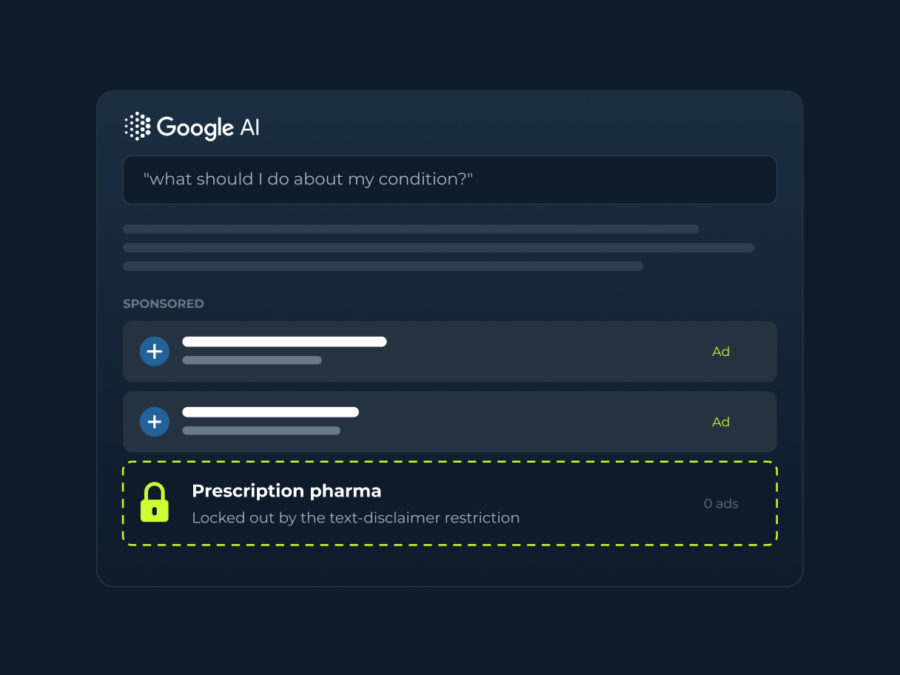
Two Q2 findings still frame this. Regulated categories stay largely dark: Legal and Banking served zero ads in our US tracking, Healthcare accounted for just 0.38% of ads in our sample, Pharma 0.21%. And brand searches rarely trigger AI ad placements, unchanged since Q1. If your paid strategy leans on defending your own brand terms, you risk being close to invisible in AI search.

What to check before it reaches the UK

No need to panic, but a few things are worth doing now. If you run PMax, Shopping, AI Max, or Broad Match in the US, you’re already serving, so baseline those campaigns. If you’re UK only, audit which campaigns become eligible on day one, and look hard at your generic and category coverage, because brand-heavy accounts have the most to lose on a surface that ignores brand queries. Above all, reread your RSA assets as ingredients. Assets carrying a number, a price, or the current year are earning their place in the headlines we’re capturing.

The UK got AI Mode a year ago. The ads are the only missing piece, and they’re heading here. The advantage goes to whoever reads the surface early, while competitors wait for a report that shows what happened.

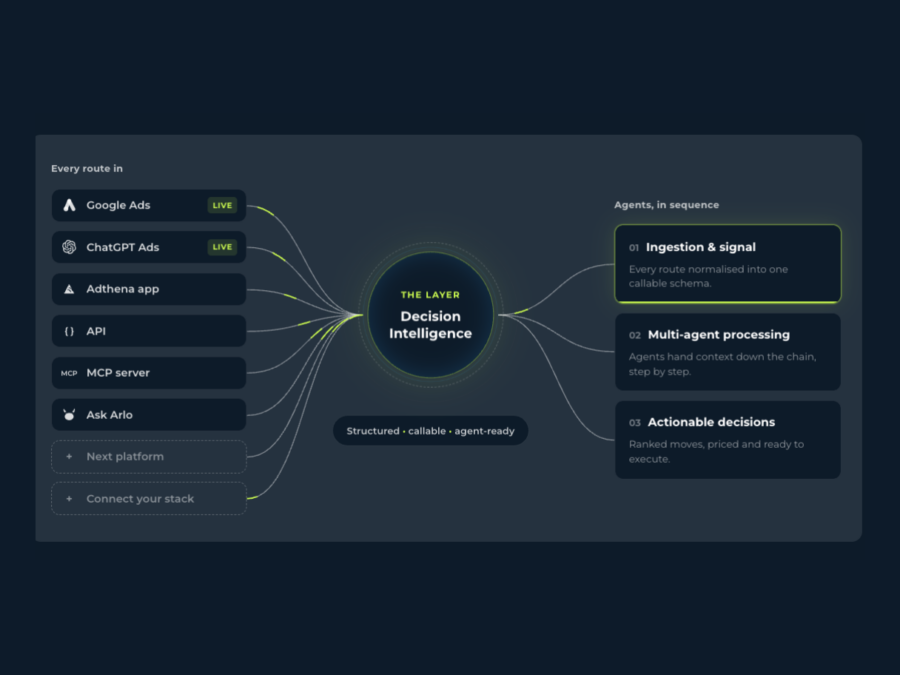
Watching what serves inside AI Mode, ChatGPT, and AIOs across your market, prompt by prompt, is exactly what Adthena’s AI search intelligence is built for. 

Book a demo and see what’s already running against your terms.

Related content