Prescription drug ads in Google AI Mode: First one spotted

Lilly is running the first prescription drug ad we’ve seen inside a Google AI Mode answer, and the creative tells you a lot about how Pharma gets through Google’s gate.

ai mode pharma feature image

TL;DR

On October 11, Adthena captured the first prescription pharma ad we’ve seen inside Google AI Mode: Lilly promoting an oral GLP-1 weight loss pill against the query “glp-1 medication.” Across 50,000 US AI Mode placements we tracked in August, prescription brands had zero. The ad copy never names the drug. That help-seeking format fits the limits Google has set for this test, which allow standard text and Shopping ads only and keep existing pharma certification rules in place. Google confirmed the test to Adweek a day later. Google Ads gives advertisers no reporting on where these ads appear, so independent tracking is currently the only way to see who’s serving.

 

Published by Joss Froggatt October 13, 2026

The first prescription drug ad in AI Mode served on October 11

We covered why prescription brands were stuck at zero, and how quickly the space around them was filling up, in our first look at pharma in Google AI Mode. This post picks up where that one left off: the first ad through the gate, the rules Google has now confirmed, and the visibility gap every pharma advertiser is about to run into.

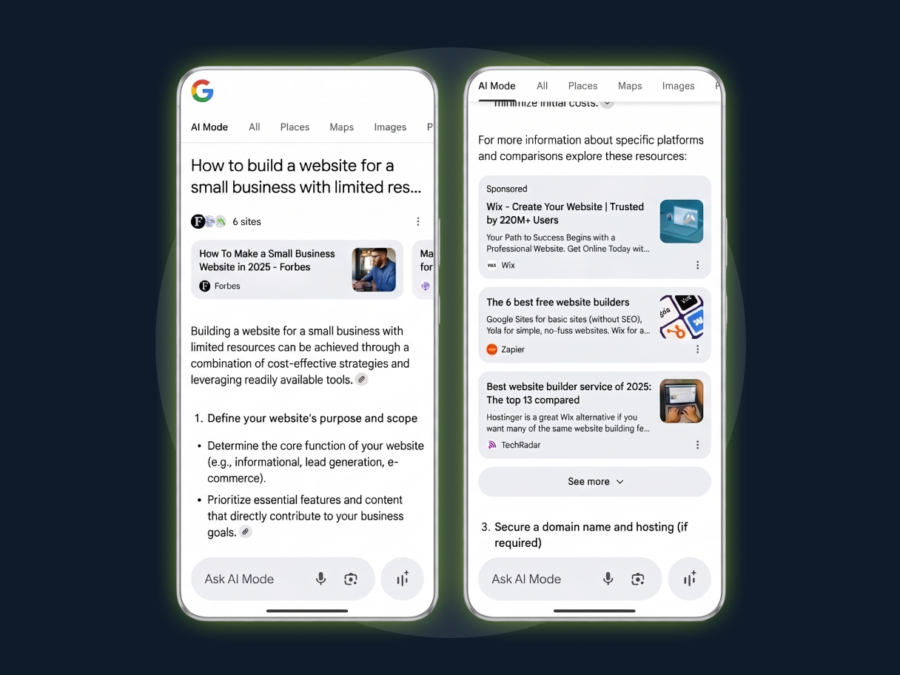
Adthena’s AI ad tracking captured a Lilly ad inside a Google AI Mode answer on October 11, 2026. It promotes an oral GLP-1 weight loss pill and served against the query “glp-1 medication.” It’s the first ad from a prescription drug manufacturer we’ve seen on the surface.

Google AI Mode answer for the query glp-1 medication showing a sponsored Lilly ad for a prescription weight loss pill option

Caption: A Lilly ad for an oral GLP-1 pill serving inside a Google AI Mode answer for the query “glp-1 medication,” captured by Adthena on October 11, 2026.

We spotted it a day before Google confirmed to Adweek that it’s testing prescription drug ads in AI Mode and AI Overviews. According to Google, the test started this month and is limited to the US.

It’s a help-seeking ad, the format pharma already runs on unbranded terms

Read the Lilly ad closely and there’s no product name in the headline or the body copy. It nudges the searcher to ask their doctor about a prescription pill option and stops there.

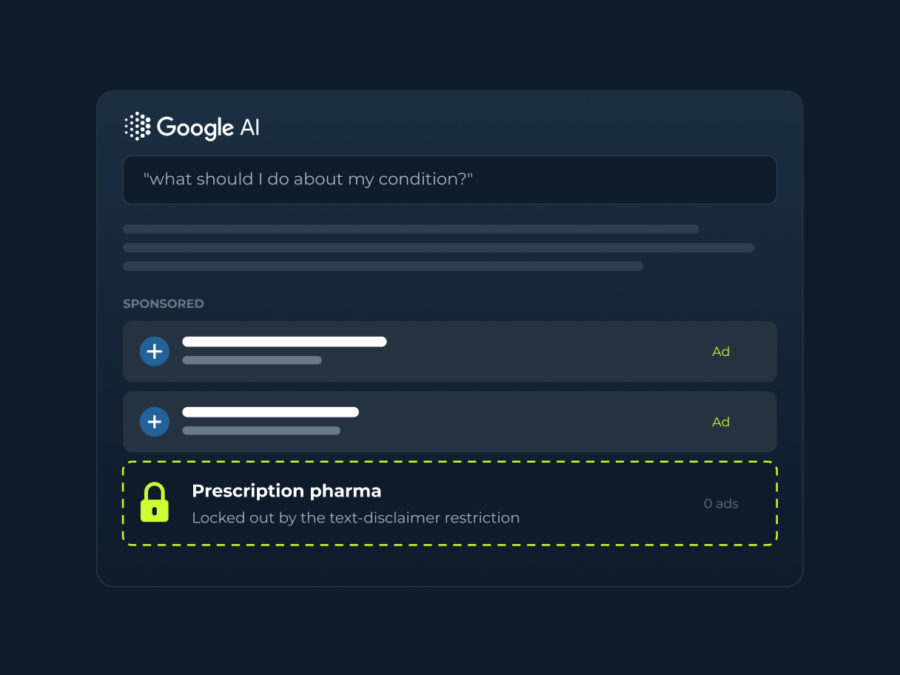
That’s a help-seeking ad, a format US pharma marketers already know well. Under FDA rules, an ad that discusses a condition or treatment category without naming a drug doesn’t carry the fair balance and risk disclosures a branded product claim needs. When the test opened in June, Google said the first phase excluded ads using pinned assets or text disclaimers, as Search Engine Land reported. The current phase supports disclaimers only to a limited extent, and Google hasn’t said which campaign types qualify.

Unbranded creative on treatment queries is standard practice, and with disclaimer support still partial, it’s also the easiest format to get through Google’s test.

Google won’t tell you where your pharma ads serve

Google Ads has no reporting that separates AI Mode or AI Overview placements from the rest of your search activity. You can be certified and live in the test without any way to confirm which treatment questions your ad answered.

Our AI Ads Intelligence tracks ads across AI Mode and ChatGPT Ads where Adthena has coverage, so you can see:

  • which treatment and condition prompts are carrying ads in your category
  • whose ads are serving there, unbranded or not, and how their share changes over time
  • the exact creative competitors are running, so you can benchmark your own help-seeking copy

It runs on the same data layer behind Adthena’s 14 years of paid search intelligence, which is how we caught this ad in the first place.

What pharma marketers should do this week

Dust off your help-seeking creative

Most US pharma brands already have approved unbranded copy from TV and disease awareness campaigns. Adapt the strongest of it into standard text ads that need no disclaimer, and get it into MLR review now.

Revisit your negative keyword lists

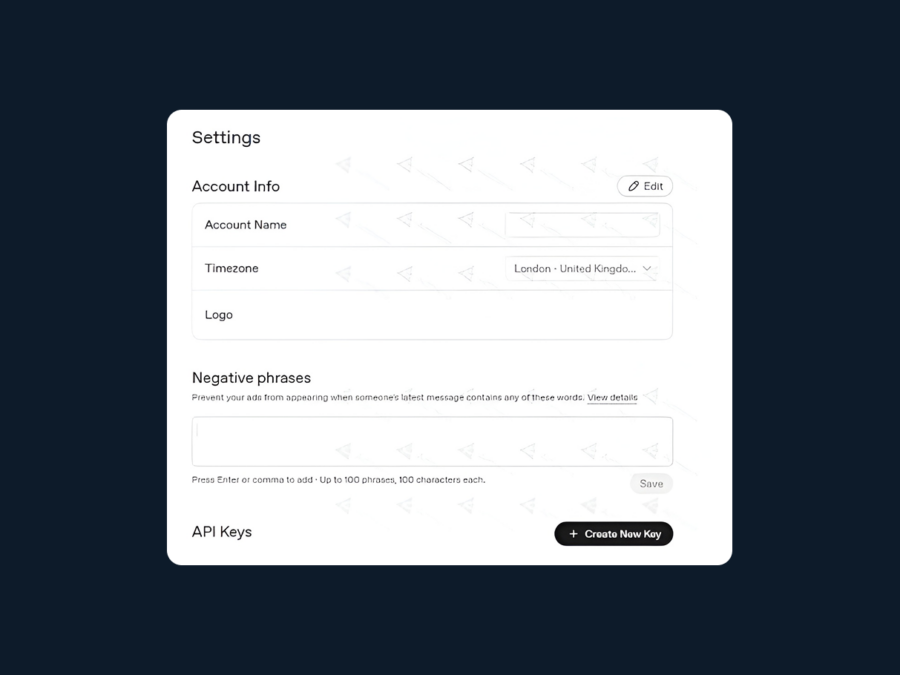
Google has told advertisers they still apply in AI Mode, and one media buyer told Adweek they’ll need to get more extensive because people search so differently there. Lists built years ago for classic search may block the treatment questions you actually want to appear on.

Find out who’s already in your category

Lilly won’t be alone for long. Map the condition and treatment prompts where competitor ads, branded or not, are serving today, so your first campaign goes where the inventory is.

The window is short

The brands that get compliant creative running while uptake is still low will set the benchmarks everyone else is measured against. If you want to see which AI Mode ads are serving against your category right now, talk to us.

Related content