Google AI Overviews & ChatGPT Ads: Paid search impact and protecting visibility

AI ads are here across Google and ChatGPT, costs are climbing, and your visibility is at stake. Here's what our data shows.

ashley fletcher speaking at brightonSEO on AI search

TL;DR

Google AI Overviews (AIOs) are now in 17%+ of SERPs, pushing paid ads down and costs up. Our clients call it the “AI Tax.” Mid-tail 3-4 word queries are where AI ad competition is hottest. ChatGPT ads are live but rough for early trialists. The brands winning right now are reacting fast, capping bids smartly, and writing copy that actually matches what AI users want. Here’s the full picture.

Published by Ashley Fletcher May 01, 2026

The window has closed

Six months ago, AI Overviews (AIOs) were scaling quietly in the background. ChatGPT ads weren’t a thing. Most advertisers were watching and waiting.

That window is shut.

Ashley Fletcher, CMO at Adthena, spoke at brightonSEO yesterday and wanted to get the key findings from our latest research out while they’re still fresh, because the data tells a story that should change how you’re running your paid search right now.

Ashley Fletcher, CMO at Adthena speaking at brightonSEO


What we measured

We didn’t pull this from a handful of accounts. We analyzed 29.1 million queries, monitored 25,000 SERPs, across 10+ industries and three markets (US, EMEA, and APAC) between November 2025 and March 2026. This is whole market data and it shows what’s really going on.

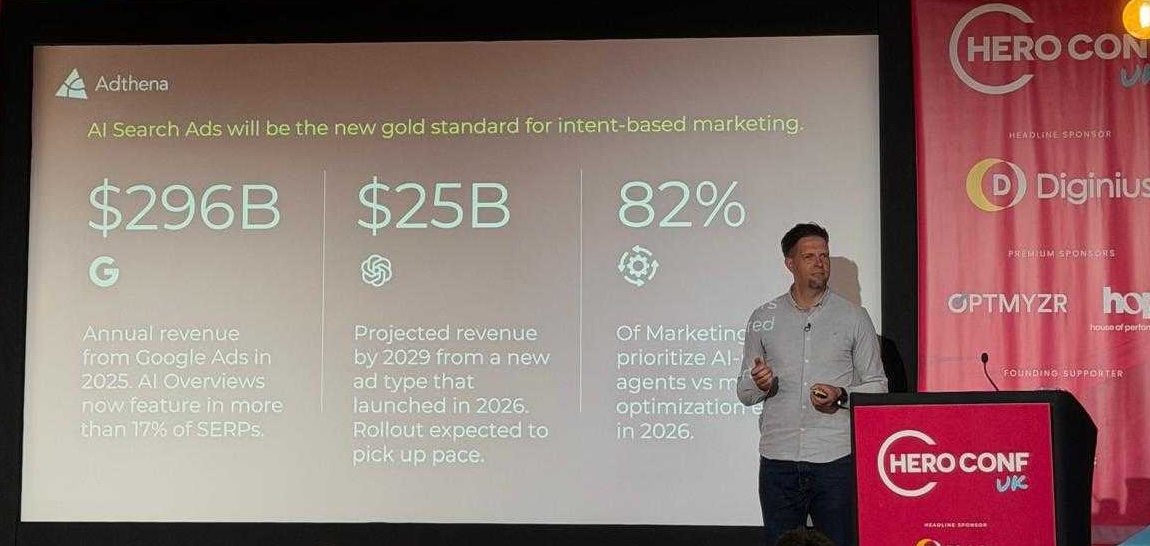
AI Overviews now feature in more than 17% of all SERPs. With Google pulling in $296 billion in annual ad revenue, the pressure to monetize those placements was never going to stay hypothetical. It hasn’t.

Where the AI ad competition actually is

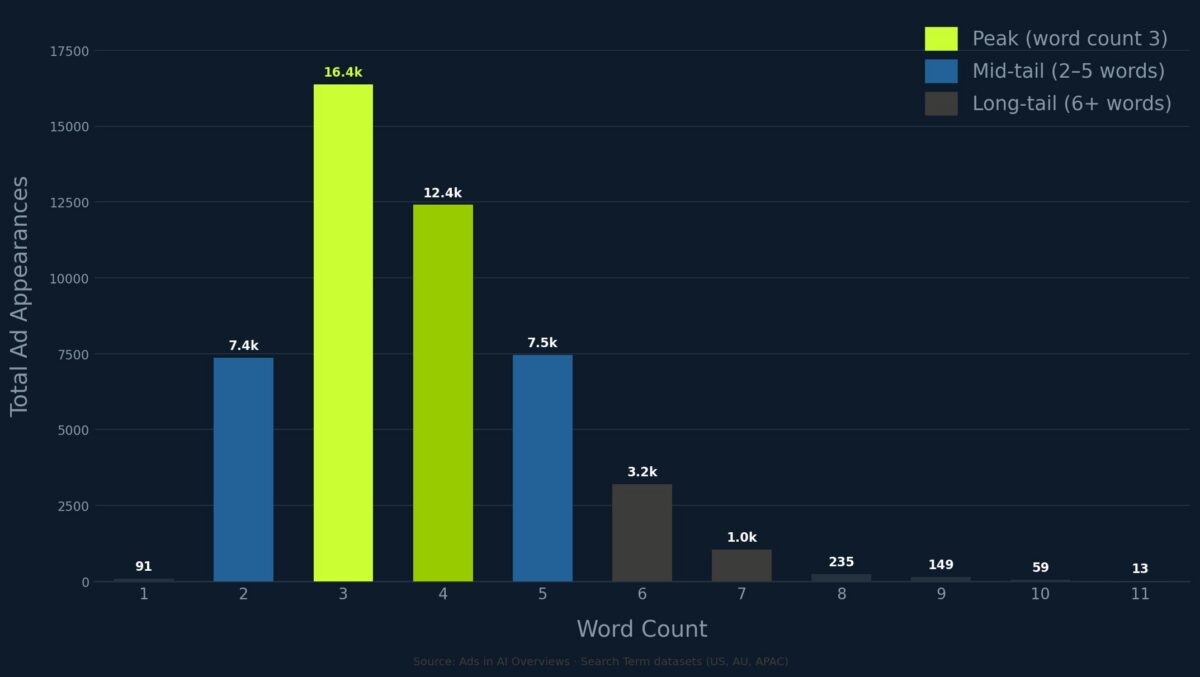
Here’s what surprised people in the room: it’s not the long, conversational queries driving AI ad appearances. It’s mid-tail.

Three to four word searches account for 60%+ of all AI Overview ad appearances. Long-tail queries, where AIOs are most naturally triggered, are largely uncontested. Brands aren’t bidding there, or Google isn’t surfacing ads yet. Either way, there’s a gap hiding in plain sight. Get there before your competitors do.

Ads in AI Overviews aren't being won on long, conversational queries - they're being won on 3–4 word searches. That's where 60%+ of all AIO ad appearances are concentrated.

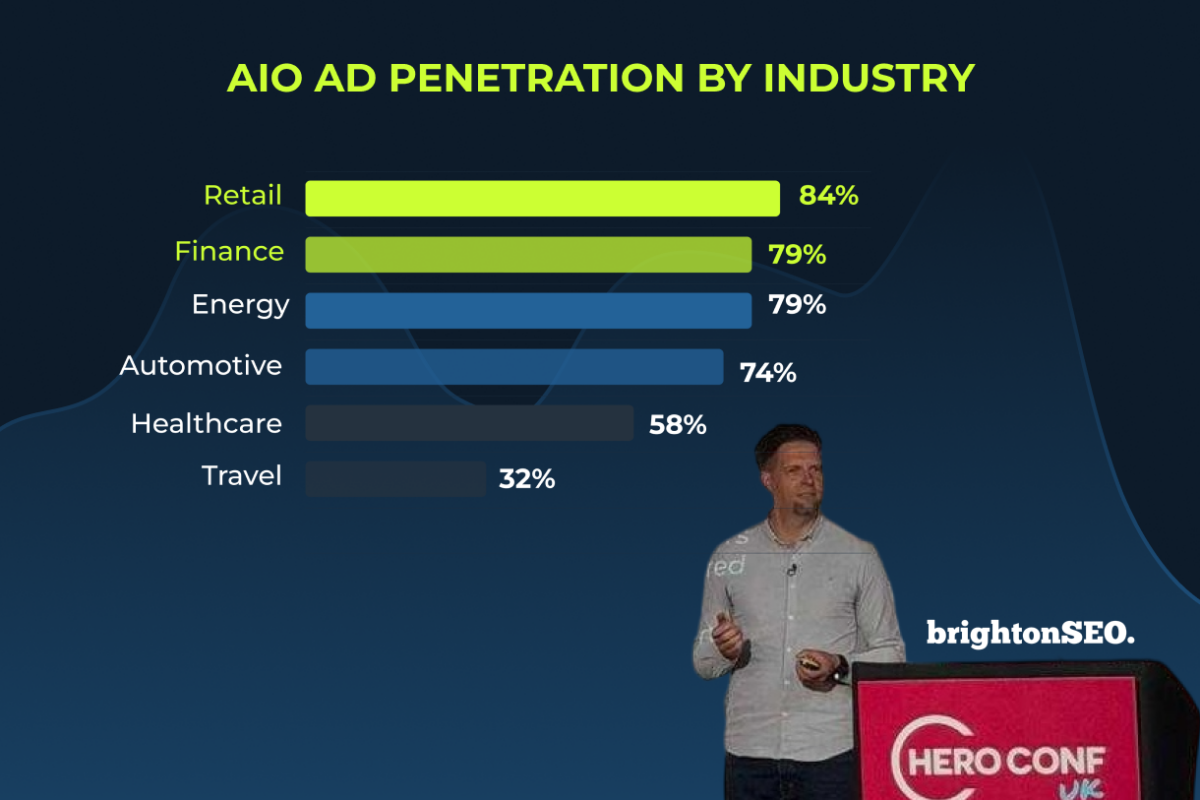
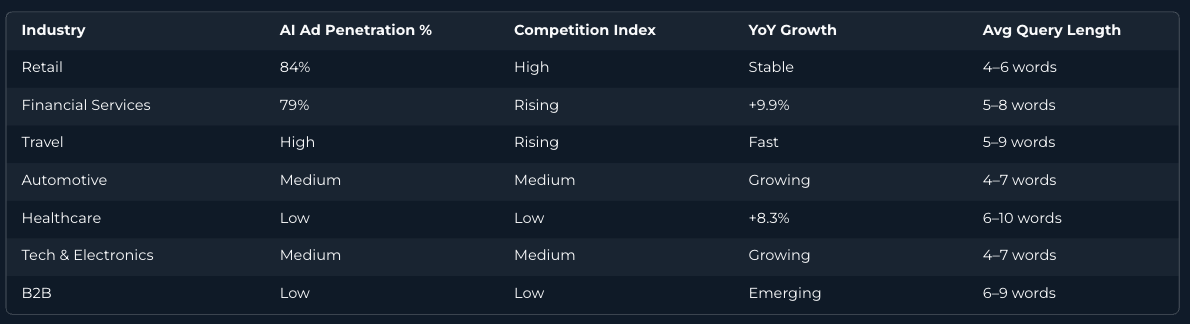
By industry, the spread looks like this:

  • Retail: 84% AI ad penetration, high competition, stable growth
  • Financial Services: 79%, rising competition, +9.9% YoY
  • Travel: high and rising fast across 5-9 word queries
  • Healthcare and B2B: low penetration, but healthcare is already up +8.3% YoY

Comparing AI ad penetration, YoY competition growth, and average auction intensity across verticals

A few blind spots worth flagging too. Navigational brand queries almost never trigger AI ad carousels, so if branded terms are your main play, you may be invisible where it increasingly matters. And seasonal, event-driven queries like “Black Friday deals” under-index for AI placements, which signals the value of always-on, evergreen strategy over campaign bursts.

ChatGPT ads: What we know (and what's still messy)

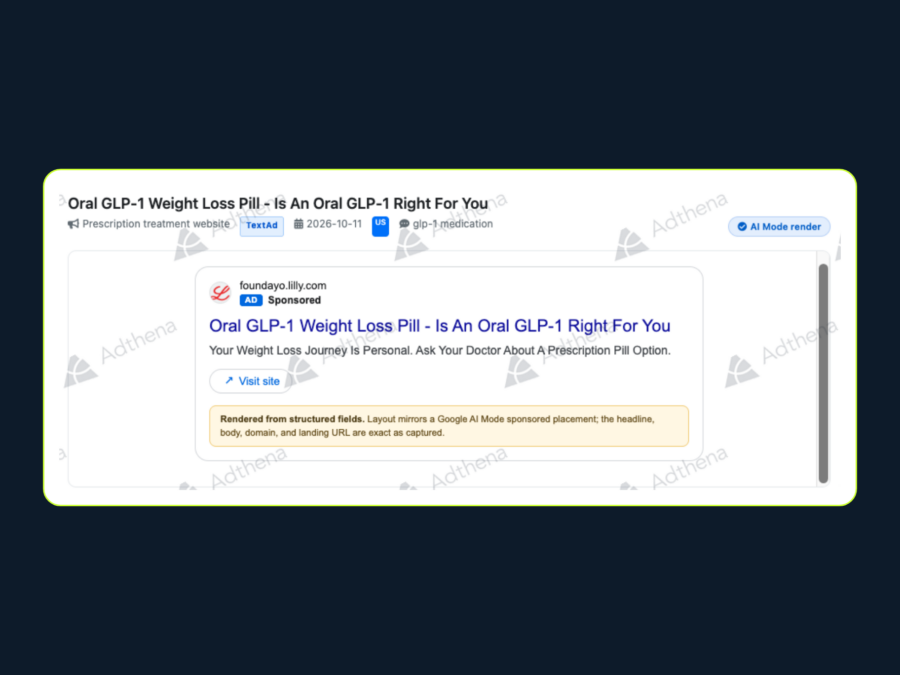
OpenAI gave advertisers less than four weeks’ notice before launching ads on February 9th. We were first to document confirmed placements that day.

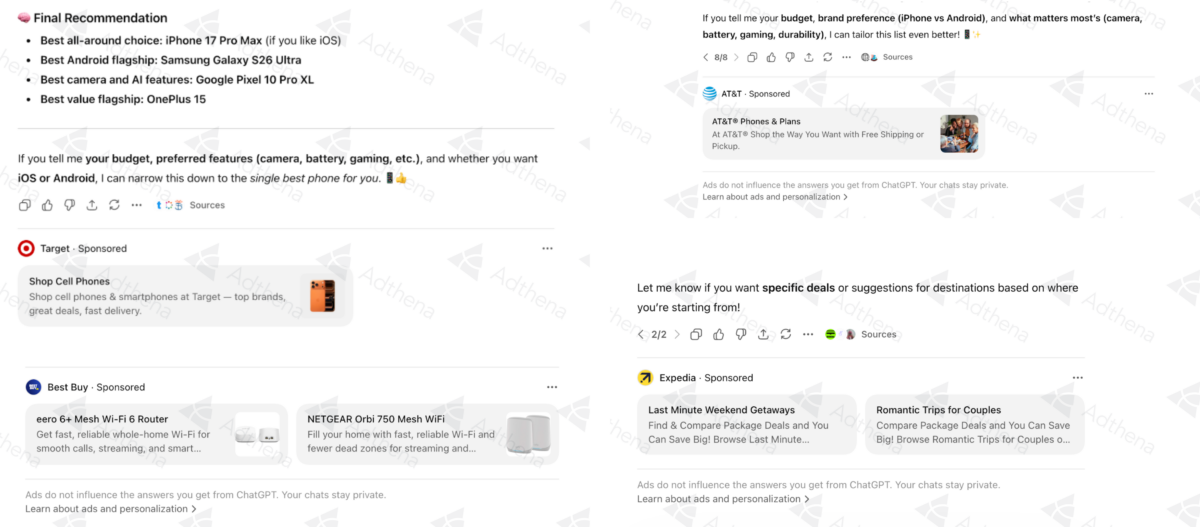
The headline numbers from the initial US trial: over 600 advertisers involved, CPMs running at around $50 (that’s roughly three times Meta’s average, comparable to NFL broadcast inventory). Major brands including Best Buy, Target, AT&T, and Expedia were active by late February.

selection of chatgpt ads found by Adthena

But let’s be real about how the trial is actually going. Some participants are spending at just 3% of their budget allocation. Sample CTR is sitting at 0.92% versus 6% on Google Ads. Many trialists are frustrated they can’t even spot their own ads in the wild. Ad triggering is broad and basic, which means placements often feel misaligned with actual intent.

That said, things are moving. In April, OpenAI lowered the minimum spend threshold to $50k after reportedly reaching $100 million in annualized revenue just six weeks in. An Ads Manager with cost-per-click (CPC) buying is now live. And a UK trial is rumored to start mid-May.

The ad format itself is a “Branded Card” designed to sit naturally inside the conversational response. Whether it converts at scale is still an open question. But the intent-matching potential is real, and we’re watching it closely.

The AI Tax is real and it's costing your clients money

This is the one that keeps coming up on client calls. AI Overviews are pushing paid ads further down the SERP. Click-through rates fall. CPCs climb. Our clients have a name for it: the AI Tax.

Here’s what it looks like in practice. One client in telecoms saw a 97% CPC spike on exact-match keywords after AIOs started dominating their core terms. They isolated those keywords into a separate campaign with a $3.75 portfolio bid cap to regain control. A healthcare advertiser watched their cost per inquiry climb from $102 to $140 on AIO-heavy terms, a 38% jump, forcing a structural rethink of their bidding approach.

On top of that, Google’s Performance Max (PMax) and broad match now conceal more than 30% of search terms. That makes independent, transparent competitive intelligence more valuable than it’s ever been.

What's actually working right now

Get your CTA language right

In AI placements, the words on your button matter more than most teams realize. “Compare” outperforms the standard “Shop Now” by +35% on CTR, especially effective for considered purchases and finance. “Get a Quote” delivers +22% in insurance and utilities. “Find a Store” actively underperforms in AI contexts, dropping 20-40%.

AI users are in research and exploration mode. CTAs that match that intent win. Generic ones don’t.

Write copy that earns the click

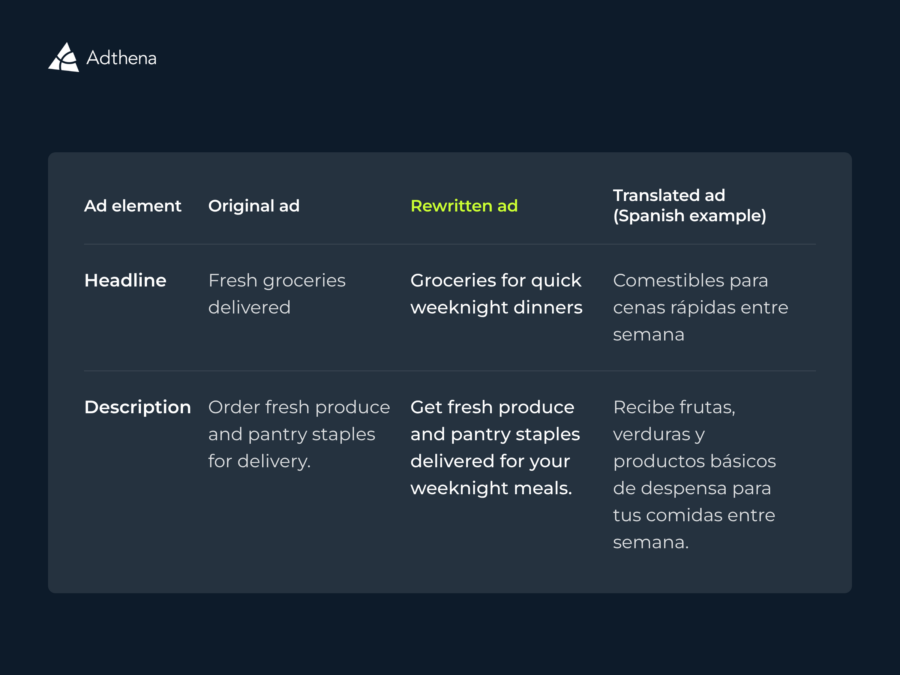
The ads performing in AI placements share four things: they lead with the user’s problem rather than the product (“Struggling with X? Here’s how…”), they use specific attribute-rich language rather than vague headlines, they include a clear and quantified offer, and they carry visible trust signals like ratings, review counts, and brand recognition cues. In AI carousels particularly, trust signals move the needle for challenger brands.

Four bid moves worth making now

Brand bid suppression. Automatically pause brand ads when no competitor is present, and let organic listings capture that traffic for free. One UK brand saved £72,000 using this approach.

Portfolio bid capping. Set hard CPC ceilings on AIO-heavy keywords to fight the AI Tax before it eats your budget. Capped at $3.75 to fight 97% CPC inflation in one case.

Agile TCPA reallocation. Use Share of Spend dashboards to shift budget the moment a competitor moves into a gap. This is becoming a daily workflow for the sharpest teams we work with.

AI Max guardrails. Feed negative keywords from hidden query reports directly into PMax to stop the algorithm cannibalizing your existing campaigns.

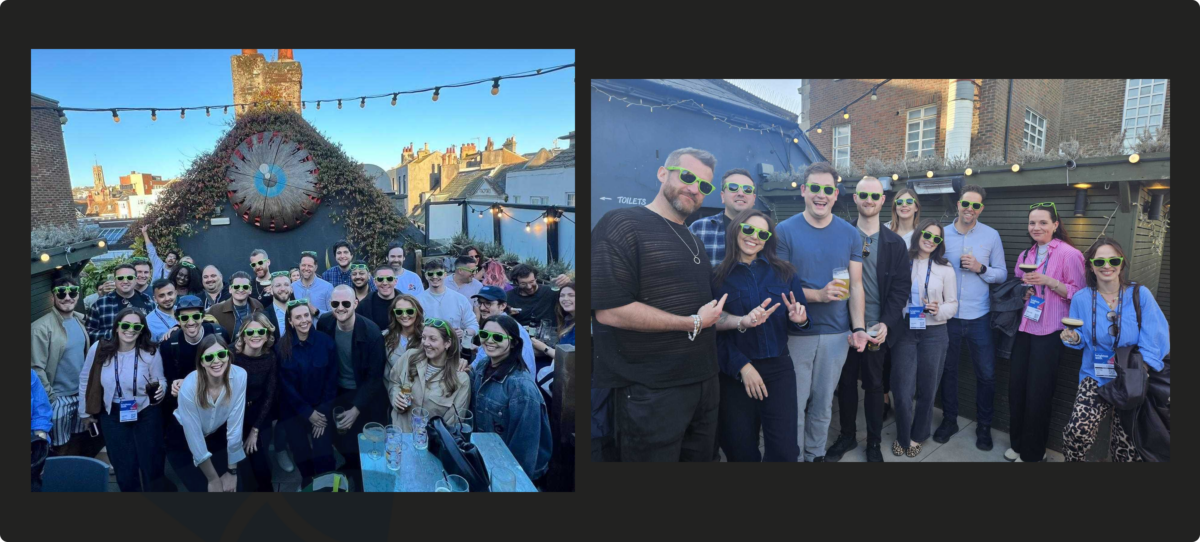
The Adthena crew at HeroConf UK

The crew at brightonSEO. Yes, the sunglasses were mandatory.

Move now, not later

82% of marketing leaders now say they’re prioritizing AI-powered agents over manual optimization. That’s not a trend. That’s a signal.

The brands winning in AI search right now are treating this as an infrastructure shift, not an experiment. The mid-tail opportunity is still open. The CTA data is clear. The AI Tax is manageable if you have the right controls in place.

The question isn’t whether to act. It’s how fast.

How is AI Search impacting you?

Related content